

Veneers are a common dental procedure to restore the aesthetics of a smile. They usually last between 5 and 15 years, depending on the exact type. Dental veneers fall under the “fixed prosthodontic restoration” classification, along with bridges, crowns, inlays, etc. They are an effective resource for addressing tooth discoloration, chips, worn enamel, and dental spacing. Stay with us as we take a deep dive into the question “How long do veneers last?”
🦷 What Are Dental Veneers?
For people who want to improve the appearance of their smile, “how long do veneers last?” is a common query. The first step to grasping the answer to this important question is to understand what a veneer exactly is.
Dental veneers are thin shells of various constructions that are fixed to the front part of the tooth to conceal structural abnormalities (E.g., chipped tooth or veneers for crooked teeth) or to alter the color, size, shape, and alignment of the teeth. To prepare the affected tooth for veneer bonding, some amount of enamel is removed, and a dental adhesive is applied to ensure durable bonding and aesthetic improvement.

✨ What Are The Types of Dental Veneers?
Not all dental veneers are the same. They are commonly classified based on their construction, such as:
Porcelain Veneers
Porcelain is a common material used in the construction of dental veneers. They are often referred to as ceramic veneers and have a visually pleasing, natural, and translucent appearance.
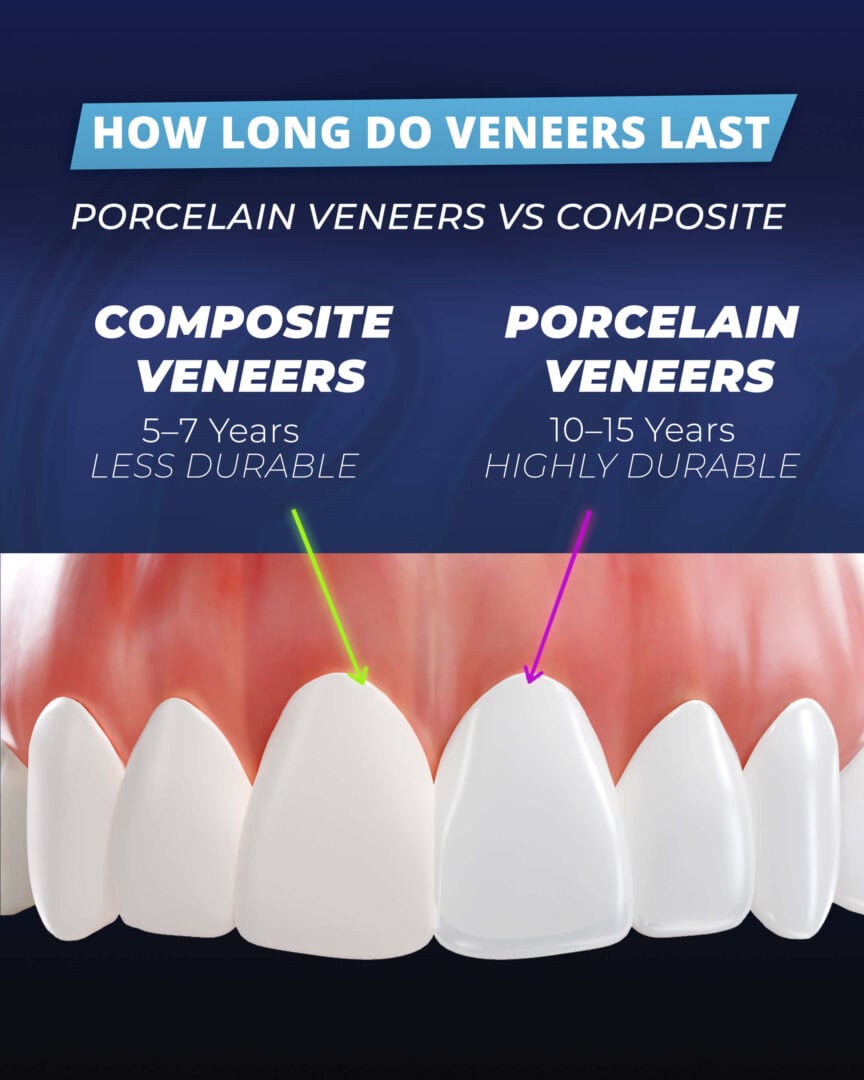
Porcelain veneers are popular due to their admirable stain resistance and durability. As for the question of how many years do porcelain veneers last? The short answer is that with proper maintenance, these veneers can easily last 10 to 15 years or even longer in some cases.
Composite Veneers
Composite veneers, on the other hand, are made of color-matched resin. They are easier to apply, require only a single application session, and are not very repair-intensive.
However, unlike porcelain, composite veneers are more prone to staining and wear and tear. On average, composite veneers last between 5 and 7 years, depending on adherence to maintenance protocols.
Minimal Preparation Veneers
Minimal-prep or no-prep veneers also use porcelain, but use an ultra-thin layer of porcelain. These are best for specific cases where there is a need for a conservative approach to enamel removal.
Furthermore, minimal-prep veneers are the best choice for minor dental repairs and aesthetic improvement. The longevity of these veneers is the same as that of porcelain veneers for the most part.
In a scenario of porcelain veneers vs composite, the final choice depends on the aesthetic needs of the patient.
🦷 What Are Common Indications For Veneers?
The reasons for the application of dental veneers may be classified as:
Aesthetic
Aesthetic issues that can be an indication for veneers include any type of tooth discoloration resistant to professional whitening, partially broken or chipped teeth, enamel damage, discrepancies in size and orientation, spacing or alignment issues, etc.
Restorative
Another frequent indication for veneer application is effective restoration of enamel damage, developmental abnormalities, and dental abrasions or erosions.
To summarize, veneers are, for the most part, a means to improve the aesthetic of a mostly intact tooth with structural or appearance issues. Once applied, the veneer’s lifespan and durability largely depend on proper maintenance.

🎯 What Are Temporary Veneers?
Temporary veneers are short-term replacements for the permanent veneers while they are being prepared/fabricated in a dental lab. The reason for the placement of temporary veneers is to maintain the appearance and function in the meantime. The basic premise behind temporary veneers includes:
- Protecting teeth after enamel prepping
- Maintaining the appearance of the smile till the permanent veneers are prepared
- Preventing abnormal tooth movement and gum overgrowth
- To confirm functional adaptation
- To assess appearance and bite before applying the permanent veneers
🦷 How Long Do Veneers Last?
The exact duration that veneers last depends on the material they are made of. Assuming proper maintenance, porcelain veneers can last between 5 and 15 years or even more in some cases.
Whereas composite veneers last for approximately 5 to 7 years. Factors affecting veneer longevity include:
- Oral hygiene status
- Veneer application process and bonding technique
- Material (Porcelain vs Composite)
- Habitual damage (Teeth grinding, nail biting, chewing hard objects)
- Type of diet
- Lifestyle choices
- Presence or absence of malocclusion
Factors affecting veneer longevity also mar the overall appearance of the smile, thereby indicating a need for replacement.
Signs For Veneer Replacement
Some common signs that your veneers need replacing include structural damage (chips/cracks), loosening of the bonding, stained or discolored veneers, surface damage, bite issues, malocclusion, or gum recession over time.
🎯 Long-Term Maintenance Protocols For Veneers
Maintaining porcelain/composite veneers for a long life requires strict adherence to the maintenance protocols conveyed by your dentist after veneer application. These include:
Maintenance of Oral Hygiene
Good oral hygiene habits like brushing twice a day and regular flossing not only improve the overall health status but also prevent veneer discoloration and structural damage.
Keeping up With Follow-ups
Getting veneers is not a one-off. Keeping up with regular dental check-ups and professional cleaning helps maintain the veneers and ensures durable bonding.
Avoiding Damaging Habits
Habits such as bruxism (teeth grinding), biting nails, or using teeth to bite down on hard objects (E.g., cracking nuts) lead to cracks, fractures, and chips in the veneers and should be avoided at all costs.
In conclusion, with proper care and rigorous compliance with maintenance guidelines, most people can successfully manage their veneer replacement timeline.