

Hair loss in women can happen due to a number of reasons. However, whatever the reason may be, hair loss can have a significant psychological impact and lead to poor self-esteem. The good news is that there are natural-looking hair restoration methods, like hair transplants, that can help women regain their lost hair and confidence. And the best part is that these methods offer permanent results. Today’s blog will focus on the FUE vs.DHI hair transplant methods and what makes each of these the best for women.
Free Quality Consult with the Doctor!
Don’t hesitate to ask your question!
💇 Breaking Down Everything About the FUE Hair Transplants
The Follicular Unit Extraction method is a great, almost scarless hair transplant method for women since it involves the removal of hair follicles individually from the donor site and then transplanting them in the recipient area. The recipient areas are where there is hair thinning. To add to this, the extraction is done using a specialized tool. In order to transplant the hair, tiny channels are made in the recipient area, after which each graft is placed in them. Moreover, the process requires a lot of precision, but the plus point is that there is almost no scarring left behind, and the recovery happens pretty quickly as well.
Here’s Why The FUE Method Can Be Effective For Women
- For starters, the FUE method leaves no excessive scarring (other than some light scarring similar to dots), which makes it ideal for women because they aren’t limited to certain hairstyles.
- The long-term results involve dense hair that looks natural.
- Also, the recovery is quick, and the procedure doesn’t cause too much discomfort.
So, What Are The Cons?
- The FUE method can be quite costly and time-consuming.
- Women who have gone through significant hair loss may not be the right candidates due to the absence of sufficient hair density in the donor site.
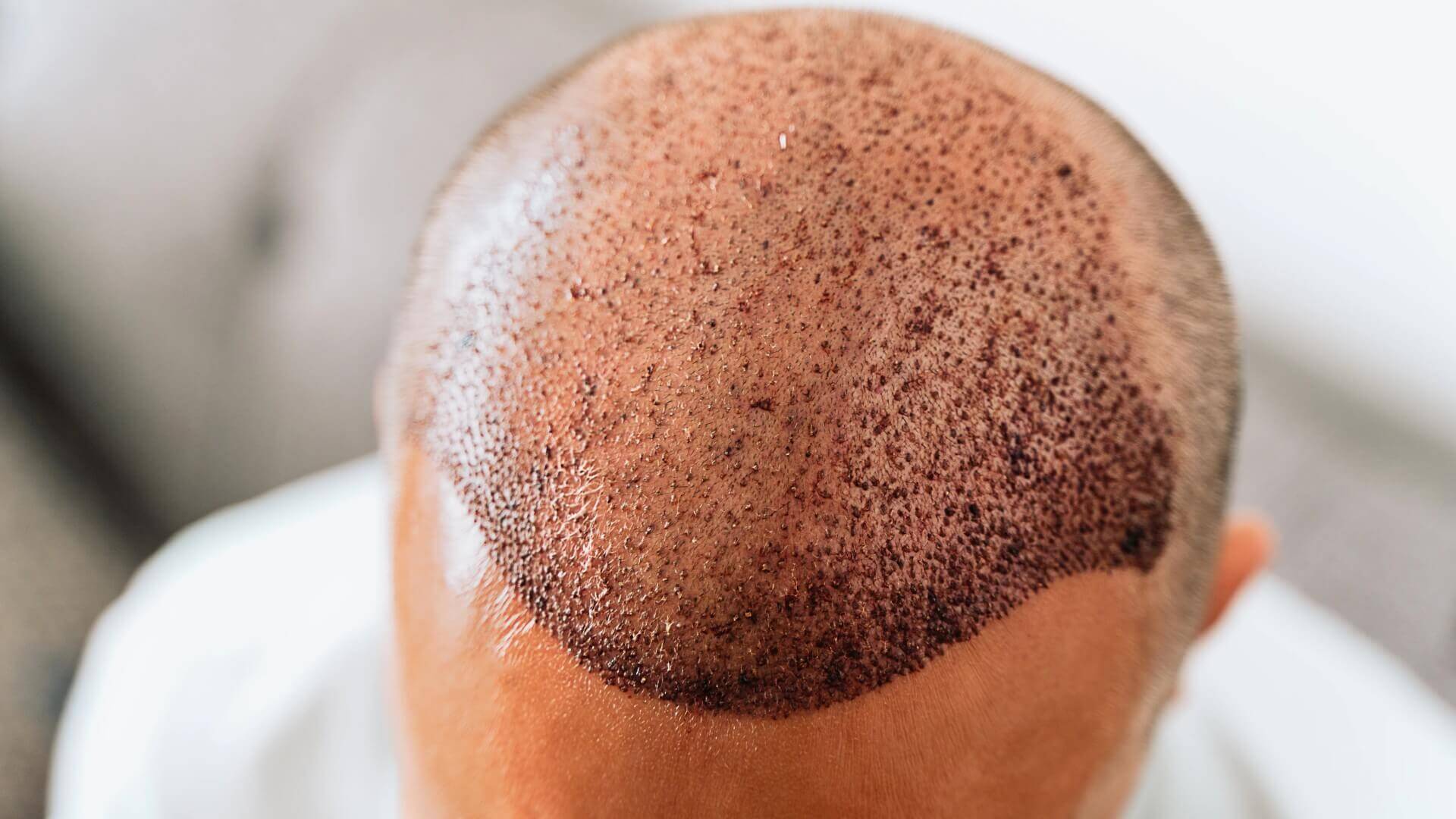
💇 Understanding DHI Hair Transplants
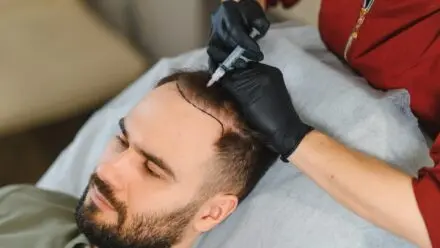
The DHI or Direct Hair Implantation Transplant, technique is one of the latest transplantation methods and is an improved version of the FUE method. In this technique, a specialized tool shaped like a pen is used to extract hair follicles one by one from the donor area. The donor area is usually the back of the head. Once the follicles are loaded in the tool, they are transplanted into the balding areas.
Choosing between FUE and DHI depends entirely on your current thinning pattern and donor density. Send us a quick message on WhatsApp! Our hair restoration experts can evaluate your hair photos confidentially.
Why DHI Can Be Good For Women
DHI and FUE are both ideal transplant methods for women. However, DHI is even more effective as it offers enhanced control, which makes it perfect for women. The procedure results in little to no crusting. This method also causes much less trauma to the tissue due to the sharpness of the implant pen. Not to mention, this method also protects existing hair and offers natural-looking thickness.
So, What is the Downside?
- The DHI method is expensive compared to the other techniques.
- Furthermore, the procedure time is also much longer.
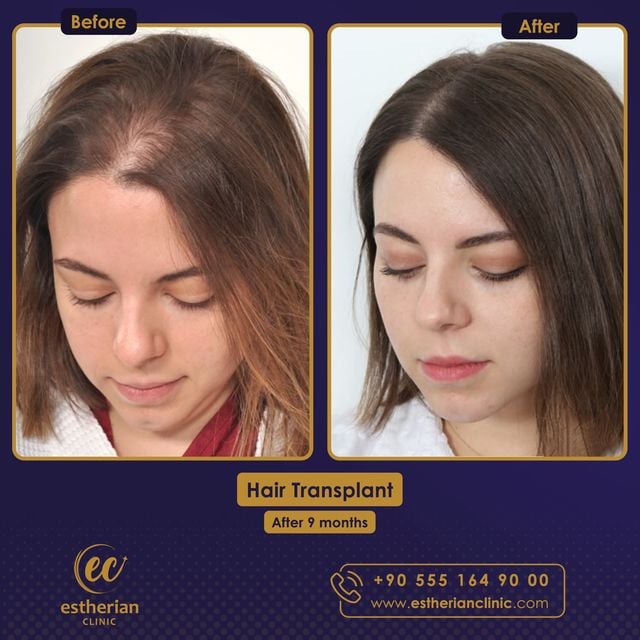
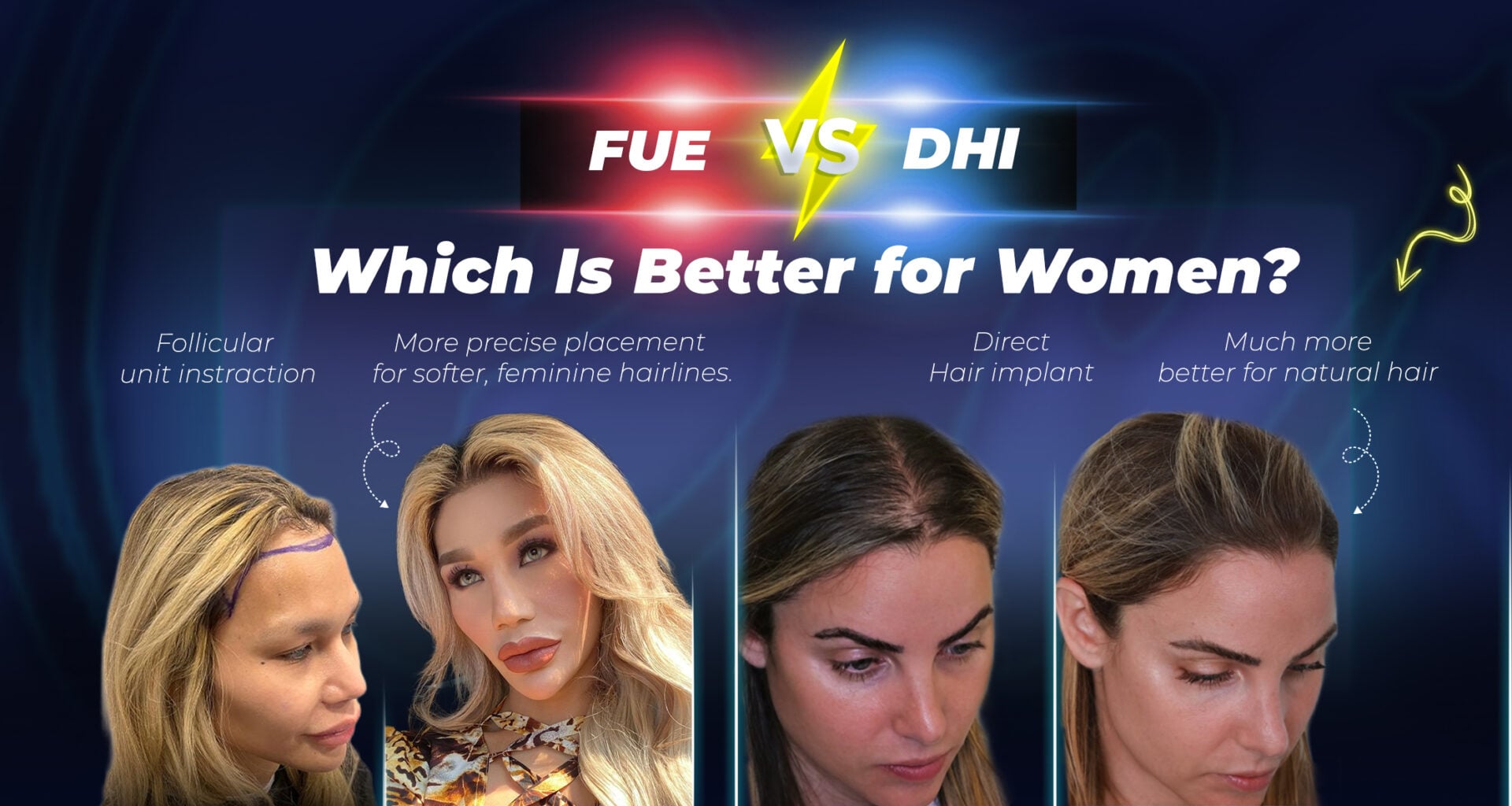
🎯FUE vs. DHI: Which of the Two is Better for Women?
| FUE | DHI | |
| Hairline Design | Gives the surgeon the ability to transplant the hair meticulously to provide the hairline with a natural, feathered look, and to guarantee a feminine hairline. | Allows the surgeon to copy the natural angle of the hair growth for a natural-looking hairline. |
| Scarring | The resulting scars are unnoticeable, like dots. | Results in the least amount of scarring, very light. |
| Recovery Phase | Takes a little longer than the DHI method as the scalp requires healing. The procedure may result in some light swelling and scabbing, which can take about a week to heal. | Faster than FUE due to minimal trauma from micro incisions. The patient can return to their routine in a few days after their procedure. |
| Cost | 2000 USD to 4500 USD | 3000 USD to 8000 USD |
Ready to permanently restore your hair density and a natural, feminine hairline? Connect directly with our patient care team on WhatsApp to get a personalized price quote based on your required graft count, check available dates, and explore our all-inclusive travel packages!
All About the FUT Method (Follicular Unit Transplant)
The follicular unit transplant method isn’t as modern as the other methods. Also referred to as the strip method, the FUT transplant method involves the doctor choosing a donor site with ample hair follicles to take a strip of skin. This site is usually the back of the head. Next, the site is prepped and anesthetized. The surgeon then meticulously removes the strip and uses it to extract healthy hair follicles. Additionally, the donor site is sutured, which eventually leaves a linear scar. However, this linear scar is concealed by the hair around it. After extracting the follicles from the strip of skin using a microscope, the follicles are then transplanted into the area that has less hair.
📌 The FUT method used to be the go-to method for restoring hair density. However, it has lost its popularity in the last 20 years and has been replaced by the DHI method.
The main reasons for the DHI transplant method becoming the premium choice for hair transplant doctors are that, compared to the FUT method, the DHI method does not involve any pain, sutures, or extreme scarring. And, since the DHI method isn’t as invasive, it has a faster recovery period and overall results in little to no trauma to the scalp. To add to this, the DHI method involves more precision, leading to hair growth at a natural angle.