

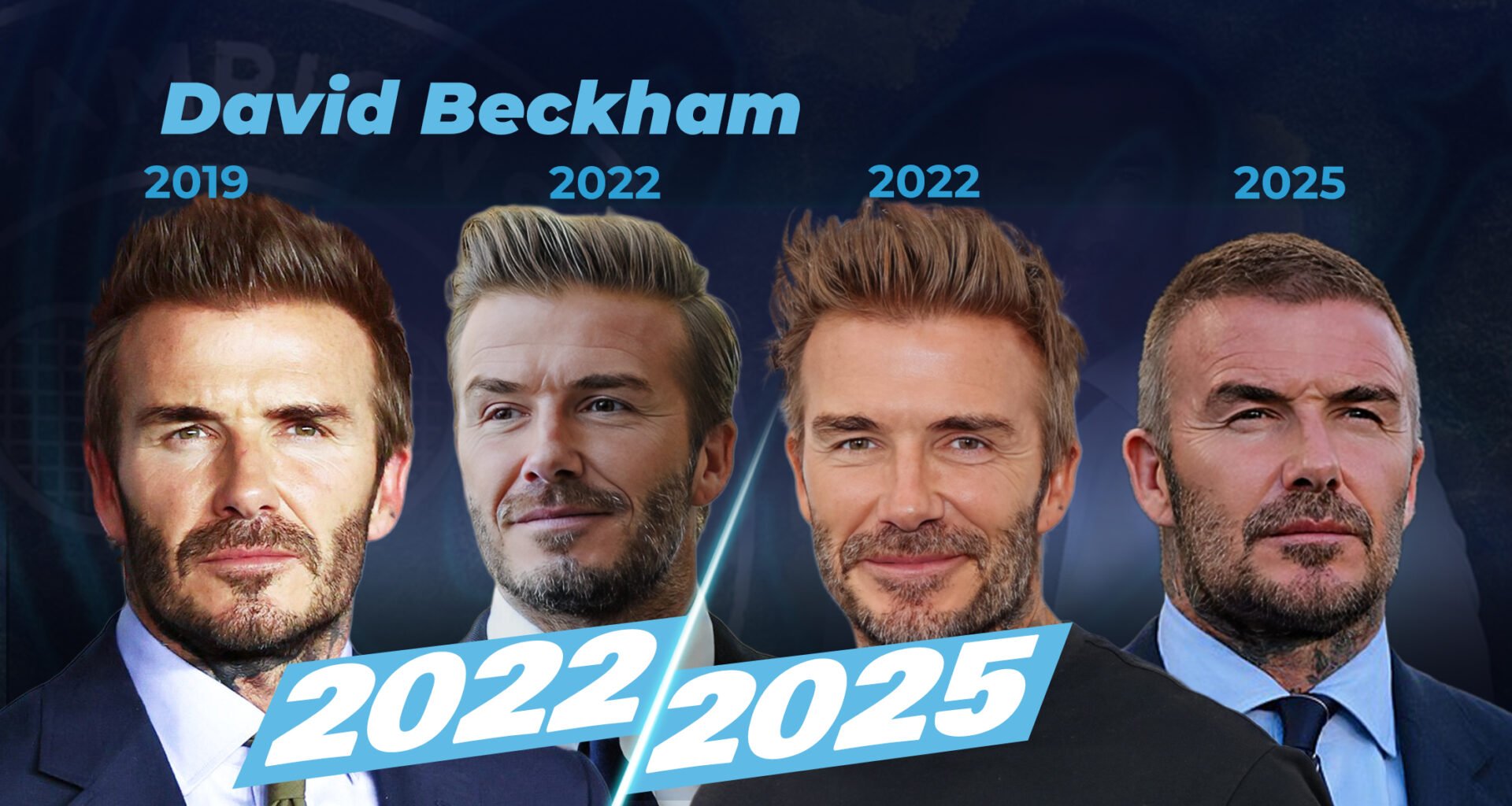
As David Beckham, the global sports icon, fashion trendsetter, and co-owner of Inter Miami CF, enters his 50s, fans and medical experts have noted significant shifts in his face. Discussions about David Beckham plastic surgery revolve around his smoother forehead with reduced expression lines, an altered upper eye contour, restored mid-face volume with fuller cheeks, and a sharp, rejuvenated face. While Beckham has not publicly confirmed undergoing facelift surgery or a specific cosmetic procedure, his visible facial changes need a comprehensive analysis. Let’s medically examine his facial changes and evaluate the surgical and non-surgical procedures that could clinically produce these effects, using aesthetic science, dermatological literature, and photographic evidence.
Consider Getting a David Beckham Transformation?
Don’t hesitate to ask your question!
Did David Beckham Have Plastic Surgery?
David Beckham plastic surgery has never been officially confirmed by the ex-football player himself. There is no verified medical record, surgeon confirmation, or statement from Beckham admitting to cosmetic surgery.
When assessing changes in celebrity appearance, we need to distinguish between observed physiological changes and speculative conclusions.
While public photographs reveal shifts in skin texture and facial volume, these do not prove surgical intervention.
Non-surgical facial rejuvenation, physiological fluctuations, and photography conditions can account for these visual differences.
Also, various non-surgical factors can influence how celebrities look in photos and in public, including:
- Natural Facial Aging & Bone Resorption: As we age, deep structural fat pads shift and reshape the face.
- Body Composition & Weight Changes: Fluctuations in body fat directly affect cheek plumpness and jawline sharpness.
- Professional Lighting & Camera Lenses: Focal lengths between 35mm and 85mm dramatically alter facial width and volume projection.
- Grooming, Makeup & High-Quality Retouching: High-quality, modern makeup can dramatically change how celebrities look.

David Beckham’s Face: What Has Changed?
Let’s take a look at the table below that compares the previous and recent changes observed in David Beckham’s face.
| Feature | Previous Features | Recent Features |
| Forehead | Deeper wrinkles | Smoother forehead with a naturally lifted brow |
| Eye Area | Crow’s feet & mild hooding | Brighter aperture, reduced lines |
| Cheeks & Mid-Face | Contoured, lean malar space | Fuller volume, less flat forehead shape |
| Facial Contour | Sharp, age-appropriate laxity | Tighter skin, defined jawline frame |
| Hairline | Temporal recession/thinning | Dense temporal framing & crown |
Now let’s dig deeper and analyze each feature and the possible surgical procedures that can provide these significant changes and results.
Forehead and Expression Lines
In his late 30s and early 40s, Beckham showed visible horizontal forehead lines (frontalis rhytids) and frown lines between the brows (glabella lines).
However, his recent public appearances show a noticeably smoother upper third of the face.
In aesthetic dermatology, this effect is mainly achieved via neuromodulators like Botulinum Toxin Type A (Botox).
Botulinum toxin blocks acetylcholine release at the neuromuscular junction, preventing muscle contractions that create dynamic skin creases.
While a smoother forehead aligns with these treatment outcomes, high-grade topical retinoids, laser skin resurfacing, and strategic studio illumination can also soften fine lines.

Eyes and Upper Eyelids
Beckham’s eye area shows a more rested look, with decreased crow’s feet (lateral canthal lines) and a more visible upper eyelid.
Potential explanations for these positive changes include:
- Micro-Botox: Light injections around the orbicularis oculi muscle smooth lateral lines without freezing natural facial expressions.
- Upper Blepharoplasty: In blepharoplasty surgery in Turkey, redundant upper eyelid skin and orbicularis muscle are removed to address dermatochalasis.
- Botox brow lift: Strategic placement of botulinum toxin can reduce activity in muscles that pull the brow downward, potentially creating a subtle lifting effect.
- Photography & Expression: Changes in camera angle, facial animation, and directional lighting.
Cheeks and Mid-Face Volume
When analyzing David Beckham plastic surgery, we mostly notice his mid-face volume.
He used to have lean, high-contoured cheekbones, but his mid-face now displays enhanced anterior malar volume and rounded cheek contours.
Possible medical changes explaining this shift include:
- Dermal Fillers: Gel injections placed deep near the bone to plump up lost volume.
- Fat Transfer: Taking fat from elsewhere on your body and moving it into your cheeks.
- Weight Changes: Gaining body weight naturally fills out the face.
- Natural Tissue Remodeling: How your facial fat naturally redistributes as you grow older.
Facial Contour
The lower face and jawline appear smooth, firm, and structured without the mid-face sagging usually observed in natural male aging.
While these can be improved via neck lifts or lower facelifts, they can also be maintained using non-invasive skin tightening devices, such as microfocused ultrasound (HIFU) or radiofrequency microneedling, which stimulate neocollagenesis and elastin synthesis in the dermis.
Hairline and Hair Density
Beckham’s hair has shown varying density and hairline positions over the decades. During the late 2010s, subtle temporal thinning was visible in unstyled photos.
However, more recent appearances show an exceptionally full hairline and strong crown density.
While public speculation points to a Follicular Unit Extraction (FUE) hair transplant, Beckham’s lack of visible linear or punch scarring at the back of his head could also show non-surgical management.
Alternatives include medical therapies (5-alpha-reductase inhibitors like Finasteride, topical Minoxidil), Platelet-Rich Plasma (PRP) scalp injections, scalp micro-pigmentation, or cosmetic thickening fibers.
What Cosmetic Procedures Could Explain David Beckham’s Facial Changes?
Botox, fillers, blepharoplasty, facial fat transfer, and facelifts are some of the most common procedures that can explain David Beckham’s changes. But that is not the whole story, and non-surgical methods can also cause some of his changes.
First, let’s take a look at the table below that summarizes the cosmetic procedures that can explain speculations about David Beckham plastic surgery and changes.
| Procedure | Primary Target Area | Physiological Mechanism | Duration of Effect |
| Botulinum Toxin | Forehead, Glabella, Eyes | Neuromuscular acetylcholine block | 3 to 4 Months |
| Hyaluronic Fillers | Cheeks, Tear Troughs, Jaw | Hydrophilic volume restoration | 6 to 18 Months |
| Upper Blepharoplasty | Upper Eyelids | Excision of dermatochalasis skin | 10+ Years |
| Facial Fat Transfer | Deep Malar & Mid-Face | Grafted autologous adipocytes | Multi-Year/ Permanent |
| Full Facelift (SMAS) | Lower Two-Thirds & Neck | Deep fascia structural elevation | 10 to 15 Years |
Botox (Botulinum Toxin)
Botulinum Toxin Type A, aka Botox, temporarily relaxes the forehead and brow muscles so they cannot contract, smoothing out forehead wrinkles and frown lines.
In male patients, precise dosing is necessary to preserve natural facial expression and prevent heavy, dropped brows.
Dermal Fillers
Dermal fillers are injectable gel preparations designed to compensate for age-related soft tissue atrophy and bone resorption.
Firm gel fillers or collagen builders are placed deep into the cheekbones. This lifts sagging cheeks and restores lost volume without surgery.
Unlike Botox, which targets muscle movement, dermal fillers add volume beneath the skin and can restore fullness to areas such as the cheeks and mid-face.
Upper Blepharoplasty
Surgical blepharoplasty removes excess cutaneous tissue and modifies underlying fat pads in the upper eyelid. It addresses heavy lids and tired-looking eyes, creating a fresher, rested look.
When executed in small doses on male patients, it preserves the natural masculine crease.
Facial Fat Transfer
Fat grafting involves taking micro-fat via liposuction (usually from the abdomen) and reinjecting it into the mid-face, where volume is lacking.
Fat transfer offers permanent tissue integration, providing softer, more gradual volume enhancement compared to synthetic hyaluronic acid gels.
Facelift and Other Surgical Procedures
A facelift, or surgical rhytidectomy, mobilizes and tightens the Superficial Musculoaponeurotic System (SMAS) layer. Learn more about SMAS vs. Deep Plane facelift.
While facelifts eliminate deep lower-face jowling and neck laxity, Beckham’s facial changes do not present typical surgical indicators, such as altered tragal morphology, hair-bearing skin displacement, or distinct tension vectors.
David Beckham Before and After: What Do the Photos Show?
Comparing high-resolution images of David Beckham from the early 2010s to his recent appearances reveals subtle yet significant variations.
| Facial Feature | Earlier Appearance (2010-2018) | Recent Appearance (2020-2026) | Medically Feasible Explanations |
| Forehead & Glabella | Deeper dynamic horizontal lines and visible frown furrows | Smoother skin surface with reduced movement | Botulinum Toxin, skin resurfacing, studio lighting |
| Periocular Area | More lateral crow’s feet and mild upper lid hooding | Open eye aperture, softened lateral creasing | Micro-Botox, upper blepharoplasty, brow lifting |
| Mid-Face & Cheeks | Leaner, highly defined malar contours with natural volume depletion | Fuller mid-face projection and rounded cheek volume | HA dermal fillers, autologous fat transfer, weight change |
| Hairline & Crown | Early bitemporal recession and occasional crown thinning | Uniform hairline density and fuller coverage | FUE hair transplant, PRP, Finasteride/Minoxidil, fibers |
David Beckham Plastic Surgery in 2025: Why Does He Look Different?
Public attention to Beckham’s appearance spiked during television appearances, commercial campaigns, and red-carpet presentations.
Broadcasters noted a significantly altered mid-face structure, sparking viral discussions on social media.
Let’s categorize David Beckham’s facial changes and viral hypothesis.
| Visual Observation | Cosmetic Medical Hypothesis | Non-Procedural Hypothesis |
| Smoother skin topography | Low-dose frontalis Botox | Medical-grade topical retinoids |
| Mid-face anterior fullness | Malar dermal filler injections | Weight gain/ fluid retention |
| Refined periocular area | Lateral canthal Botox/ Eyelift | Diffuse ring lighting/ makeup |
| Thickened hairline | FUE micro-grafting | Micro-pigmentation/ styling fibers |
Clinically speaking, temporary post-procedure swelling (edema) following dermal filler placement can create an artificially plumped look that settles into a more natural contour over 2-4 weeks.
So, Did David Beckham Get Botox or Fillers?
Here is what plastic surgeons and specialists conclude about David Beckham plastic Surgery:
Botox Assessment
The reduction in visible forehead and expression lines is consistent with the effects of botulinum toxin, but photographs alone cannot confirm whether Beckham has received Botox.
When administered expertly in men, “Baby Botox” relaxes deep muscular strain while retaining subtle movement around the eyes, preventing an artificial or frozen look.
Cheek Fillers Assessment
The addition of mid-face volume is consistent with hyaluronic acid (HA) dermal fillers.
As men age, deep malar fat pads atrophy. Reinstating this matrix via deep supraperiosteal injections lifts the mid-face and smooths nasolabial folds.
However, neither procedure can be definitively diagnosed without clinical records.
High-performance skincare regimens, regenerative treatments, such as microneedling with exosomes, and professional media lighting can produce similar visual effects.
Has David Beckham Had Cosmetic Surgery on His Face?
While examining David Beckham plastic surgery theories, we need to distinguish between invasive cosmetic surgery and minimally invasive aesthetic procedures:
- Invasive Surgical Procedures: These include incision-based treatments such as deep-plane facelifts, neck lifts, and surgical rhinoplasty. Beckham shows no visible surgical stigmata, such as preauricular scarring or unnatural hairline shifts.
- Minimally Invasive Non-Surgical Treatments: These include injectables (Botox, fillers), energy-based skin tightening, and chemical treatments. If Beckham has undergone aesthetic improvements, current photographic evidence aligns far more closely with non-surgical rejuvenation than major invasive surgery.
What Happened to David Beckham’s Face?
Multiple overlapping factors affect a person’s appearance over decades. Some of the most important factors include:
- Natural Aging and Biology: Bone density, Fat migration, Collagen loss. Decreased dermal collagen density and facial fat redistribution occur in all men after 40.
- Lifestyle and Environment: Fitness/ Diet, Skincare, HD Lighting. Transitioning from a professional athlete to a business executive alters body fat percentages, directly impacting facial volume.
- Aesthetic Medicine: Botox/ Fillers, Laser therapy, Biostimulators. Careful skincare regimens containing antioxidants, peptides, and retinoids preserve epidermal hydration and elasticity.
- Non-Invasive Aesthetic Maintenance: Periodic use of neuromodulators, hyaluronic acid volumizers, and biostimulatory skin treatments can also impact how you look.
David Beckham Plastic Surgery: Key Takeaways
- David Beckham has never confirmed undergoing plastic surgery, nor is there definitive proof of invasive surgical intervention.
- The main changes in his appearance include a smoother forehead, reduced eye lines, fuller cheek volume, and a dense hairline.
- These visible traits closely mirror the results of non-invasive procedures such as Botox, cheek fillers, and non-surgical skin tightening.
- Natural changes in weight, advanced skincare, grooming techniques, and professional lighting significantly influence how his features appear on camera.
FAQs
Let’s go through answers to some of the most frequently asked questions about David Beckham plastic surgery.
Did David Beckham Have Plastic Surgery?
There is no verified evidence or public confirmation of David Beckham surgery. But his appearance has most likely been maintained through non-invasive aesthetic treatments, professional skincare, and healthy lifestyle habits.
Has David Beckham Had Botox?
While David Beckham Botox has not been publicly confirmed, the smooth appearance of his forehead and reduced expression lines around his eyes are consistent with subtle Botulinum Toxin (Botox) treatments.
Did David Beckham Get Fillers?
Rumors about David Beckham cheek filler have not been confirmed. Beckham’s restored mid-face and fuller cheek contours resemble the outcomes of dermal filler injections or fat grafting. However, these changes could also be created by weight changes or professional lighting.
Why Does David Beckham’s Face Look Different?
Beckham’s face looks different due to a combination of natural age-related changes, shifts in body composition, advanced skincare routines, studio lighting, and potential non-surgical cosmetic treatments.
Has David Beckham Had Plastic Surgery on His Face?
No surgical incisions or classical facelift scars are visible on Beckham’s face. Most medical experts attribute his refreshed appearance to non-surgical aesthetic improvements rather than cosmetic surgery.
What Plastic Surgery Has David Beckham Had?
David Beckham plastic surgery has not been confirmed. Public speculation about his eyelid surgery (blepharoplasty) or David Beckham face lifts is unverified.
Did David Beckham Get a Hair Transplant?
Beckham has not confirmed a hair transplant and has said to prefer non-surgical solutions. While his fuller hairline suggests potential FUE restoration, it could also be maintained via medical therapies like Finasteride, PRP injections, or hair density fibers.