
Medically reviewed by Dr. Muhammed Tezcanlar, oral surgeon at Estherian Clinic
Full mouth reconstruction surgery repairs, rebuilds, or replaces all the teeth in both your jaws. This procedure uses a combination of dental implants, restorative dentistry, and sometimes bone grafting and gum treatment. The full process usually takes 3 to 9 months in two main phases, with a healing period in between. In Turkey, full mouth reconstruction costs between $8,000 and $20,000, compared with $20,000 to $90,000 in the US.
What Is Full Mouth Reconstruction?
Full mouth reconstruction restores oral function, structural integrity, and natural facial harmony through an individualized combination of prosthodontic, periodontal, and surgical procedures. Treatment plans don’t always follow a standard general approach because each patient’s oral health profile is different; not everyone needs dental implants, bone grafting, or tooth replacement.
Your dental team performs a thorough initial evaluation of your occlusion (bite alignment), joints, bone density, and gum health to make sure of long-lasting results. A multidisciplinary team including periodontists, prosthodontists, and oral surgeons works together to plan the stages of your treatment based on these diagnostic results.
When You Need a Full Mouth Reconstruction?
Full mouth reconstruction is done when damage to the teeth is too widespread to fix one tooth at a time. The most common reasons are severe decay, advanced gum disease, accidents, worn-down teeth, and bite problems that cause pain or make eating difficult.
- Extensive tooth decay and loss. When most teeth are decayed, broken, or already lost, they are beyond the point where simple fillings can help.
- Advanced gum disease (periodontitis). Chronic gum infections that destroy supporting jawbone tissue, causing teeth to loosen or shift out of alignment.
- Acid erosion. Chronic acid reflux (GERD) or dietary acids can wear enamel away across all the teeth until they’re short, sensitive, and fragile.
- Severe grinding (bruxism). Years of nightly clenching can change the shape of the lower face and stress the jaw joints.
- Facial Trauma or Accidents: Severe fractures from sports injuries or road accidents can crack or displace multiple teeth across both jaws.
- Bite misalignment. When the upper and lower teeth don’t meet properly, it causes headaches, jaw pain, and difficulty chewing.
When a patient has multiple issues at once, a full mouth reconstruction procedure is the best choice rather than several different solutions.
What Procedures Are Involved in Full Mouth Reconstruction?
Because every patient’s oral anatomy is different, full mouth dental reconstruction uses a different combination of surgical, restorative, and periodontal treatments. Your specialist evaluates your remaining bone volume, gum health, and current tooth stability to select specific procedures.
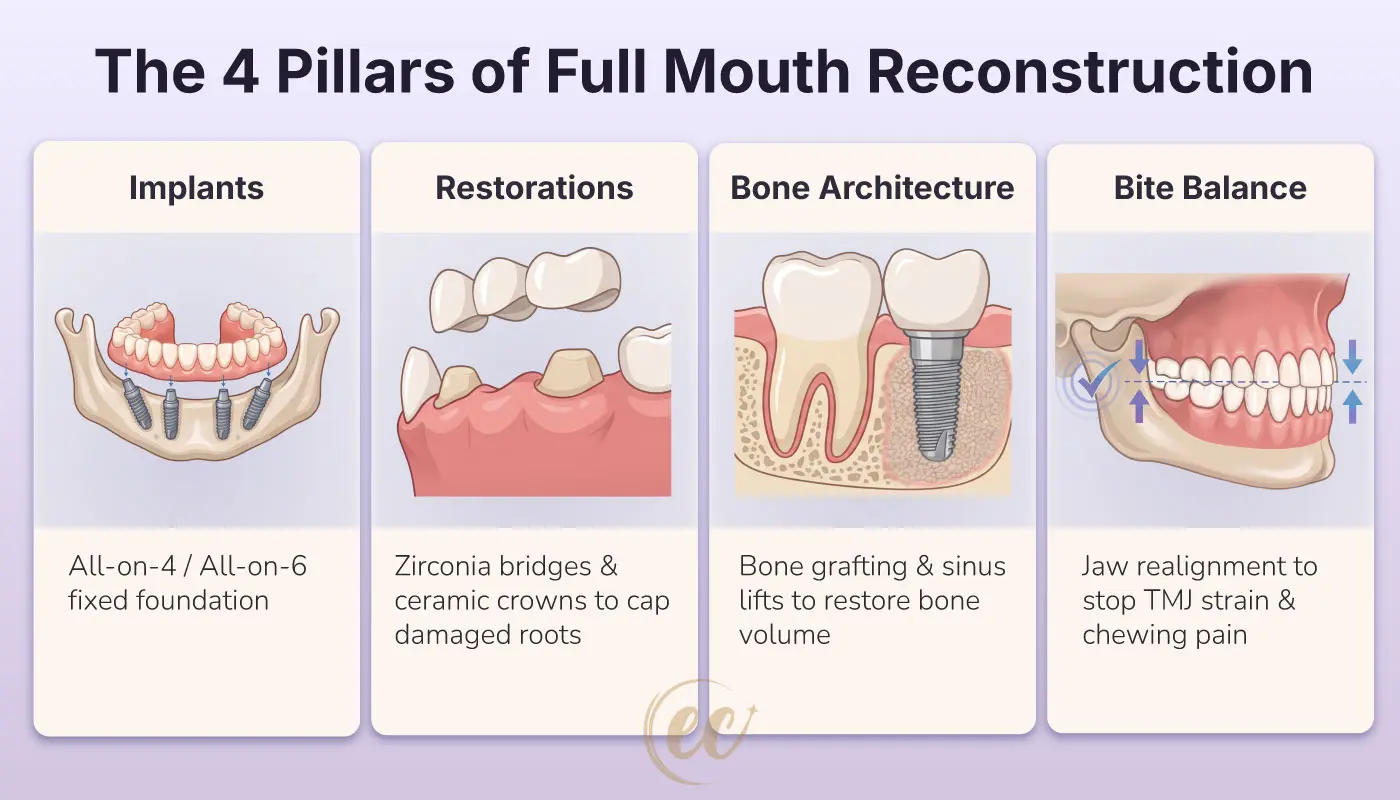
Dental implants (All-on-4 and All-on-6)
When natural teeth are missing or too severely damaged to retain, titanium or zirconia dental implants provide a stable structural foundation for crowns, bridges, or full-arch prostheses. In case of multiple damaged teeth, the All-on-4 or All-on-6 technique places four to six implants at strategic angles to provide a complete fixed bridge of teeth that doesn’t slip or click.
Zygomatic implants
Standard dental implants might not have enough bone volume to support them in certain situations involving severe upper-jaw bone resorption. For these particular anatomical difficulties, zygomatic implants provide a specialized solution.
These longer implants anchor directly into the zygomatic bone (cheekbone), which retains high density and structural stability over time, rather than the maxilla (upper bone). Your surgical team can secure a fixed prosthesis without extensive sinus lifts or bone grafting with this targeted approach.
Bone grafting and sinus lifts
After years of tooth loss or advanced periodontitis, the jawbone naturally resorbs. Bone grafting rebuilds bone volume with natural or synthetic bone mineral to support implants. A sinus lift gently raises the sinus membrane in the upper jaw to create room for the placement of implants. Your 3D imaging results, natural bone anatomy, and overall clinical treatment sequence will determine whether these procedures are necessary and when they should be carried out.
Dental crowns and bridges
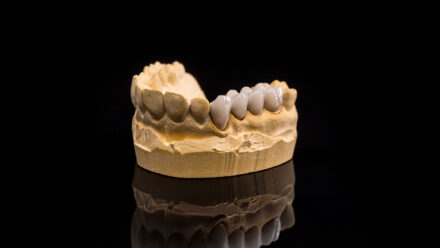
Your dental team uses restorative techniques to preserve any remaining healthy, structurally sound tooth roots. Damaged teeth are treated, shaped, and capped with strong zirconia or porcelain crowns. Fixed dental bridges span the gaps where single teeth are missing. Modern crowns, made from zirconia or porcelain, closely match natural teeth.
Periodontal therapy and bite realignment
Healthy gums provide the critical foundation needed to support long-term restorative work. Your dentist will treat active gum disease with standard methods like deep cleaning and root planing, or laser gum treatments if clinically necessary. Your prosthodontist also recalibrates your bite (occlusion), making sure your upper and lower teeth meet evenly without imposing pressure on your jaw joints.
Full Mouth Reconstruction vs. Smile Makeover
The main distinction between a smile makeover and a full mouth reconstruction is that the former is elective and cosmetic, while the latter is a medical necessity. While reconstruction fixes diseased, missing, or non-functional teeth, a smile makeover modifies the color and shape of otherwise healthy teeth. The following table compares their details:
| Feature / Factor | Full mouth reconstruction | Smile makeover |
| Main purpose | Restore chewing, speech, and oral health | Enhance color, symmetry, and smile aesthetics |
| Who it’s for | Patients with missing, broken, decayed, or worn teeth and bite problems | Patients with healthy teeth who want a whiter, straighter, and more even smile |
| Typical procedures | Implants, All-on-4, bone grafts, crowns, gum treatment | Veneers, whitening, bonding, minor reshaping |
| Jawbone Involvement | Yes, usually requires bone grafts or sinus lifts | Usually not |
| Timeline | 3 to 9 months (staged healing phases) | 1 to 2 weeks (often finished in 2 to 3 visits) |
| Specialists involved | Oral surgeon, periodontist, prosthodontist | Cosmetic dentist |
| Medically necessary | High (treats chronic infection, bone loss, pain) | Low (elective cosmetic improvement) |
How Much Does Full Mouth Reconstruction Cost in Turkey?
Full mouth reconstruction in Turkey costs between $14,000 and $20,000 at Estherian Clinic as an all-inclusive package, depending on how many implants, grafts, and crowns are needed. The same treatment typically costs $60,000 to $90,000 in the United States and £35,000 to £60,000 in the UK.
The gap is not about quality. Turkish clinics work with the same implant brands and the same materials. The reason is lower clinical operating expenses, favorable currency exchange rates, and Turkey’s high-volume medical infrastructure.
| Treatment | United States | United Kingdom | Estherian Clinic (Turkey) |
| All-on-4, one jaw | $15,000 to $35,000 | £10,000 to £16,000 | $3,700 to $8,400 |
| All-on-4, both jaws | $30,000 to $70,000 | £20,000 to £32,000 | $9,000 to $14,000 |
| All-on-6, both jaws | $55,000 to $80,000 | £22,000 to £50,000 | $5,000 to $18,000 |
| Full reconstruction with grafts and zygomatic implants | $60,000 to $90,000+ | £35,000 to £60,000+ | $14,000 to $20,000 |
Estherian’s packages include the surgery, implants and materials, temporary and permanent teeth, 3D scans and evaluation, hotel accommodation, VIP airport transfers, and follow-up care.
Request a free personal consultation for full mouth reconstruction
Don’t hesitate to ask your question!
How to pay for full mouth reconstruction
Because of the high costs of reconstructive dental surgery, international patients use multiple options to manage these costs. In the US and UK, standard dental insurance caps annual benefits at $1,000 to $2,000, which is only a small fraction of the total cost of full mouth reconstruction.
By traveling to Estherian Clinic in Istanbul, patients pay for their entire procedure upfront at a fraction of the domestic price. Many finance their treatment through medical travel financing, personal health loans, or HSA/FSA funds, eliminating the multi-year debt typical of Western private practices.
Want to know exactly what your teeth need? Send your panoramic X-rays or a few clear photos of your teeth to Estherian Clinic on WhatsApp for a complete, customized cost estimate from our oral surgery team.
Step-by-Step Timeline and Recovery Stages of Full Mouth Reconstruction
Full mouth reconstruction takes 3 to 9 months from start to finish. The dental surgery team does the whole procedure in two main phases, which require two trips to Turkey, separated by three to six months of healing.
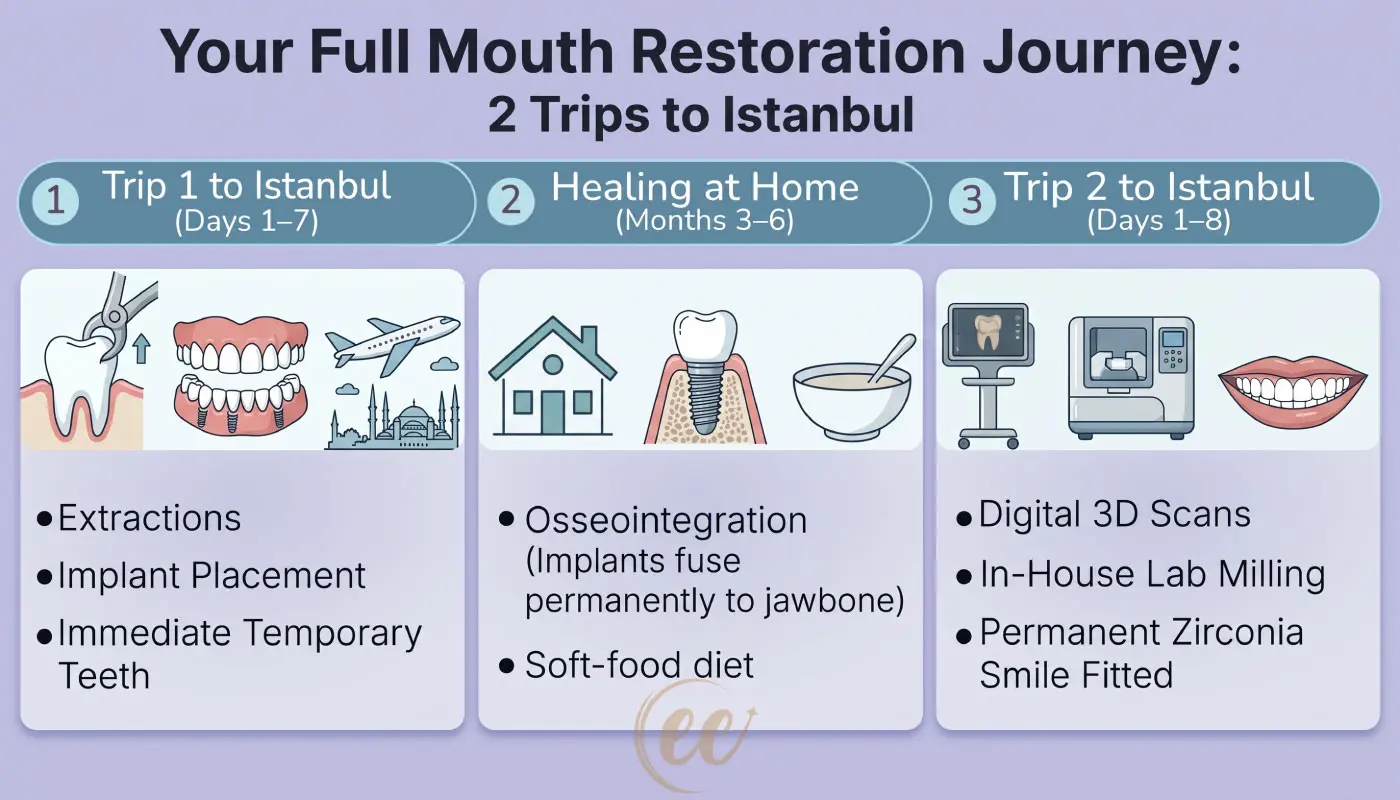
Phase 1: extractions, implants, and temporary teeth (first trip: 7-10 days)
- Day 1 to 2: Consultation, scans, and final planning. Impressions are taken for your temporary teeth.
- Day 3 to 4: Surgery. Any remaining damaged teeth are removed, gum disease is treated, and implants are placed. Bone grafts are done at the same time if needed.
- Day 4 to 7: You receive a custom-fitted set of temporary teeth.
- Day 8 to 10: Final check, and you fly home with your temporary teeth.
The osseointegration healing period (3 to 6 months at home)
You return home for 3 to 6 months while your jawbone naturally fuses to the titanium implant roots through a biological process called osseointegration. If you had major bone grafts, this stage may be longer. During this period, you follow a soft-food diet, and our clinical team monitors your healing through scheduled digital follow-ups.
Phase 2: permanent prosthetics and bite calibration (5 to 7 days in Turkey)
- Day 1 to 2: Your prosthodontist takes high-precision 3D digital impressions of your healed gums.
- Day 3 to 5: Your permanent zirconia or porcelain teeth are made in the clinic’s lab, tried in, and adjusted for fit and bite.
- Day 6 to 7: The permanent teeth are fixed in place. Final adjustments, aftercare instructions, and you go home.
Risks, Complications, and Managing Dental Anxiety After Full Mouth Reconstruction
Standard surgical risks after full mouth reconstruction surgery include infection and implant failure, but less than 3% to 5% of cases result in serious complications. Specialized clinics always follow established guidelines from the American Dental Association (ADA), using digital planning to keep risks to a minimum. However, some potential complications may include:
- Implant Non-Integration: In rare cases, an implant does not fuse properly with the bone. In such a case, the dentist gently removes the implant, lets the area heal, and then places a new implant.
- Temporary Gum Soreness: For three to five days following implant placement, mild swelling and bruising around the gums are common and can be treated with standard painkillers.
- Bite Readjustments: As your jaw muscles adjust to an even bite, minor adjustments to your crowns may be needed to eliminate high spots.
How to manage severe dental anxiety
Dental phobia prevents many patients from visiting a dentist and receiving dental care for decades. At Estherian Clinic, we provide comfortable sedation dentistry options, including twilight intravenous sedation. During the dental surgery, you rest peacefully in a sleep-like state, feeling zero pain and waking up with your procedure already completed.
Are You a Good Candidate for Full Mouth Reconstruction?
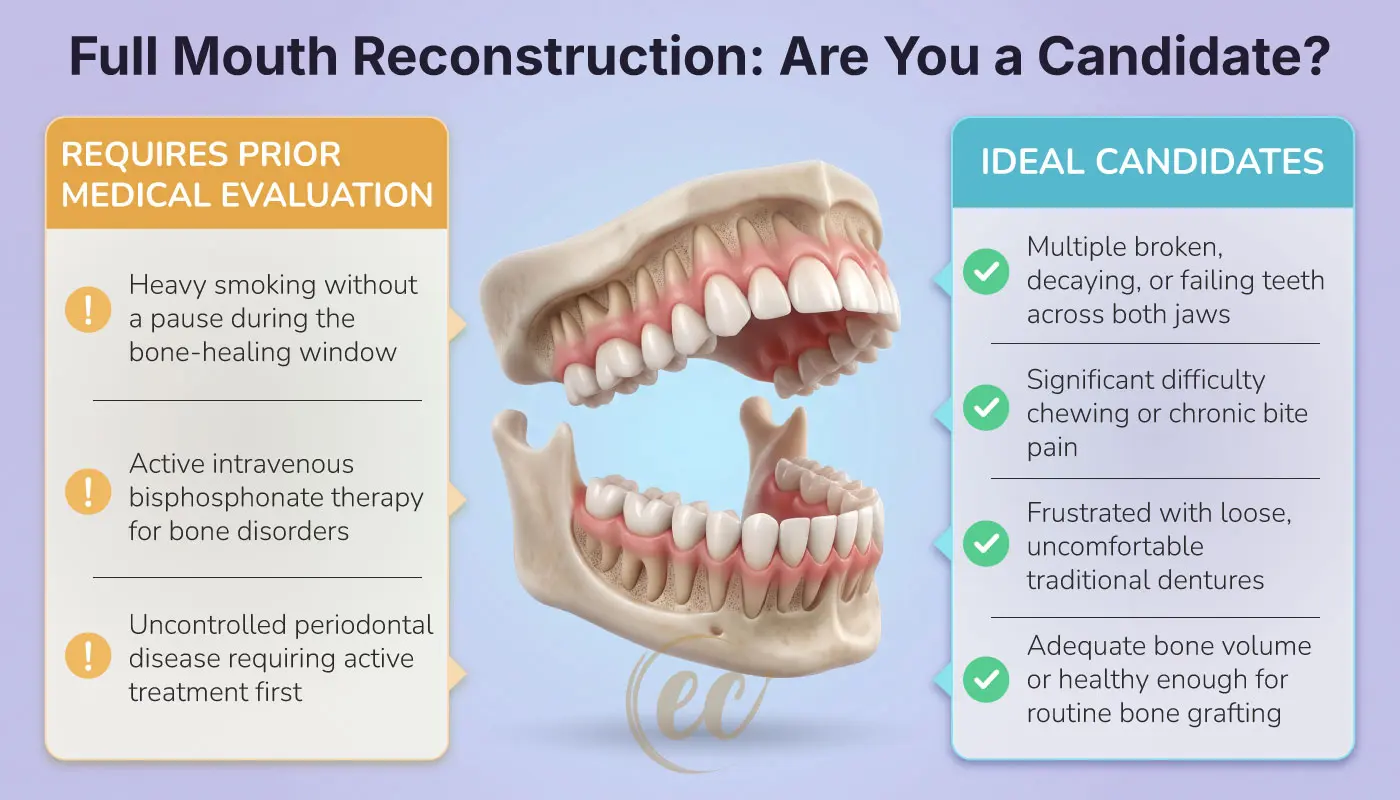
Most adults suffering from extensive tooth decay, broken teeth, or chronic gum issues are proper candidates for full mouth reconstruction, as long as their general health allows surgery. The most important factors for this procedure are your jawbone and your overall health.
You are likely a strong candidate if:
- You have multiple broken, loose, or painful teeth that make eating difficult.
- You are dealing with loose, uncomfortable traditional dentures.
- You have sufficient jawbone density or are healthy enough for routine bone grafting.
- You are in good general health, and any medical conditions like diabetes are well-controlled.
You may need specialized evaluation if:
- You are a heavy smoker who is unable to pause during the bone-healing phase.
- You have bone density problems.
- You have severe, uncontrolled periodontal disease that requires treatment before placing implants.
Why Choose Estherian Clinic for Complex Dental Surgery?
Estherian Clinic combines hospital-grade oral surgery with a digital dental lab, delivering precise dental and oral restorations in Istanbul. We do not rely on standard assembly-line dental work; our oral surgeons, prosthodontists, and master ceramists work together as a professional team.
- 3D volumetric tomography on site. Our team uses a cone-beam CT scan to create a detailed plan, ensure the implants’ placement will be completely accurate, and evaluate any nerve or sinus risks in advance.
- A full specialist team working together. Oral surgeons, periodontists, and prosthodontists plan your case together so the bite, gums, and final teeth work together seamlessly.
- On-site CAD/CAM milling. Our custom zirconia bridges are designed and milled in-house, giving our dental specialists complete control over bite alignment, fit, and appearance.
- All-inclusive two-trip packages. Hotel, VIP transfers, a multilingual patient coordinator, and remote follow-up between phases.
How long does full mouth reconstruction take?
Usually 3 to 9 months in total: a first trip of 7 to 10 days for extractions and implants, a healing period of 3 to 6 months at home, and a second trip of 5 to 7 days for the permanent teeth.
Does full mouth reconstruction hurt?
The surgery is done under sedation or general anesthesia; most patients barely feel pain during the procedure. Afterwards, expect swelling and soreness for a few days, usually managed with ordinary painkillers
How long do the full mouth reconstruction results last?
The biocompatible implant fixture in your jawbone provides long-term structural support with daily oral hygiene and professional checkups. The implant-attached prosthetic crown or bridge wears naturally and needs routine inspection, maintenance, or replacement after 15 to 25 years.
Can I eat normally after full mouth reconstruction?
A soft-food diet protects temporary restorations during the 3-to-6-month healing phase while implants fuse with jawbone. After installing permanent zirconia restorations, eating and chewing function usually improve. Your clinical team will provide personalized dietary guidelines to help you return to eating a variety of foods. Adaptation times vary.
Can I get full mouth reconstruction in one trip?
For most comprehensive restorations, treatment is safely completed across staged visits. Implants need 3 to 6 months to integrate properly before they can withstand definitive restoration chewing forces. Your surgical team places functional, natural-looking temporary teeth during your first visit so you can eat and smile while your implants heal.
Related dental treatments
- Dental Implants in Turkey: a durable and natural-looking solution to missing teeth.
- Veneers in Turkey: highly durable porcelain shells designed to enhance your smile.
- Hollywood Smile in Turkey: the cosmetic alternative for patients whose teeth are healthy.
Get your free 3D dental assessment
Dental pain and missing teeth will affect your nutrition, speech, and your daily quality of life. Contact Estherian Clinic today to evaluate your dental X-rays for an honest, comprehensive evaluation and receive your personalized treatment plan from our oral surgery specialists.