
Medically reviewed by Dr. Hilal Sağlam, Hair Transplant Specialist at Estherian Clinic
Doctors will prescribe some drugs after your hair transplant, but only for about a week. Antibiotics, painkillers, and anti-swelling medication are part of surgical recovery and stop once you’ve healed. Using long-term drugs like Finasteride and Minoxidil is a separate decision. They aren’t necessary to keep your transplanted hair, which is permanent on its own; they protect your native hair around it from getting weak or thin.
Do You Have To Take Medication After Hair Transplant Forever
You do not need to take medication forever after a hair transplant procedure. Short-term post-op medications are necessary to help your scalp heal, but any ongoing hair loss medications, like Finasteride or Minoxidil, are completely optional and used only to protect your natural hair surrounding the new implants.
Many clinics usually mix up a five-day course of antibiotics with a lifelong DHT blocker without any explanation. These are two entirely different categories of medication, and once you see them side by side, the decision gets much simpler. This guide separates the two, explains what each drug actually does, and answers the main question directly: what happens if you take nothing at all?
Essential Short-Term Medications for Your Hair Transplant Recovery
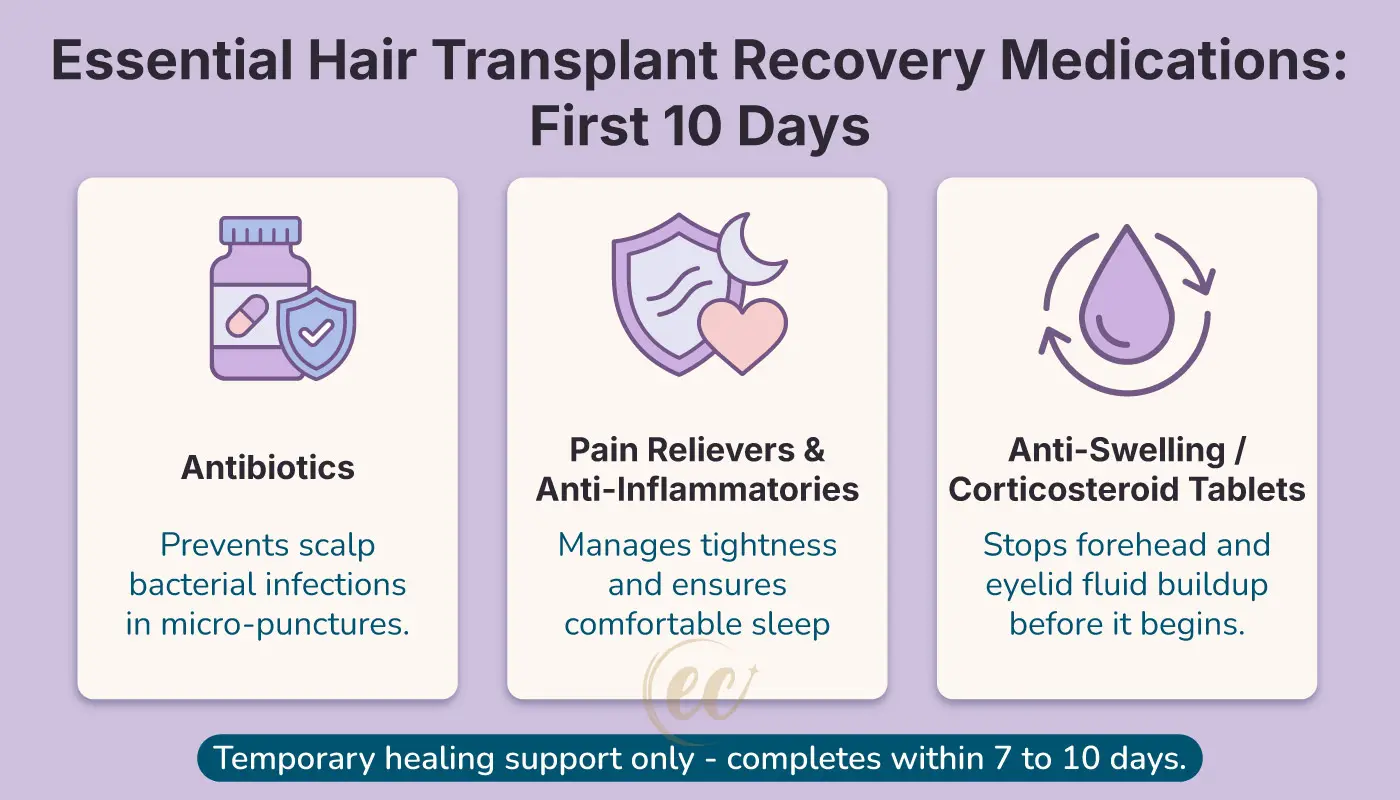
Short-term recovery drugs are the medications every patient takes in the first week after a hair transplant. The primary medications you will take for a hair transplant are:
Antibiotics to prevent infection
A hair transplant creates thousands of tiny incisions across your scalp when harvesting and placing the hair grafts. Each one is a potential entry point for bacteria. A short course of oral antibiotics, typically 3 to 5 days, significantly reduces the risk of infection while the skin closes. This is not optional, and you should finish the full course even if the scalp looks fine.
Painkillers and anti-inflammatories
Modern hair transplant methods are gentle, and patients describe the first two or three days as feeling tightness and tenderness rather than real pain. Simple painkillers such as paracetamol handle it well. Some clinics add a mild anti-inflammatory for the donor area, which is the sorest spot. You should avoid taking Aspirin and ibuprofen in the first days because they thin the blood and can increase bleeding around fresh grafts.
Corticosteroids or anti-swelling tablets
Swelling of the forehead, and sometimes around the eyes, is common between day 2 and day 5. Don’t worry, it is harmless and temporary. A short course of an oral corticosteroid like prednisolone, or a single dose given during surgery, reduces it significantly. Not every clinic prescribes steroids, and not every patient needs them; your surgeon decides based on your specific hairline treatment area.
Long-Term Hair Transplant Drugs: Are They Necessary After Surgery?
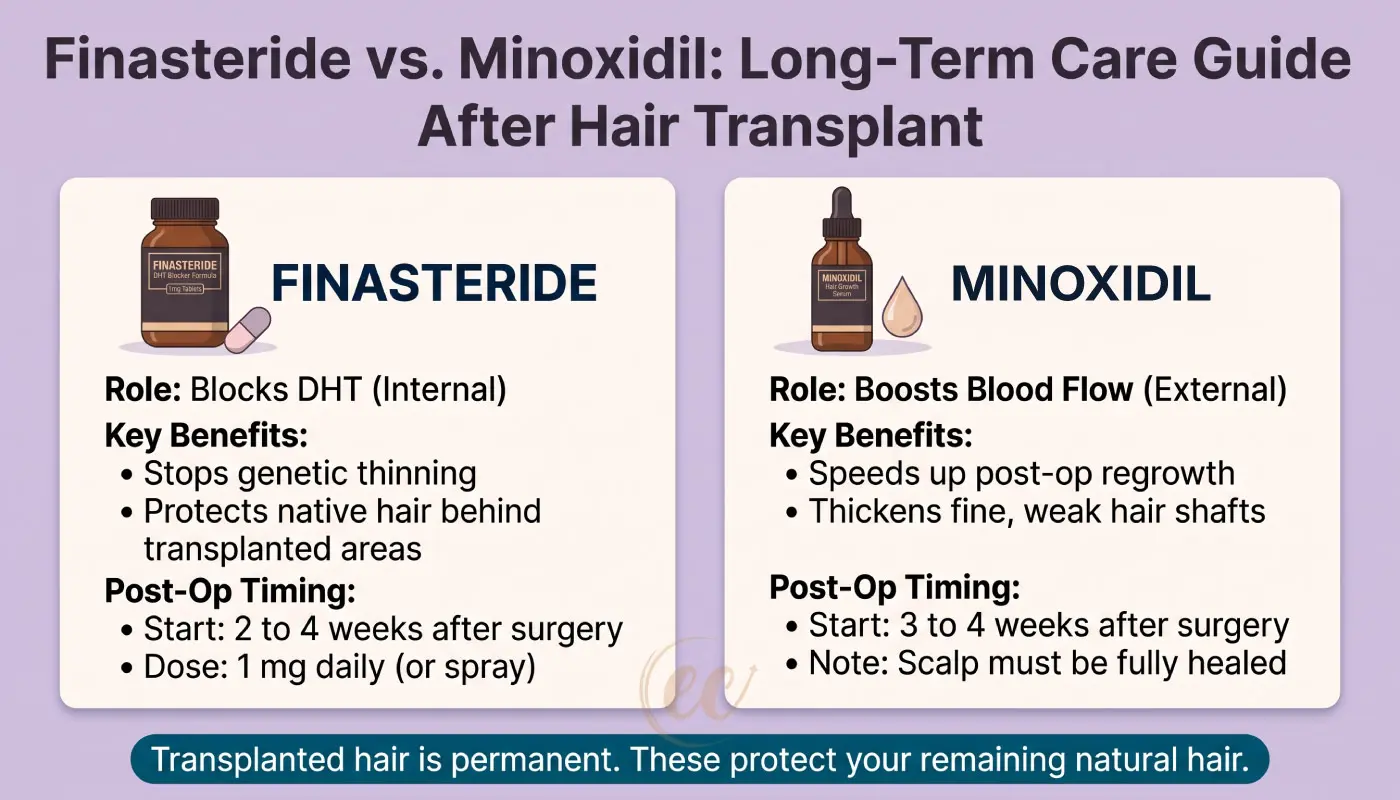
Long-term maintenance drugs are medications that you take for months or years to slow ongoing hair loss. These long-term drugs you may take include:
Finasteride: DHT blocker
Finasteride works by reducing the amount of dihydrotestosterone (DHT) in your body – the hormone that attacks and shrinks vulnerable hair follicles all over your crown and hairline.
- What it does: It stops the existing natural hairs around your new grafts from thinning out.
- How to use: Take it as a simple daily pill (1 mg) or apply it directly to your scalp as a topical gel or spray.
- Is it required? No. Your transplanted hair does not need Finasteride to survive.
Minoxidil: stimulating blood flow
Generally, Minoxidil is often used alongside Finasteride because the two work through different mechanisms. Minoxidil widens blood vessels in the scalp and extends the growth phase of the hair cycle.
- What it does: It helps wake up resting follicles faster, reduce temporary “shock loss” after surgery, and thicken weaker hair shafts.
- How you use it: You can apply it as a daily liquid/foam or take it as a low-dose oral pill.
- Is it required? No. It just increases overall thickness and accelerates initial growth.
What Is the Difference Between Short-Term and Long-Term Hair Transplant Drugs?
| Medication Category | Common Examples | How Long You Take It | Is It Required? | What It Actually Does |
| Healing and Recovery | Antibiotics, painkillers, Prednisone | 5 to 10 days | Yes | Prevents infection and swelling; eases post-op pains |
| Hormone Blocker | Finasteride (Oral or Topical) | Ongoing (months to years) | No (Optional) | Blocks DHT to protect untreated, original hairs from thinning |
| Growth Booster | Minoxidil (Foam, Liquid, or Pill) | Ongoing (months to years) | No (Optional) | Improves scalp circulation to help native hairs grow thicker |
Will Your Transplanted Hair Fall Out Without Drugs?
No. Your transplanted hair will survive without any medication. Your doctor takes the grafts from the back and sides of the head, where follicles are genetically resistant to DHT, and they keep that resistance after they’re moved. Finasteride and Minoxidil are optional. What they protect is the natural hair around the transplant, which is still vulnerable to thinning.
If you decide not to use long-term medication, that’s a legitimate choice, and a good surgeon will plan around it. It means using a more conservative hairline design or reserving donor hair for a possible second procedure. What matters is deciding with full information, not being pushed either way.
Not sure which category applies to you? Send a few photos of your scalp to Estherian Clinic’s medical team on WhatsApp and get a free assessment of whether long-term medication would benefit your case. Message us on WhatsApp.
Free Quality Consult with the Doctor!
Don’t hesitate to ask your question!
What Happens If You Take No Drugs At All?
If you take no medication after a hair transplant, the result depends on which drugs you skip.
Skipping the short-term recovery drugs will result in:
- Infection risk rises sharply in the first 3 to 5 days, when thousands of small wounds across the scalp are still open. This can destroy grafts before they establish a blood supply
- Forehead swelling may be more severe and last longer
- These drugs run for a week at most; surgeons do not consider them optional
Skipping the long-term maintenance drugs will lead to:
- Transplanted hair grows in on the normal timeline; it never depended on medication
- Native hair continues to miniaturize at the same rate as before surgery
- Over 5 to 10 years, the transplanted hairline may stay full while the crown and mid-scalp behind it thin, creating an unbalanced look
Doctors normally recommend taking the recovery drugs, no exceptions. The maintenance drugs are your choice, and declining them means accepting that your native hair will keep doing what it was already doing.
Risks, Side Effects, and Alternatives of Hair Transplant Drugs
Oral Finasteride
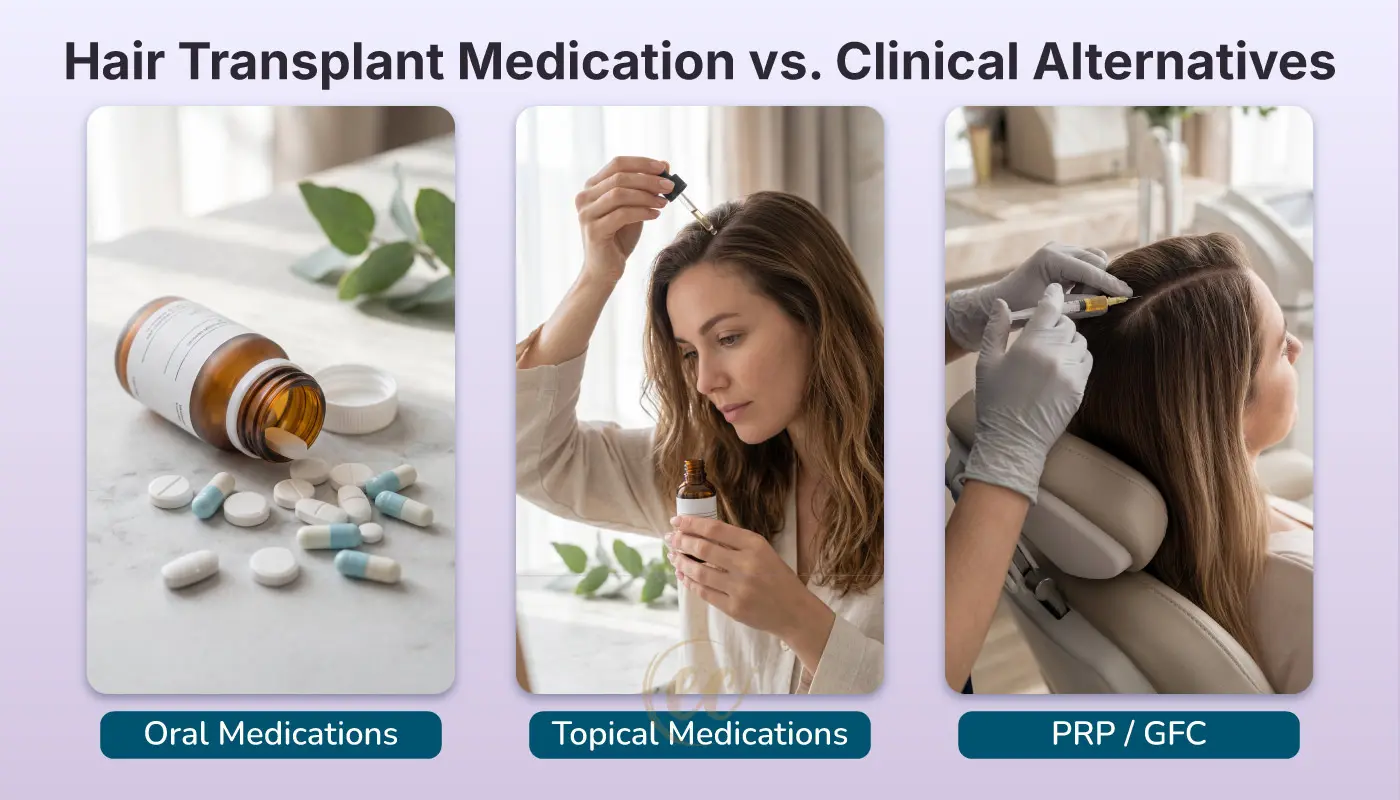
After reading concerning reports online about sexual health, many men hesitate to try oral Finasteride. Data from the American Academy of Dermatology shows that notable side effects occur in only 1% to 2% of users, including decreased libido, mild erectile dysfunction, or slight mood shifts. These symptoms almost always stop completely as soon as you stop taking the pill.
Topical Finasteride
If you want the DHT-blocking benefits of Finasteride without using a daily pill, topical sprays deliver the active ingredient directly to your scalp. Because far less of the drug enters your bloodstream, systemic side effects like lowered sex drive are significantly reduced.
- Risks and Side Effects: Localized scalp irritation, redness, dryness, itching, or contact dermatitis at the application site
PRP therapy: non-drug alternatives
If you want to avoid any pharmaceutical hair loss medications, non-drug options like Platelet-Rich Plasma (PRP) therapy offer natural follicle stimulation without impacting hormone levels.
- Risks and Side Effects: PRP has minor risks associated with blood draws and micro-injections, such as temporary scalp sensitivity, mild bruising, tightness, or slight swelling for 24 to 48 hours.
Minoxidil
Minoxidil doesn’t affect hormones as Finasteride does. However, its topical liquids can cause scalp dryness, redness, or itching, which can often be solved by switching to an alcohol-free foam. Because Minoxidil pushes resting follicles into a rapid growth phase, it causes old, thin hairs to drop out so thicker ones can grow. So, it is normal to notice temporary hair shedding during the first month.
Minoxidil pills go into the bloodstream rather than just sitting on the scalp; they may cause different systemic side effects, including a faster heartbeat, low blood pressure, or seeing thicker hair on the arms, legs, or beard area.
Read more: Hair Transplant Results – 5-Month Recovery Timeline
Estherian Clinic Offers Personalized Aftercare for Hair Transplant
A hair transplant is a one-day procedure, but the result develops over a year. At Estherian Clinic in Istanbul, we do not believe in pushing a one-size-fits-all pill routine on our patients. Every scalp, lifestyle, and medical background is different. We monitor every patient for 12 months after surgery, with check-ins in the first week. We follow up on the shedding phase around months 1 to 2, early growth at month 4, and final density at month 12.
Our doctors review the medication decisions at each stage rather than offering a fixed plan on day one. So a patient who starts without Finasteride can add it later if native thinning appears, and one who has side effects can switch or stop with medical support.
Does Finasteride cause side effects?
In a small minority of men, yes. Sexual side effects are the most reported, but they usually resolve after stopping. Most men take it without any noticeable effect.
Can I use natural supplements instead of Finasteride?
Supplements like saw palmetto, biotin, and pumpkin seed oil are popular, but the evidence for them is weak compared to Finasteride and Minoxidil.
Will my transplanted hair fall out if I stop taking Finasteride?
No. Transplanted hair is DHT-resistant and stays regardless of medication. What you may lose over time is native hair around it.
When should I start Minoxidil after a hair transplant?
Most surgeons recommend waiting 2 to 4 weeks, until the grafts are firmly anchored, before applying topical Minoxidil. Follow your surgeon’s specific timeline.
Do women need to take drugs after a hair transplant?
Finasteride is not prescribed to women of childbearing age. Topical Minoxidil (usually 2 percent, sometimes 5 percent) is the standard maintenance option for women.
What is post-op “shock loss” for hair transplant surgery?
Around 2 to 8 weeks after surgery, your transplanted hair shafts may temporarily shed. This is a normal, healthy part of the follicle life cycle called shock loss. Around month three or four, the living roots start to grow permanent hair while remaining safely beneath your skin.
Related Hair Restoration Treatments
- DHI Hair Transplant in Turkey: This is a direct hair implantation method that places grafts without pre-made incisions.
- PRP Hair Treatment: This is a drug-free option for supporting native hair, used alone or alongside a transplant.
- FUE Hair Transplant: This minimally invasive technique uses a tiny punch tool to transfer individual hair follicles from a donor area to balding or thinning areas.
Wondering What Your Hair Restoration Plan Looks Like?
Whether long-term medication is right for you depends on your age, your pattern of hair loss, and your medical history. Book a free virtual consultation with Estherian Clinic‘s hair transplant team to review your case and get a clear plan, including which drugs you’d need and which you wouldn’t.