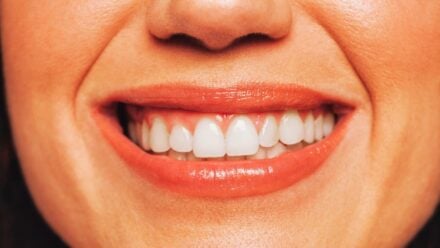


Clean, pearly white teeth are much more than simply “aesthetically pleasing”: They are also a representation of good health and oral hygiene. Unfortunately, many foods can stain your bright smile and decrease its sparkle. While stains are a common occurrence, most people struggle to understand exactly how they are formed and how to avoid stained teeth. Understanding how certain foods are responsible for teeth discoloration is the first step to finding an answer to this common question.
🦷 Tooth Stains and Their Types
A tooth stain is a yellow, brown, gray, or black discoloration of the tooth surface that occurs due to certain pigments contained in foods, drinks, and medications, such as coffee, tea, candy, etc. There are several types of teeth stains, and knowing the exact type helps in narrowing down the underlying cause of the discoloration. Common teeth stains are classified as:
Intrinsic Stains
These stains occur due to changes on the inside of the teeth, typically the dentin. Common culprits include medications (Tetracyclines in early childhood), age-related changes, trauma, infection, etc. Due to the nature of these stains, it is very difficult to remove them, and there may be a need for specialized cosmetic dentistry interventions like dental veneers or professional teeth whitening sessions.
Extrinsic Stains
Extrinsic stains are the most common type and occur due to damage to the outside enamel of the teeth. This common cause of dirty teeth occurs due to irritating foods, drinks, smoking, chewing tobacco, and poor oral hygiene standards.
Stains Due to Aging Changes
Aging changes of the teeth lead to both intrinsic and extrinsic stains. Prolonged exposure to staining foods and drinks, combined with thinning enamel that allows the underlying dark dentin to peek through, leads to age-related dental staining.
Stains Related to Plaque/Tartar
Plaque and tartar have the tendency to trap stains and hinder their removal through conventional oral hygiene methods like brushing. Such stains can only be removed through cleaning at a dental office/practice.

☕ Common Foods That Stain Teeth
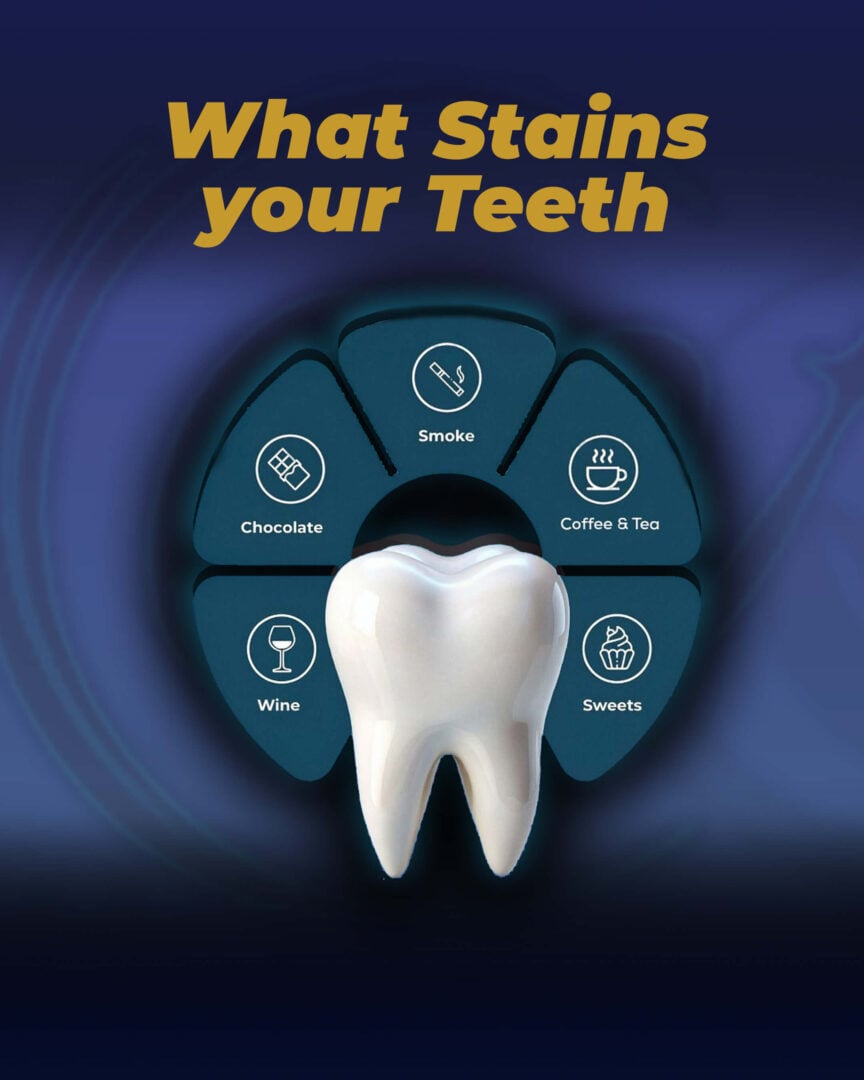
Some common culprits of teeth staining in our daily diet are as follows:
Tea and Coffee
The internet is filled with queries such as”Does coffee stain your teeth?” or “Does tea stain your teeth?” The answer to both is a resounding “Yes”. Tea and coffee are acidic beverages, so consuming them regularly can increase enamel roughness. Apart from that, both of them contain pro-staining compounds like tannins, which stick to the microscopic rough contours of the enamel and lead to extrinsic stains.
Cola and Carbonated Beverages
Colas and carbonated drinks attack teeth on three fronts. The acidic compounds erode the enamel over time, coloring agents (especially in dark-colored drinks) stick to the rough enamel, and the high sugar content helps sustain harmful oral bacteria.
Wine/Alcohol
Wine (red or white) can stain teeth due to acidic damage to the enamel. This, in turn, allows pigments and irritants such as anthocyanins and tannins to stick to the surface and produce unsightly stains.
Energy Drinks
Energy drinks are highly acidic, contain artificial pigments/dyes, and their high sugar content promotes oral bacterial growth. All of these factors together lead to extrinsic stains with prolonged dental exposure.
Candy
Candies are high in sugar content and artificial pigments. Moreover, the natural texture of most candies allows them to stick to the dental surface, thus prolonging exposure.
Berries
Various berries have strong natural pigments, and their juices are very acidic. As the acid wears down the tooth enamel to expose the dark dentin inside, the natural pigments stick to the roughened enamel to produce stains.
Balsamic Vinegar
As far as foods that stain teeth go, Balsamic vinegar is one of the most acidic (pH 2.5 to 3.5). It not only weakens the enamel to its own dark pigments, but it also makes it susceptible to pigmented compounds in other foods and drinks.
Turmeric
Turmeric contains a very concentrated pigment called curcumin. Dental staining is common with frequent and prolonged exposure, especially when the enamel is already damaged.

✨ How to Fix Stained Teeth? Is there a Professional Treatment for it?
While early stains are reversible with a good, sustainable, and consistent oral hygiene routine, intrinsic or deeply embedded extrinsic stains are not easy to remove. This is where professional teeth cleaning and whitening sessions come in:
What is Dental Whitening?
When a certified and trained dental professional performs a cosmetic procedure to lighten the color of one’s teeth, it is known as a dental whitening treatment. Compared to OTC dental whitening kits, this process uses stronger and more effective bleaching agents under the oversight of a licensed dentist.
Steps of Professional Dental Whitening
Common steps of an in-office dental whitening procedure include:
- Thorough dental consultation and examination to rule out other issues
- Professional cleaning to remove accumulated plaque and tartar
- Applying a protective barrier to the gums and a retractor to hold the cheeks and lips away
- Performing the whitening treatment (Bleaching agent/Lasers)
- Removal of the whitening agent and a thorough rinse of the oral cavity and teeth
- Remineralization to reduce any sensitivity
A whitening treatment, even one that is professionally done, requires maintenance for longevity. Moreover, post-treatment instructions usually include avoiding exposure to staining foods and using toothpastes that address sensitivity issues.
Contact us for a consultation!