
Medically reviewed by Dr. Veli Polat, Bariatric Surgeon at Estherian Clinic.
A gastric sleeve reset after 10 years won’t make your stomach the same size it was before surgery, but it may help you get back on track with portion sizes and healthier eating habits.
Weight regain is not uncommon over time and can happen for several reasons, including changes in stomach capacity and eating patterns. A structured 5-to-10-day reset diet may help you rebuild a consistent routine, but if you’ve regained significant weight, you may need additional support from a dietitian, weight-loss medication, or a revision procedure.
In this guide, we’ll look at why weight regain happens, what a reset can actually do, and what options you have if changing your diet isn’t enough.
Is Gastric Sleeve Right for You?
Don’t hesitate to ask your question!
What Happens 10 Years After Gastric Sleeve?
Most weight loss after gastric sleeve surgery occurs during the first one to two years, when patients typically reach their lowest body weight. During this period, patients may lose around 25–30% of their total body weight, equivalent to approximately 30–36 kg for someone weighing 120 kg before surgery. However, weight loss does not always remain constant, and some patients gradually regain weight over time. Despite this, long-term results are generally encouraging. A review of 11 studies involving 1,020 patients found that patients maintained an average total weight loss of 24.4% even 10 years after gastric sleeve surgery.
Nevertheless, weight regain is not uncommon. The same review reported that approximately 28% of patients experienced weight regain after seven or 10 years, while around 20% underwent revisional surgery, although not all these procedures were due to weight regain.
Similarly, a 13-year study from Kuwait reported weight regain rates ranging from 31% to 61% between 6 and 10 years after surgery. Overall, gastric sleeve surgery can provide substantial, lasting weight loss, although some patients gradually regain weight over the years and may need to follow a gastric sleeve reset after 10 years or more.
Can You Reset a Gastric Sleeve After 5 to 10 Years?
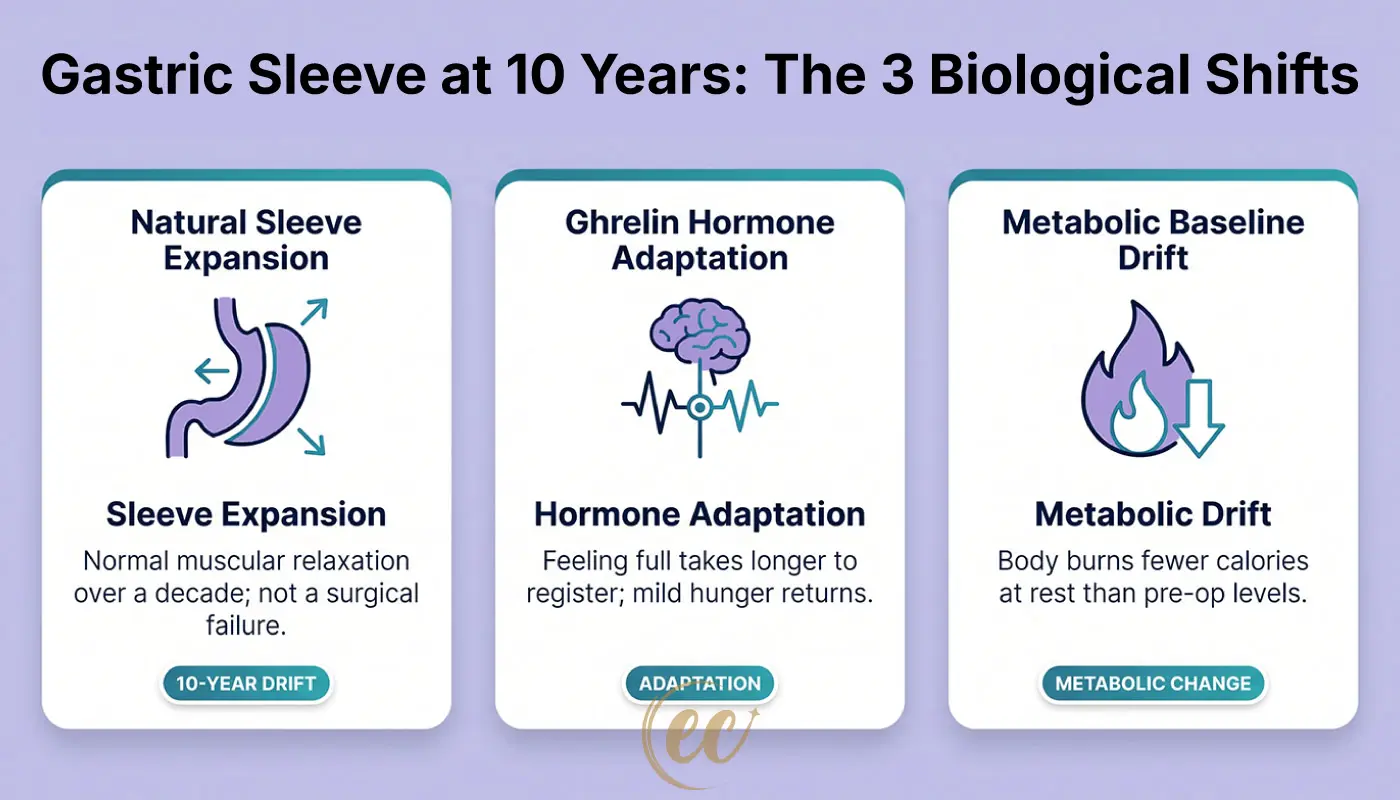
Yes. By gastric sleeve reset, we mean improving your eating habits, managing portion sizes, and returning to a balanced diet after surgery. But why might you need this several years after the procedure? Well, a gastric sleeve is one of the obesity surgeries that limits how much you can eat at one time and helps you feel full sooner. However, over time, the remaining stomach may gradually expand, while changes in eating habits can make it easier to consume larger portions and regain weight.
The good news is that you can work on these changes without another operation and regain control of your eating habits and portion sizes. A non-surgical gastric sleeve reset typically involves returning to structured meals, choosing nutrient-rich foods, eating appropriate portions, and reducing frequent snacking or overeating.
If you have experienced significant weight regain, a bariatric specialist or dietitian can help identify the underlying causes and determine whether lifestyle changes or additional medical treatment may be appropriate.
Gastric Sleeve Reset After 10 Years: Quick Reality Check
Ten years after gastric sleeve surgery, patients may experience some weight regain, increased stomach capacity, acid reflux, or nutritional deficiencies. However, many maintain substantial weight loss, and treatment options are available if complications or significant weight regain occur.
| Parameter / Milestone | What to Expect 10+ Years Post-Op | Clinical Context / Cause |
| Average Long-Term Weight Regain | 10% – 25% of lost excess weight | Natural muscular expansion and habit drift |
| Typical Stomach Capacity | 1.5 to 2 cups of food per meal | Up from 1/4 to 1/2 cup in year one |
| Pouch Reset Feasibility | Highly effective for behavioral reset | Re-establishes satiety; does not alter anatomy |
| Most Common Late Issue | Acid reflux (GERD) or nutrient dips | Weakened lower esophageal barrier, vitamin B12 drops |
| Surgical Revision Options | Bypass conversion or Endoscopic tightening | Performed if dilation exceeds 350–400 mL |
Why Do Some People Gain Weight After a Gastric Sleeve?
Weight regain 10 years after gastric sleeve is a documented biological and behavioral reality, not a personal failure. Your body constantly strives to maintain its highest weight set-point because obesity is a chronic, relapsing condition. Over the course of ten years, several physiological changes occur:
- Natural Gastric Relaxation: At first, your sleeve was swollen and stiff, holding only 60 to 90 mL. Regular muscle use increases its resting capacity to 250–350 mL (about 1 to 1.5 cups) over a ten-year period.
- Return of Ghrelin: Following surgery, after the surgeon removes the stomach fundus, there will be a sharp decline in the hunger hormone ghrelin. Over time, other digestive tissues adjust and start generating ghrelin once more, progressively increasing hunger.
- Liquid Calories: High-calorie, soft foods (ice cream and sweetened beverages) move easily through the stomach without triggering fullness sensors, adding uncounted daily calories.
- Metabolic Adaptation: Your basal metabolic rate (BMR) decreases as your body becomes smaller, which means you burn fewer calories at rest than you did before surgery.
How to Do a Bariatric Pouch Reset Diet?
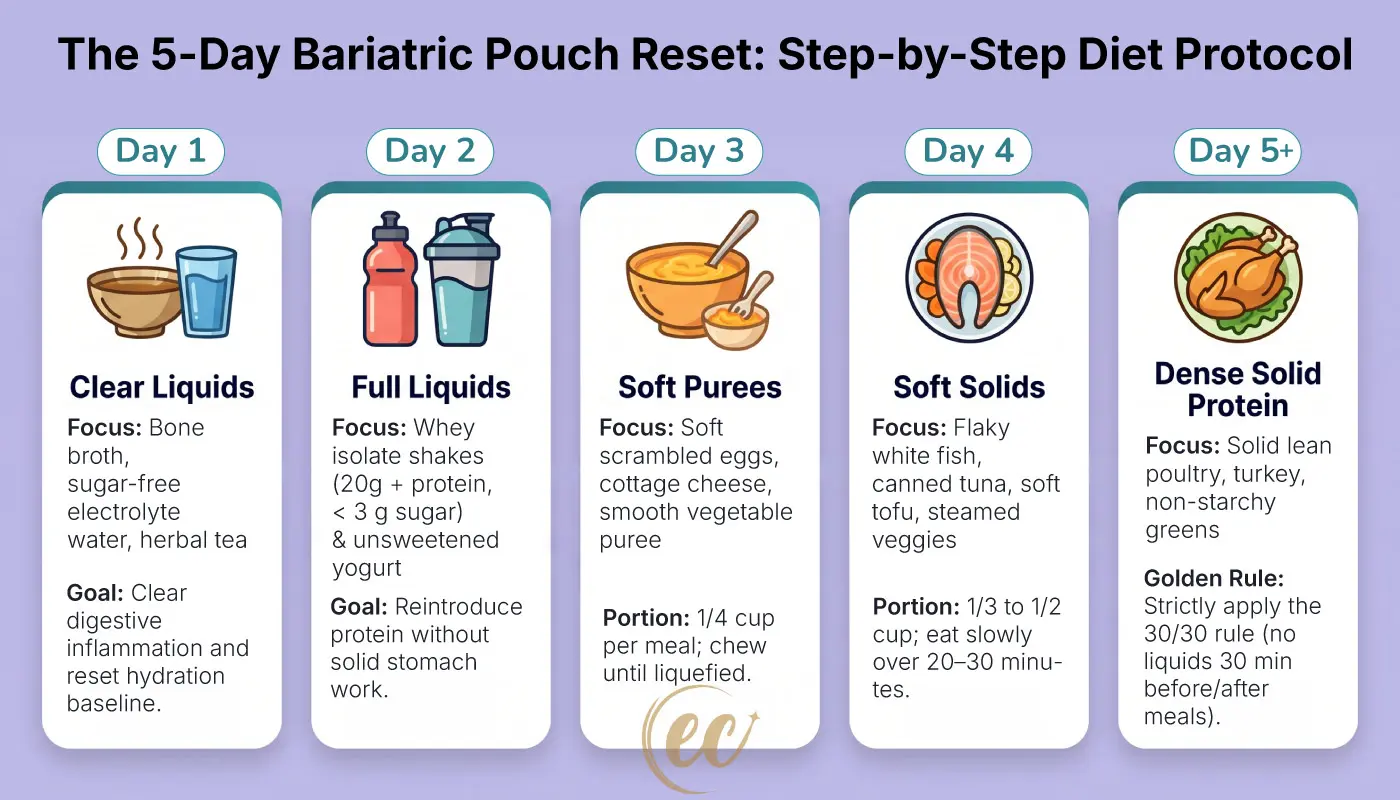
The 5-day pouch reset diet is a short, structured eating plan that some bariatric clinics suggest as part of a gastric sleeve reset after 10 years. It progresses from clear liquids to protein-rich solid foods, helping reduce constant snacking and rebuild awareness of natural hunger and fullness cues.
The 5-Day Pouch Reset Diet Breakdown
- Day 1: Clear Liquids Only: Drink bone broth, decaffeinated tea, and electrolyte water during the day. This empties the stomach completely, reduces gut inflammation, and supports baseline hydration.
- Day 2: Thick Liquids and Protein: Add high-grade whey protein isolate shakes (20g+ protein per serving with under 3g sugar) and smooth, unsweetened yogurt.
- Day 3: Soft Purees: Eat small 1/4-cup portions of soft scrambled eggs, fat-free cottage cheese, or smooth pureed vegetable soups. Chew each bite until completely dissolved.
- Day 4: Tender Solids: Include a tender flaky fish, moist canned tuna, soft tofu, and thoroughly steamed vegetables.
- Day 5 and After: Solid Dense Protein: You can add palm-sized meals of dense lean meats (chicken breast, turkey, white fish) paired with non-starchy vegetables.
The golden rule is to always follow the 30/30 rule. Never drink liquids 30 minutes before eating, during meals, or for 30 minutes afterward, because fluid washes dense food through the sleeve too fast.
What to Do When a Gastric Sleeve Reset Fails: Revision Options in Turkey
If a 5-day pouch reset fails to control your hunger or stop weight regain, your sleeve may have dilated, making you a candidate for bariatric revision. Modern revision treatments can adjust your bariatric anatomy to restore tight restriction and metabolic control. The following table shows you the three revision options and their benefits.
| Revision Procedure | Technique Style | Primary Benefit | Average Stay in Turkey |
| Gastric Sleeve to Bypass (RNY) | Laparoscopic Conversion | Resolves severe GERD & adds intestinal malabsorption | 4 to 5 Days |
Endoscopic Sleeve Revision (ROSE) | Non-Surgical (Through Mouth) | Stitches the dilated stomach tube tighter from inside | 2 to 3 Days |
Re-Sleeve Gastrectomy | Laparoscopic Trimming | Re-excises redundant, stretched stomach tissue | 3 to 4 Days |
At Estherian Clinic in Istanbul, our bariatric surgery board measures your exact sleeve volume before recommending a revision. This will ensure that you receive the least invasive, most effective solution for your anatomy. Contact our professional team to receive the best advice for the next step.
How Much Can You Realistically Eat 2 to 10 Years After Gastric Sleeve Surgery?
A healthy gastric sleeve can normally hold 1 to 1.5 cups (8 to 12 ounces) of solid food per meal for two to ten years following surgery. If you eat more than 2 full cups of solid food at a single meal without feeling discomfort, your sleeve may have stretched beyond its intended size.
In the first year, your stomach can hold only 2 to 4 ounces, or a quarter to a half cup. That volume increases to about 6 to 8 ounces by year two.
It is perfectly normal and expected to eat a typical small plate with 30% fibrous vegetables and 70% dense protein. Problems start when meals expand into large restaurant portions or when continuous snacking replaces structured healthy meals.
Can a Gastric Sleeve Cause Complications Later in Life?
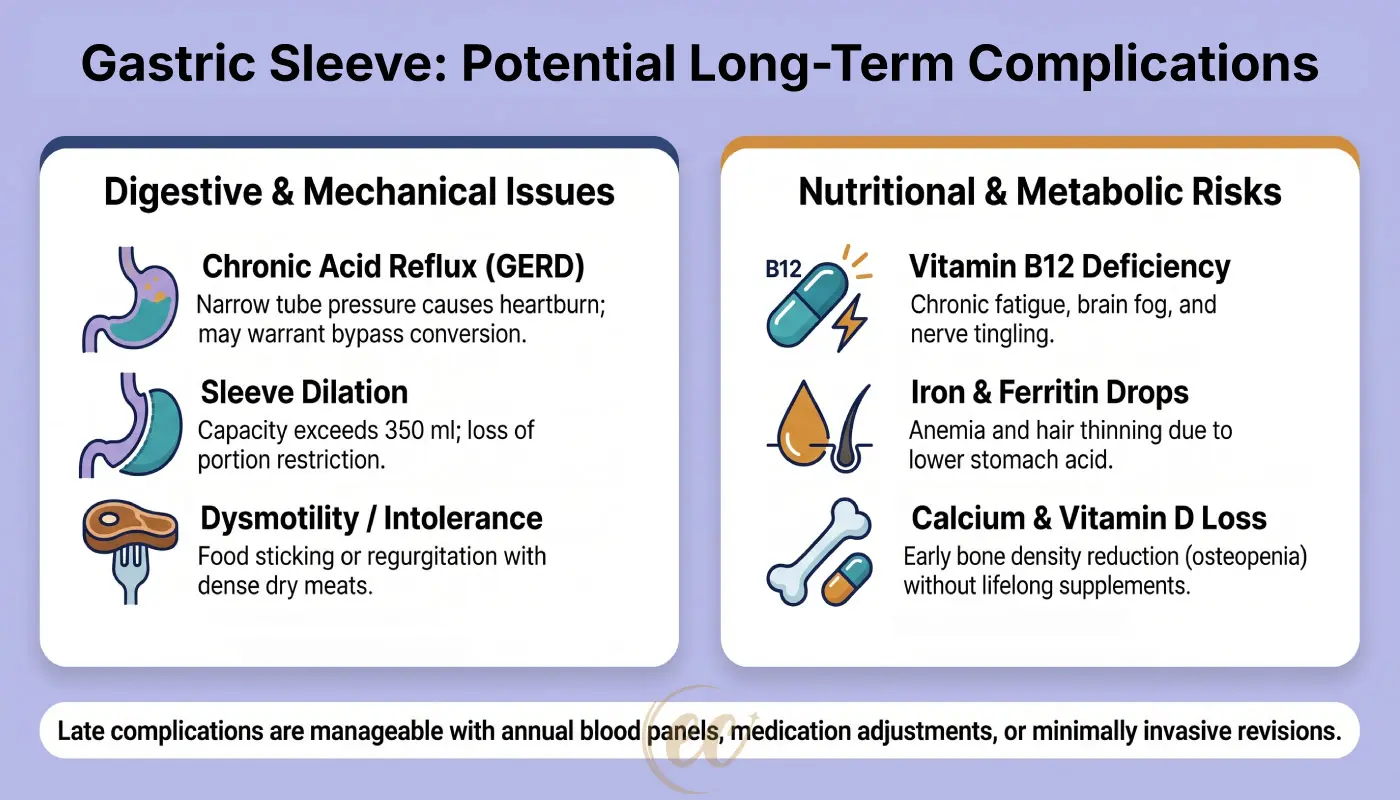
Yes, a gastric sleeve can lead to long-term health complications 10 to 15 years later. The most prevalent problems are chronic acid reflux and micronutrient deficiencies. Even though life-threatening late emergencies are uncommon, it is crucial to be under constant observation.
1. Chronic Acid Reflux (GERD)
The gastric sleeve changes the stomach into a high-pressure, narrow tube. Over time, stomach acid can push back upward into the esophagus, and you may experience heartburn and nighttime coughing. The best medical solution is to convert the sleeve to a Roux-en-Y gastric bypass if prescription drugs are unable to control acid.
2. Micronutrient Deficiencies
Unlike gastric bypass, a sleeve preserves the intestines, but the loss of intrinsic factor and stomach acid reduces the absorption rate of vital nutrients. Patients often experience deficiencies in the following areas without lifelong supplementation:
- Vitamin B12: Causing chronic fatigue, brain fog, and nerve tingling.
- Ferritin and Iron: Leading to microcytic anemia and thinning hair.
- Vitamin D and Calcium: Causing early bone density loss (osteopenia).
3. Food Intolerances and Dysmotility
After 10 to 15 years of having a gastric sleeve, some patients develop chronic sensitivities to dry red meat, reheated poultry, or bread. Eating too quickly or not chewing food completely can lead to sudden abdominal pressure or contractions.
What They Don’t Tell You About Gastric Sleeve
According to the American Society of Metabolic and Bariatric Surgery, patients’ lives undergo significant changes after bariatric surgery. Patients who have had sleeve surgery more than ten years ago usually say the same things when asked what they wish they’d known:
- Hunger comes back. Not on day one, but for most people it happens by year three or four.
- The sleeve stretches a little. Not so much, but enough to make a difference.
- Supplements are for life, and blood tests once a year are not optional.
- Reflux is common and sometimes gets worse over time.
- Alcohol affects you differently and can become a problem with weight gain after gastric sleeve.
- Loose skin is real, and the sleeve doesn’t fix it; that’s a separate procedure.
- Your stomach may have changed, but that doesn’t mean your relationship with food has changed. That part is where many people need help to manage.
- The first two years are the easiest. You will need to put forth your best effort over the next twenty years to avoid a gastric sleeve reset.
These facts do not suggest that having the sleeve surgery is a bad idea. For the majority of patients, it continues to be the best treatment available for severe obesity. It just says that the gastric sleeve is a tool, and tools require regular care.
FAQs
Let’s find answers to the most frequently asked questions about gastric sleeve after 10 years.
1. Is it normal to gain weight 5 years after gastric sleeve?
Yes. Medical studies indicate that the average bariatric patient regains between 5% and 15% of their lost weight by year five. For optimal clinical outcomes, you should follow a routine exercise and high-protein diet.
2. Can a gastric sleeve be redone after 10 years?
Yes. A procedure called a “Re-Sleeve” involves laparoscopically trimming away the stretched excess stomach tissue to restore the original slim tube.
3. What are the warning signs that my gastric sleeve has stretched?
Key signs include losing the sense of fullness after eating standard portions, being able to eat more than 2 full cups of dense solids at once without discomfort, and experiencing steady, unexplained weight regain over several months after gastric sleeve.
How long do I need to take supplements after gastric sleeve surgery?
Supplementation is often a long-term commitment, but the exact duration and types of supplements depend on your nutritional status, blood test results, and individual needs. You will need to take a bariatric multivitamin, B12, calcium with vitamin D, and iron if your levels are low. Annual blood tests will tell your doctor what to adjust.
5. How often should I see a doctor 10 years after gastric sleeve?
At least once a year, with blood tests. See your doctor more often if you have reflux symptoms, regain weight after gastric sleeve, or develop any new problems.
6. How much does gastric sleeve revision cost in Turkey?
At Estherian Clinic, bariatric revision surgery packages typically range from $3,500 to $6,000. These comprehensive packages include hospital admission, pre-op diagnostic endoscopy, surgeon fees, and VIP airport transfers.
Will weight loss medication work after a sleeve?
Yes. In many cases, medication may be an effective option for managing weight regain after bariatric surgery, particularly for patients experiencing increased hunger or looking for a gastric sleeve reset after several years. However, a qualified medical professional should prescribe and monitor any medication to ensure it is safe for the patient.
Related Reading
- Gastric Sleeve in Turkey: the full overview of the procedure, candidacy, and current costs
- Obesity Surgery Turkey: An effective solution for individuals struggling with severe obesity
- Gastric Botox: Should you do this as an FDA-approved procedure?
Get a Straight Answer About Your Gastric Sleeve Surgery
If you’re looking for a gastric sleeve reset after 10 years, you’re not alone. Weight regain and changes in eating habits can happen over time, but ignoring them or turning to restrictive diets isn’t the answer. Book a free consultation with Estherian Clinic’s bariatric team. We’ll assess your medical history, current symptoms, and sleeve results to help you understand whether a lifestyle program, medication, or revision surgery is the right next step.