

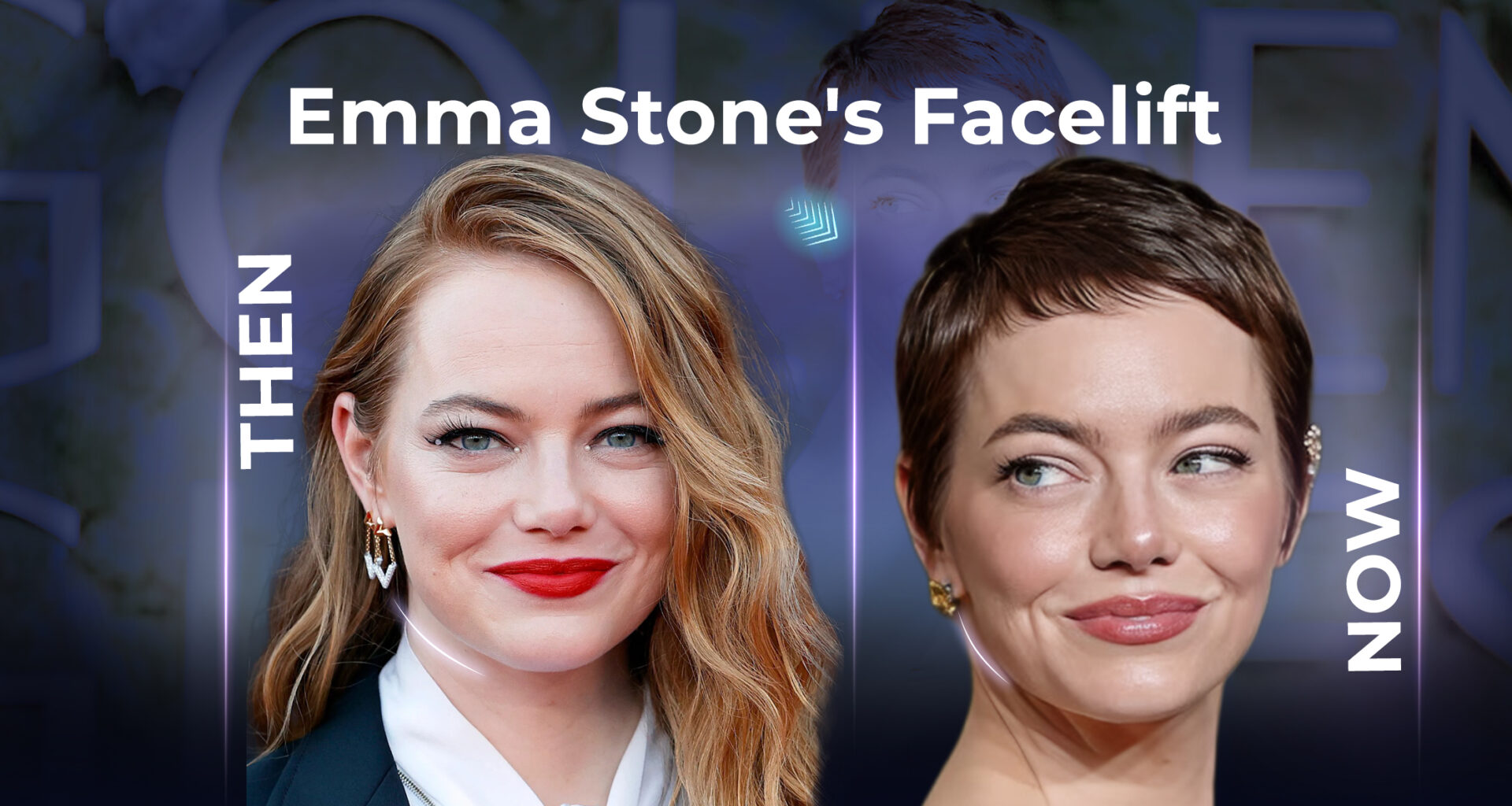
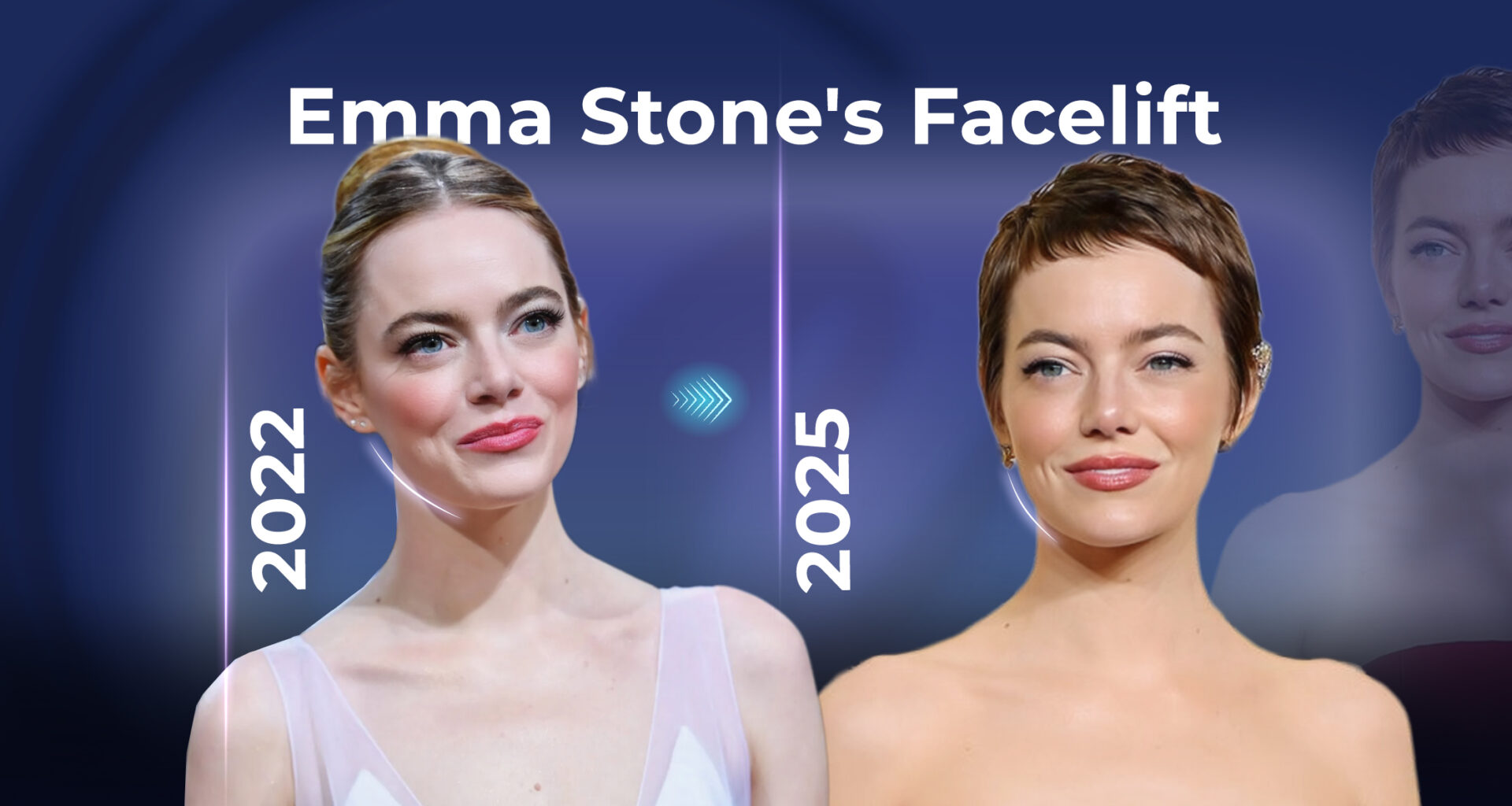
When Oscar-winning actress Emma Stone stepped onto recent red carpets, many fans started asking questions about an Emma Stone facelift and wondered what has changed in her face. While hairstyle shifts and subtle makeup changes usually cause temporary transformations, significant facial changes in her eye area, brow elevation, and midface structure have sparked widespread discussion regarding an Emma Stone facelift and facial rejuvenation. To understand Emma Stone’s face changes, we need to move beyond casual speculation or Hollywood rumors and analyze her facial evolution through a clinical lens. Comparing earlier photographs with recent public appearances helps explain how specific cosmetic procedures address distinct facial structures. So, let’s dig in!
Looking for an Emma Stone Facelift?
Don’t hesitate to ask your question!
Emma Stone’s Face Changes: What Do Doctors Actually Notice?
A medical analysis of Emma Stone’s facial photographs focuses on structural features rather than surface-level styling.
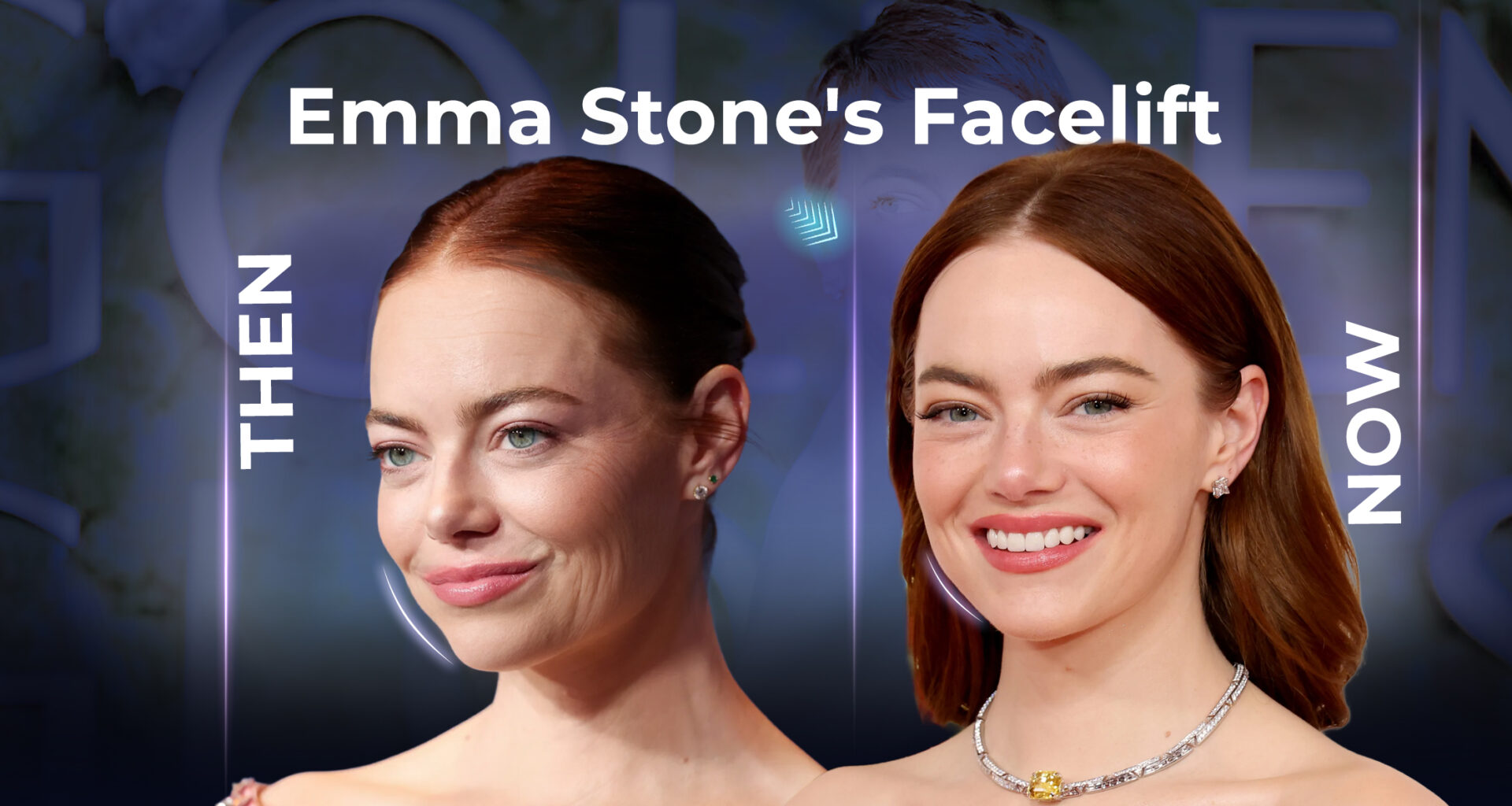
In early photographs, Stone had a classic youthful appearance characterized by naturally soft upper eyelid hooding, rounded midface contouring, and a flexible, dynamic brow line.
In recent appearances, her face shows several subtle yet distinct anatomical shifts including:
- Increased Upper Eyelid Visibility: Less heavy tissue hovering over the lash line
- Elevated Temporal Brow Position: A subtle upward vector at the tail of her eyebrow
- Refined Eye Axis: A slightly lifted outer corner of the eye
- Enhanced Midface Continuity: A seamless transition from the lower eyelid to the cheek area
- Sharpened Lower Jawline Definition: A smooth, continuous line along the jaw without soft tissue sagging
To evaluate these shifts, we need to assess specific anatomical zones, such as the eyes, eyelids, brows, etc., to understand which medical techniques can lead to these exact outcomes.
Emma Stone’s Eyes and Upper Eyelids
The eye region is one of the most noticeable areas of change when reviewing Emma Stone’s previous and recent photos. Here are her most visible changes in the eye area.
Elevated Brow and Reduced Upper Eyelid Hooding
Her heavy skin has become a smooth brow arc. Also, her hooded eyelid has become a rejuvenated upper lid.
The soft-tissue weight at the lateral (outer) aspect of her upper eyelids appears reduced, creating an open, well-rested appearance without altering her fundamental eye shape.
Increased Tarsal Platform Show
Emma Stone’s upper eyelids used to have mild congenital dermatochalasis (natural tissue hooding), where a fold of skin rested close to her upper lash line, obscuring the tarsal platform (the visible portion of the eyelid when the eye is open).
In some recent photographs, her upper lid crease appears higher, more defined, and more visible, showing a wider tarsal platform.
Outer-Eye Angle (Lateral Canthus)
The lateral canthal angle, where the upper and lower eyelids meet at the outer corner, displays a subtly higher tilt relative to the inner corner of the eye (canthus).
Medical Procedures That Explain These Changes
- Upper Blepharoplasty: An upper eyelid surgery in which a surgeon precisely removes redundant skin, underlying muscle, and localized fat through an incision hidden in the natural eyelid crease. This restores upper eyelid definition and widens the tarsal platform.
- Canthopexy or Canthoplasty: Minor surgical procedures that tighten or reposition the lateral canthal tendon, which supports the outer corner of the eye and provides a subtle upward vector to the opening between the eyelids.
Changes in Emma Stone’s Brows
The position and arch of Emma Stone’s eyebrow directly show how light hits her upper face and heavily influences the upper eyelid.
Higher and Lifted Lateral Brow Position
In early photographs, Stone’s eyebrow arch was relatively flat directly along the superior orbital rim or brow bone.
Her recent appearances show subtle elevation, especially along the tail of the brow, creating an open, refreshed frame.
Medical Procedures That Explain These Changes
- Lateral/ Temporal Brow Lift: A surgical procedure performed through small incisions hidden in the hair-bearing scalp of the temples. The surgeon lifts the underlying deep fascia, repositioning the outer brow higher on the temporal bone without altering the center of the forehead.
- Endoscopic Brow Lift: A minimally invasive surgical technique using sub-centimeter scalp incisions and tiny cameras to release the facial tissues surrounding the orbital rim, repositioning the entire brow upward.
- Botox Brow Lift (Neuromodulators): A non-surgical approach where precise injections of botulinum toxin relax the muscle that pulls the outer brow downward. Also, the elevator muscles (frontalis) lift the outer brow by 1 to 2 millimeters.

Emma Stone’s Cheeks and Midface
The midface, stretching from the lower eyelid down to the nasolabial fold, plays an important role in maintaining youthful facial balance. Let’s learn about the changes she has made to her cheeks and midface.
Fuller, Lifted Midface Contour
Comparing earlier and recent photographs of Emma Stone shows better volume distribution across the cheekbones (zygomatic arch).
Rather than displaying flat or low-resting cheek contours, the midface shows an elevated, rounded shape.
Smooth Tear Trough Transition
A key indicator of midface rejuvenation is the lid-cheek junction. In Emma Stone’s recent photos, the transition from her lower eyelid down to the upper cheek is smooth, eliminating dark shadows or tear trough depressions.
Medical Procedures That Explain These Changes
- Endoscopic Midface Lift: A surgical procedure that elevates the deep malar fat pads vertically back onto the cheekbones. Unlike traditional facelifts that pull horizontally, a midface lift restores vertical height directly under the eyes.
- Autologous Fat Transfer (Facial Fat Grafting): A procedure where tiny quantities of micro-fat are taken from another body area, purified, and injected into deeper midface planes to naturally restore lost volume.
- Hyaluronic Acid Dermal Fillers: Non-surgical deep-tissue injections to support the cheekbones and soften tear troughs.
Emma Stone’s Jawline and Lower Face
Emma Stone’s latest photos show significant sharpness in the lower third of her face.
Lower Face Definition and Tightening
Maintaining a clear, sharp jawline without soft tissue laxity or early jowl formation at age 36 requires high structural tissue support.
Her lower cheek tissue remains firm, maintaining a clean contour from the chin point to the angle of the jaw.
Different methods of facelift use various techniques to provide different results. Let’s take a look at the table below that compares the most common facelift approaches: SMAS Facelift, Deep Plane Facelift, and Energy Tightening.
Medical Procedures That Explain These Changes
- Deep Plane Facelift: In a Deep Plane facelift, the surgeon works beneath the SMAS (Superficial Muscular Aponeurotic System) layer. By releasing tethering facial ligaments, deep cheek and jaw tissues are repositioned vertically without tension on the skin, avoiding a pulled or unnatural look.
- SMAS Facelift: A SMAS facelift is a surgical technique for tightening and repositioning the SMAS layer directly, anchoring lower facial tissue firmly to superior structural fascia.
- Energy-Based Non-Surgical Tightening: Technologies using micro-focused ultrasound, such as Ultherapy, or radiofrequency, such as Profound RF, to deliver thermal energy into deep dermal and sub-dermal tissue layers, stimulating collagen production and contracting tissue.
| Technique | Primary Mechanism & Tissue Level Focus |
| SMAS Facelift | Tightens, plicates, or elevates the superficial muscular aponeurotic system under the skin layer. |
| Deep-Plane Lift | Releases deep facial ligaments to move cheek fat and muscle structures upward as one unified layer. |
| Energy Tightening (Non-Surgical) | Uses Radiofrequency (RF) or ultrasound to heat collagen fibers and stimulate dermal contraction. |
Emma Stone’s Skin and Facial Texture
In addition to structural changes, the quality, reflectivity, and smoothness of the skin significantly impact how facial features look in high-definition photography.
Smoothness and Refined Surface Texture
Emma Stone’s skin shows minimal superficial fine lines around dynamic zones like the forehead, glabella (between the brows), and lateral periorbital areas (crow’s feet).
Her skin has an even tone, tight pore structure, and strong light reflection.
Medical Procedures That Explain These Changes
- Botulinum Toxin Injections: It softens lines by temporarily blocking neural signals at the neuromuscular junction. This means the muscles do not move, so lines and wrinkles do not appear on the face.
- Fractional Laser Resurfacing (CO2 or Erbium): It creates microscopic thermal zones in the epidermis and dermis (skin layers) to break up superficial pigmentation, resurface roughness, and trigger collagen synthesis.
- Biostimulatory Injectables: These are products that stimulate the body’s natural collagen production over several months to improve dermal thickness and skin elasticity.
Emma Stone Before and After: What the Changes May Mean?
To clearly visualize how specific physical changes correspond with surgical and non-surgical procedures, let’s take a look at the table below:
| Observed Facial Change | Relevant Anatomy Involved | Medical/ Surgical Procedures That Can Explain Stone’s Changes |
| Upper-Eyelid Hooding | Excess upper eyelid skin (dermatochalasis), tarsal plate | Upper Blepharoplasty |
| Higher Lateral Brow | Orbicularis oculi muscle, temporal fascia | Temporal/ Lateral Brow Lift, Botox Brow Lift |
| Lifted Outer Eye Corner | Lateral canthal tendon, outer palpebral fissure | Canthopexy, Canthoplasty |
| Fuller Midface/ Cheeks | Malar fat pad, zygomatic arch | Midface Lift, Facial Fat Transfer, Dermal Fillers |
| Tighter Lower Face/ Jawline | SMAS layer, platysma muscle bands | Deep-Plane Facelift, SMAS Facelift, RF Energy Tightening |
| Smoother Skin | Epidermal & dermal layers, facial mimic muscles | Micro-Botox, Fractional Laser Resurfacing, Chemical Peels |
Did Emma Stone Have a Facelift?
No official confirmation or public record states that Emma Stone has undergone a facelift or any cosmetic surgery.
When discussing Emma Stone and plastic surgery, it is important to distinguish between confirmed medical facts and professional observational analysis.
- Age Factors: At 36 years old, most individuals do not possess significant skin sagging or severe lower-face laxity. Traditional full facelifts are usually for advanced skin laxity seen later in life.
- Subtle Interventions: Younger public figures usually try preventative, micro-targeted surgical adjustments, such as an upper blepharoplasty or mini temporal lift, combined with routine non-surgical maintenance.
- Alternative Explanations: Professional lighting, high-quality camera lenses, professional makeup contouring, weight fluctuations, and hair styling, such as tight updos or short pixie cuts, can significantly change how light hits facial contours, simulating surgical lifts.
Consequently, medical professionals discuss these appearances not to verify an individual’s private medical history, but to explain how modern surgical techniques achieve similar refined outcomes.
What Makes a Natural-Looking Facial Transformation?
The public fascination with Emma Stone facelift or Emma Stone’s face changes highlights an important modern trend in aesthetic medicine: everybody is looking for undetectable, natural-looking facial rejuvenation.
| Old Aesthetic Approach | Modern Rejuvenation Approach |
| Pulling skin horizontally tight | Elevating deep tissue layers vertically |
| Over-filling cheeks with dermal gel | Restoring natural micro-fat distribution |
| Altering core structural eye shape | Preserving natural facial identity |
Emma Stone’s refreshed face is a good example of the core principles of modern facial aesthetic surgery:
- Preserving Individual Identity: High-level plastic surgery avoids altering a patient’s core features. It restores tissue to where it rested years prior rather than pulling skin tight across bone structures.
- Multi-Layer Micro-Adjustments: Achieving harmony usually involves combining subtle procedures across different anatomical levels (e.g., a tiny upper eyelid adjustment paired with subtle dermal support) rather than relying on one aggressive procedure.
- Vertical Tissue Elevation: Modern techniques like deep-plane vector lifts move deeper structural muscles upwards against gravity, preventing the wide-mouthed, windblown appearance of legacy plastic surgery.
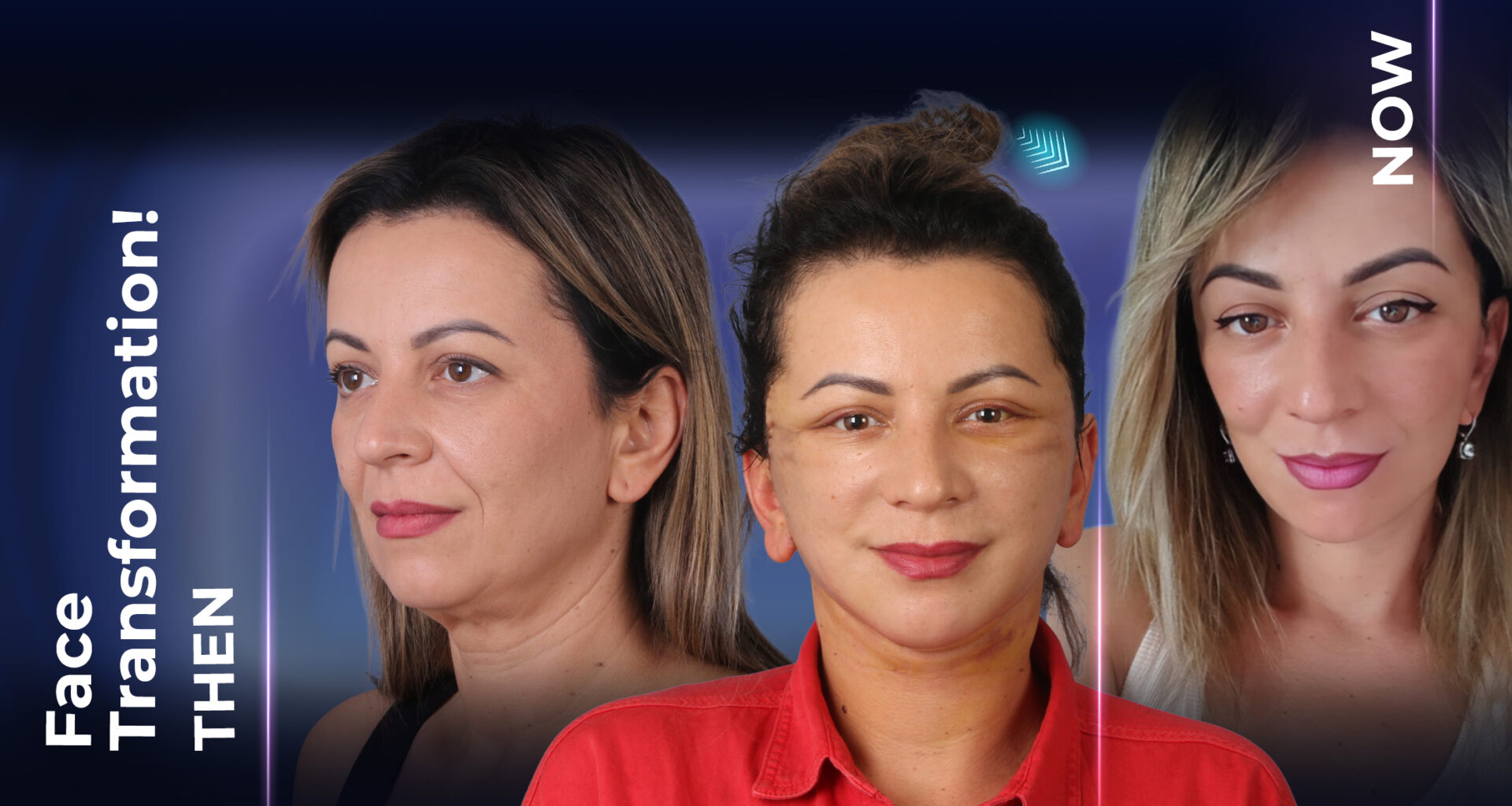
Expert Perspective on Emma Stone’s Facial Changes
Board-certified facial surgeons analyzing high-resolution images of Emma Stone highlight distinct anatomical features when evaluating her transformation:
Upper Eyelid and Tarsal Platform Show
Oculoplastic specialists emphasize that the increased visibility of Emma Stone’s upper eyelid shows a meticulous upper blepharoplasty.
By removing just a few millimeters of skin obscuring the eyelid crease, the eyes appear brighter and wider without altering their shape.
Lateral Canthus and Brow Vector
Facial plastic surgeons observe that the subtle upward vector of Emma Stone’s outer brow and lateral eye corner points toward a temporal tissue release.
Whether achieved via an endoscopic temporal lift or precise neuromodulator placement, elevating the outer brow tail relieves lateral hooding over the eye.
Midface Volume and Continuity
Expert eye surgeons note that Emma Stone’s midface shows volume retention. Rather than showing heavy, artificially filled cheek structures, her cheeks display an elevated, smooth transition below the lower eye orbit.
This outcome is typical of structural fat grafting or an endoscopic midface lift.
Experts emphasize that these clinical observations are hypothetical evaluations based on public imagery, as educational models for modern facial anatomy and aesthetic procedures.
FAQs
Let’s answer the most frequently asked questions about Emma Stone facelift and Emma Stone plastic surgery.
Did Emma Stone Have a Facelift?
Emma Stone has not confirmed having done a facelift. But aesthetic doctors believe she has had an upper blepharoplasty, temporal brow adjustment, or non-surgical skin tightening, rather than a traditional full facelift.
Did Emma Stone Have Eyelid Surgery?
While unconfirmed by the actress, medical professionals highlight her increased tarsal platform show and reduced upper lid hooding as classic outcomes of an upper blepharoplasty (upper eyelid surgery).
What Changed about Emma Stone’s Eyes?
Compared to earlier photos, Emma Stone’s upper eyelids show less heavy skin folding over her lash line, her eyelid crease is more defined, and the outer corners of her eyes appear subtly elevated.
Why Does Emma Stone Look Different?
Changes in Emma Stone’s appearance are attributed to a combination of hair and makeup styles, weight shifts, and potential aesthetic treatments that enhance midface volume, open the eye area, and sharpen jawline contours.
What Procedures Can Create Emma Stone’s Facial Changes?
The combination of open upper eyelids, elevated lateral brows, high midface volume, and smooth skin can be achieved using an upper blepharoplasty, a temporal brow lift, deep-plane or midface lifts, micro-fat grafting, and laser resurfacing paired with botulinum toxin.
Why Are Celebrities Getting Rid of Hooded Eyes?
Celebrities choose procedures like upper blepharoplasty to create a wider eyelid space, making their eyes look larger, brighter, and easier to define with makeup under HD cameras.