
This article has been reviewed and verified for accuracy by Dr. Cengizhan Ekizceli (lead surgeon at Estherian Clinic).
If you’re researching a DHI hair transplant in Turkey, you’ve likely come across a wide range of prices, claims, and clinic promises. This guide covers what DHI hair transplantation actually involves, how the procedure works, what realistically affects the cost, and what to check before choosing a clinic, so you can make an informed decision rather than relying on advertised headline prices.
What Is DHI Hair Transplantation?
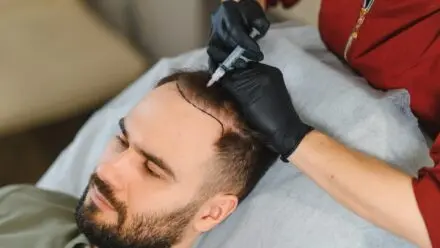
DHI, or Direct Hair Implantation, is a hair restoration technique that involves extracting follicular unit or graft hair follicles from a donor area and implanting them into areas affected by thinning or hair loss. The extraction process is similar to FUE hair transplantation, but DHI uses an implanter pen, commonly a Choi pen, during graft placement. The surgeon loads each graft into the pen and places it directly into the recipient area, controlling the angle, depth, and direction of implantation.
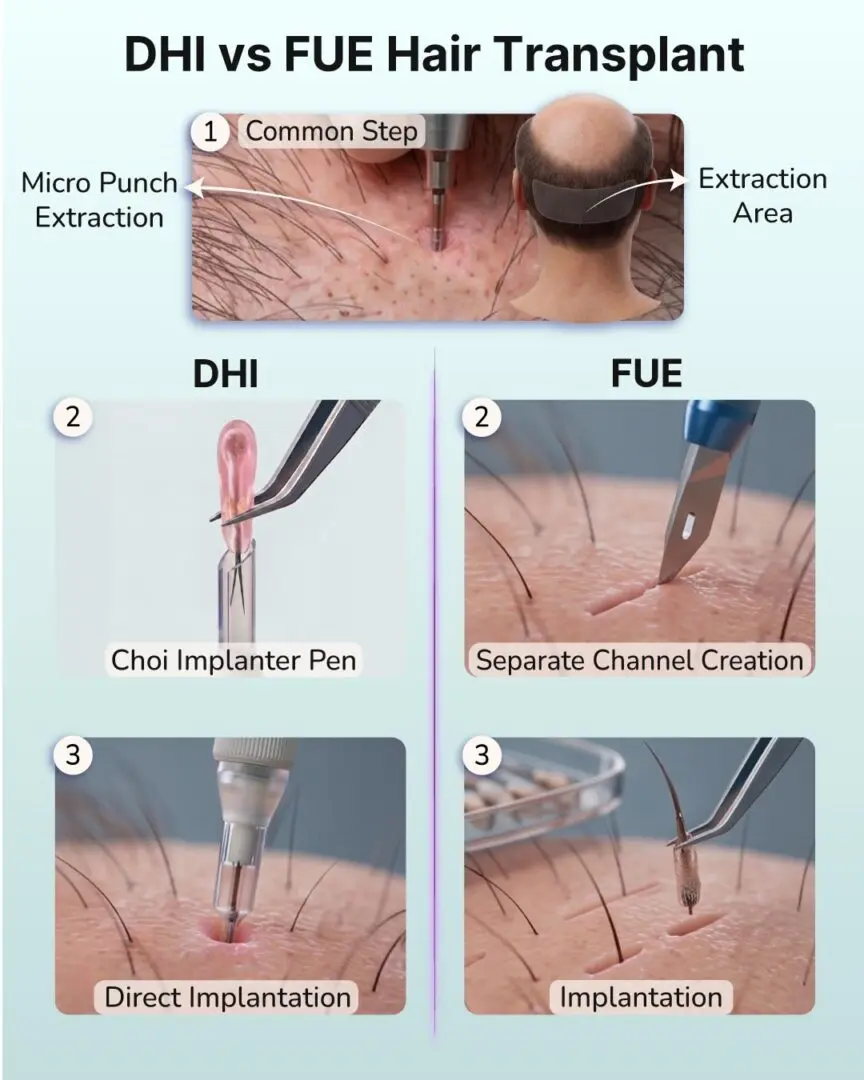
The main difference between DHI and FUE is how the grafts are implanted. With FUE, recipient sites are generally created before the grafts are placed into them. With DHI, the implanter pen allows the recipient site to be created and the graft to be inserted in a single motion.
DHI may suit patients whose hair-loss pattern responds well to transplantation and who have sufficient donor hair and realistic expectations. DHI is not automatically a better option than FUE; the appropriate technique should be determined based on the patient’s specific needs and the surgeon’s assessment.
How Does the DHI Procedure Work, Step by Step?
Consultation and Hair Assessment
- The medical team assesses the scalp and hair condition.
- The team develops a personalized treatment plan based on hair density, donor supply, natural hair direction, facial proportions, and treatment goals.
- The surgeon designs the hairline to create a natural-looking result.
Donor Area Preparation
- The medical team prepares the donor area, usually at the back or sides of the scalp, for extraction.
- The medical team administers local anesthesia to keep the procedure comfortable.
Follicular Extraction
- The medical team carefully extracts individual follicular units from the donor area.
- The team handles the grafts carefully to preserve their condition before implantation.
Graft Preparation
- The medical team prepares the extracted grafts for implantation.
- A member of the medical team loads each graft into the DHI implanter pen before implantation.
Direct Implantation
- The surgeon implants grafts directly into thinning or balding areas using the DHI implanter pen.
- The surgeon controls the angle, depth, direction, and density of the recipient area to create a natural appearance.
- Unlike conventional FUE, the implanter pen creates the recipient site and places the graft in a single motion.
Postoperative Care and Follow-Up
- After the procedure, the medical team gives patients instructions for caring for the donor and recipient areas.
- Aftercare may include guidance on washing, medications, protecting the transplanted area, and attending follow-up appointments.
Why Do People Choose Turkey for a Hair Transplant?
Turkey has become a popular destination for DHI and other hair transplant procedures. Several factors contribute to this, including the large number of hair transplant clinics, experienced medical teams, competitive treatment costs, and established services for international patients.
Large Number of Hair Transplant Clinics
Turkey, particularly Istanbul, has a large number of clinics offering hair transplant procedures. This gives international patients a wide range of providers to compare based on their treatment approach, medical team, facilities, and pricing.
Experienced Hair Transplant Surgeons and Teams
Hair transplantation is widely performed in Turkey, giving many surgeons and medical teams experience with techniques such as DHI and FUE.
Competitive Treatment Costs and Package Pricing
DHI hair transplantation in Turkey can cost less than similar procedures in some other countries. Differences in local operating costs, competition between clinics, exchange rates, and package pricing can all affect the overall cost.
International-Patient Infrastructure
Many Turkish clinics regularly treat patients from abroad and offer services designed to make the treatment process easier for international visitors. These may include airport transfers, hotel accommodation, translation assistance, and support with appointments.
Istanbul’s Accessibility
Istanbul is well connected to many international destinations, making it relatively accessible for patients travelling from abroad. Its established medical-tourism infrastructure also means that visitors can find a wide range of accommodation and transport options for a hair transplant Istanbul trip.
Accommodation and Transfer Services
DHI hair transplant packages in Turkey may include hotel accommodation and airport or clinic transfers. These services can make the logistics of travelling for treatment more convenient, particularly for patients visiting Turkey for the first time.
Overall, Turkey offers a combination of competitive costs, a wide choice of hair transplant providers, experienced medical teams, and established services for international patients. However, the choice of clinic should be based on the surgeon and medical team, treatment plan, facilities, and level of care rather than the destination or package price alone.
Are you curious whether DHI is the right fit for your hair loss pattern? Book a free consultation with our medical team to get an honest assessment before you compare quotes.
DHI Hair Transplant Turkey Cost: What Should You Expect to Pay?
The cost of a DHI hair transplant in Turkey can vary considerably from one clinic to another. In 2026, advertised prices may range from around €2,000 to €3,500, depending on the number of grafts, the clinic and medical team, the type of DHI procedure, and the services included in the package. (Note for the team: confirm this range is current and add Estherian’s own price point here, clearly labeled as our pricing rather than a general market figure, per the brief.)
Rather than focusing only on the headline price, patients should look at what they are actually paying for. A quote that includes accommodation, transfers, medication, and follow-up may represent a different overall value from a lower quote that covers the procedure alone.
| Cost factor | What may be included |
| DHI procedure | Follicular extraction and implantation |
| Medical fees | Surgeon and medical team |
| Medication | Prescribed postoperative medication |
| Accommodation | Hotel stay, if included |
| Transfers | Airport, hotel, and clinic transfers |
| Follow-up | Postoperative assessment and support |
| Additional treatments | PRP or other treatments, if included |
What affects the cost of DHI in Turkey?
- Number of grafts: Patients with more extensive hair loss may require a larger number of grafts, which can increase the overall cost. However, The medical team should determine graft requirements during an individual assessment.
- Clinic and medical team: The qualifications and experience of the professionals performing the procedure can affect pricing. Patients should establish who is responsible for extraction, graft preparation, and implantation before comparing quotes.
- Type of DHI procedure: In standard shaved DHI, the medical team will shave the recipient area before implantation, allowing the medical team to work more easily and efficiently. Unshaved or partially shaved DHI works around existing hair and may require more time and precision, which can affect the price.
- Package inclusions: International-patient packages may include services such as hotel accommodation, airport transfers, medication, and postoperative checks. These extras can make two apparently similar quotes difficult to compare.
- Additional treatments: Some clinics may offer or include treatments such as PRP as part of a package, while others charge separately. Patients should check whether the clinic medically recommends these services and whether the quoted price includes them.
What should you check before accepting a price?
Ask the clinic for a written breakdown of the total cost. Clinics may exclude international flights, extra accommodation, personal expenses, and optional treatments. Patients should therefore assess the final price based on the total cost of treatment and travel, rather than the advertised procedure price.
It is also worth comparing quotes based on the treatment plan and medical care provided, not simply choosing the cheapest option. A lower price does not automatically mean lower quality, just as a higher price does not guarantee better results.
Want an itemized, personalized quote? Request your free DHI consultation and get a breakdown based on your actual hair loss and goals, not a generic price list.
What’s Included in a DHI Hair Transplant Package?
Many clinics in Turkey offer DHI hair transplant packages that combine the procedure with services intended to make treatment easier for international patients. Instead of arranging every part of the trip separately, patients can choose packages that cover medical care, accommodation, transportation, and aftercare.
However, “all-inclusive” does not have a standard definition. What one clinic includes may be charged separately by another. Before paying a deposit, ask for a written breakdown of everything covered by the quoted price.
What may be included in a DHI package?
A typical package for international patients may include:
- Consultation and assessment: An initial consultation, hair and donor-area assessment, and treatment planning. Some clinics also include preoperative blood tests or other health checks.
- DHI procedure: The extraction and implantation of the agreed number of grafts using the planned technique.
- Medication and aftercare products: Prescribed postoperative medication and products such as shampoo, lotion, or other items recommended for early recovery.
- Hotel accommodation: Packages may include a set number of hotel nights, depending on the clinic’s arrangements.
- Airport transfers: International-patient packages commonly include transportation between the airport and hotel.
- Clinic transfers: The clinic may also arrange transport between the hotel and clinic for treatment and follow-up visits.
- Postoperative check: The clinic may provide a follow-up examination or first wash before the patient leaves Turkey.
- PRP or additional treatments: Some packages include PRP or other treatments, while others offer them as optional extras. Patients should confirm whether the clinic includes these treatments and whether the medical team recommends them for their individual case.
The exact package can vary according to the clinic, treatment plan, and services selected. For this reason, patients should not assume that a service is included simply because a package is described as “all-inclusive.”
What may not be included?
International flights are commonly excluded from hair-transplant packages. Other potential additional costs can include extra hotel nights, travel insurance, personal expenses, companion accommodation, and treatments that are not part of the original plan.
The important point is to identify these costs before travelling, rather than discovering them after arrival.
A low advertised price can look attractive, but it may not represent the final amount you will spend. When comparing DHI hair transplant packages in Turkey, look beyond the headline price and check the medical treatment, number of grafts, accommodation, transfers, medication, follow-up care, and any exclusions.
A slightly higher package may offer better overall value if it includes services that another clinic charges for separately. The safest comparison is therefore based on the total cost and scope of care, rather than price alone.
Best DHI Hair Transplant in Turkey: How to Choose a Reputable Clinic
With so many clinics advertising the “best DHI hair transplant in Turkey,” it’s worth knowing what to actually check rather than relying on marketing claims. No single clinic is objectively the best fit for every patient, but a reputable clinic should answer the following questions clearly and directly.
Questions About the Medical Team
- Who performs the procedure? Ask specifically who carries out the consultation, extraction, and implantation. A hair transplant can involve several people, so it’s reasonable to know each person’s role before you commit.
- What are the surgeon’s qualifications? Check their medical training and specialization, and find out how you can verify their credentials through registration bodies, professional associations, or published qualifications.
- How much experience do they have with DHI specifically? General hair-transplant experience isn’t the same as DHI experience. The implanter-pen technique has its own learning curve.
- Who performs extraction and implantation? In some clinics, the surgeon performs these steps; in others, trained technicians carry out parts of the procedure under supervision. You should know which approach the clinic uses for your treatment.
Questions About Your Treatment Plan
- Is the consultation conducted by the surgeon or medical team? A consultation with the people planning your treatment can give you a clearer picture of what’s realistic for your case than a consultation with sales staff alone.
- Are realistic results discussed? Be cautious of any clinic that promises guaranteed density or a specific outcome. A reputable provider should explain what’s achievable based on your donor supply and hair-loss pattern.
- Are before-and-after photos authentic? Ask whether the clinic treated the patients shown, whether the results represent typical outcomes rather than only the best cases, and whether the clinic can provide additional examples.
- Where does the procedure take place? Confirm that the clinic performs the procedure in a proper medical facility with appropriate hygiene and safety standards.
- What postoperative care does the clinic provide? Ask how the clinic handles follow-up while you’re in Turkey and after you return home, and who you should contact if a concern comes up.
Look for a doctor-founded clinic where medical decisions — not just sales targets — drive how patients are treated. For general, non-commercial guidance on evaluating providers, the International Society of Hair Restoration Surgery publishes independent patient information on what to look for in a qualified provider.
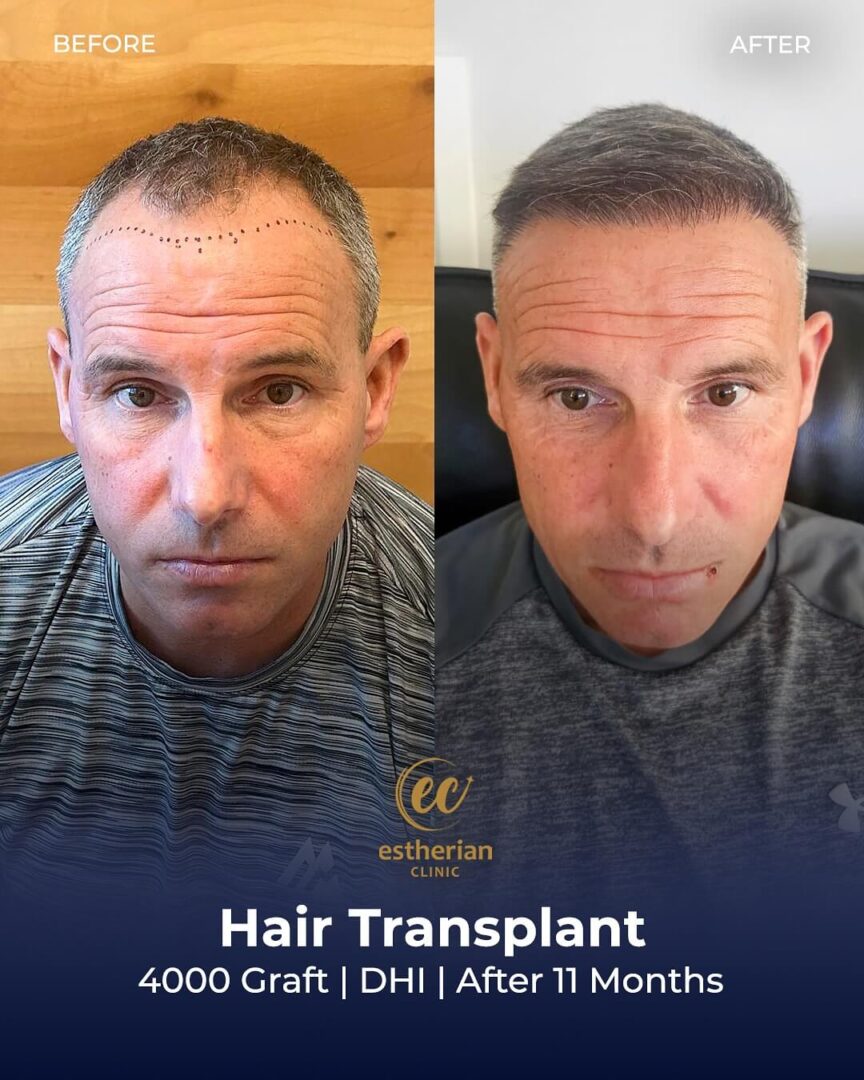
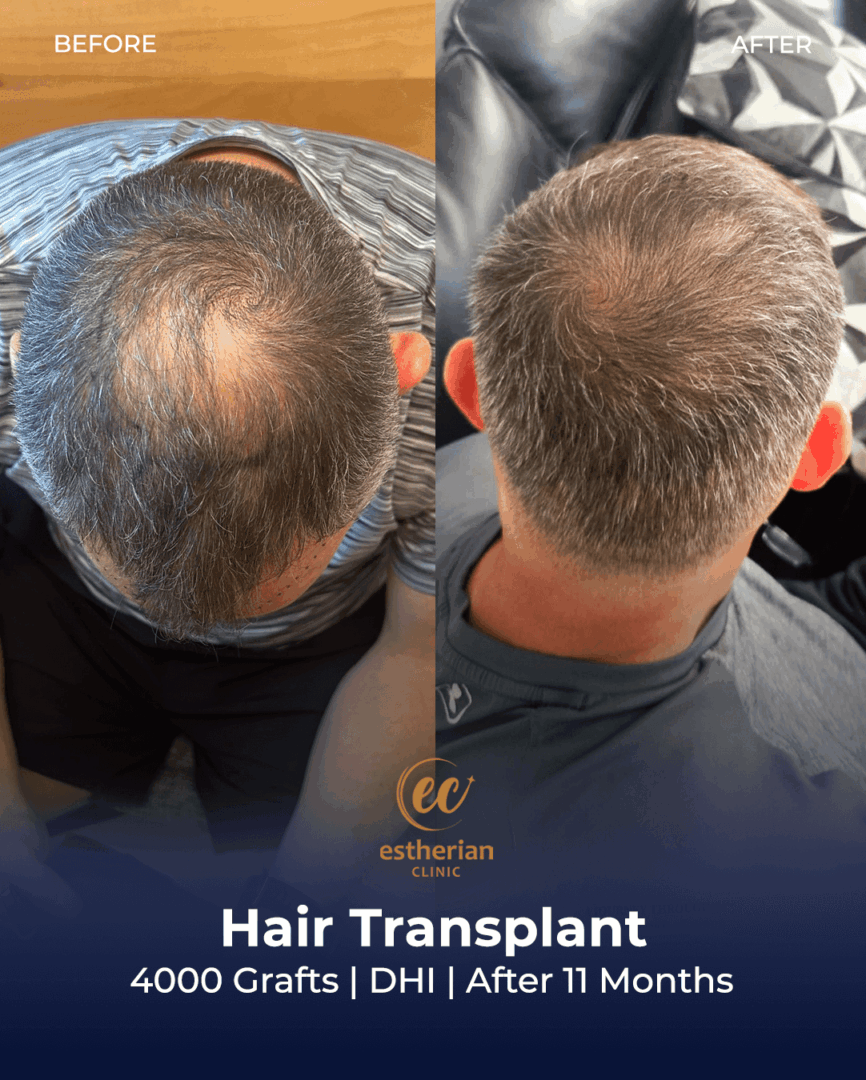
Before and After: What Results Can You Expect?
Before-and-after photos can give patients a better idea of what to expect from a DHI hair transplant, but individual results can vary. When reviewing a clinic’s results, consider:
- Results vary between patients: The outcome depends on factors such as the extent of hair loss, donor hair quality and availability, graft characteristics, and the patient’s natural hair growth.
- Donor supply affects density: The amount of healthy hair available in the donor area can limit how much coverage and density can realistically be achieved.
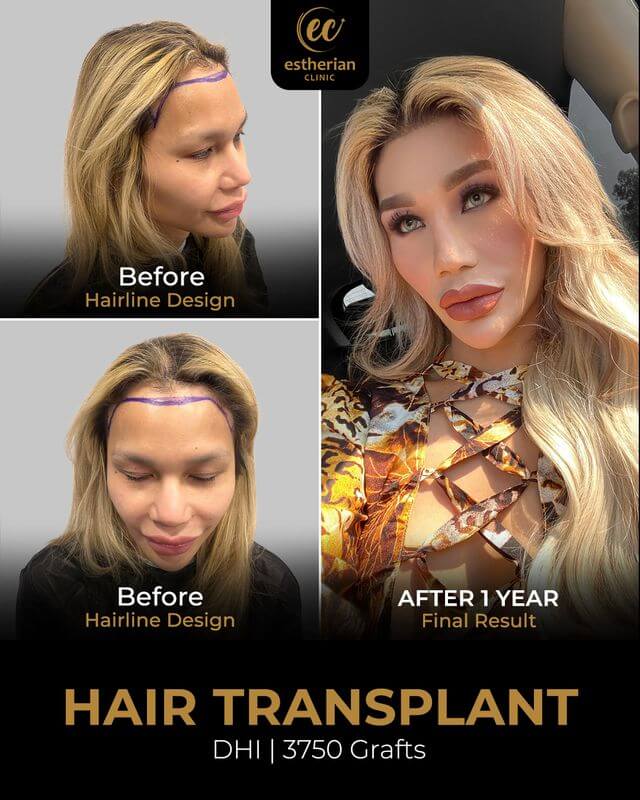
- Hairline design matters: The position, shape, and density of the new hairline can have a major effect on the overall appearance. It should be planned around the patient’s facial features and existing hair rather than using the same design for everyone.
- Results develop gradually: The appearance immediately after the procedure is not the final result. Transplanted hair goes through a healing and growth process, and patients may experience temporary shedding before new growth becomes more noticeable.
- Compare photos carefully: Before-and-after images are more useful when they show the same patient from similar angles and under similar lighting and conditions.
- Check that photos are genuine: Ask whether the images represent actual patients treated by the clinic and, where possible, whether the results shown are typical rather than selected exceptional cases.
- Look beyond photographs: A patient testimonial or short video can provide additional insight into the consultation, procedure, recovery, and follow-up experience. However, individual testimonials should be considered alongside the clinic’s qualifications and medical standards.
How Long Does DHI Recovery Take?
Recovery after a DHI hair transplant happens gradually rather than all at once. While the initial healing period is relatively short, the transplanted follicles need considerably longer to produce visible, mature hair.
- First few days: Mild swelling, redness, tenderness, numbness, or slight bleeding may occur. Swelling can become more noticeable around the forehead before gradually subsiding.
- First 1–2 weeks: Small scabs can form around the transplanted grafts as the scalp heals. Patients are generally advised to follow the clinic’s washing and aftercare instructions carefully and avoid picking or scratching the scabs.
- Around weeks 2–8: Some of the transplanted hair may shed temporarily. This is commonly referred to as shock loss and does not necessarily mean that the transplanted follicles have been lost; the follicle can remain in place while the visible hair shaft sheds.
- Following months: The transplanted follicles gradually return to an active growth cycle. New hairs may begin appearing at different times, so progress is usually uneven at first.
- Visible improvement: Hair growth becomes progressively more noticeable over the following months, while the transplanted hairs continue to thicken and mature.
- Final results: Full results are generally visible around 12–18 months, though this varies by patient and depends on individual healing and hair growth cycles.
The exact recovery timeline depends on the individual patient, the extent of the procedure, and how closely postoperative instructions are followed. Your clinic should provide specific guidance on washing, exercise, sleeping, medication, and when it is appropriate to resume normal activities.
Following these instructions is important not only during the first few days but throughout the recovery period as the transplanted follicles establish and begin producing new hair.
How Long Should You Stay in Turkey for Hair Transplant Istanbul?
The length of your stay in Turkey depends on your clinic’s protocol, treatment plan, and the timing of your postoperative check. Rather than booking the earliest possible return flight, allow enough time for the clinic to complete the procedure and assess your recovery before you leave.
| Patient consideration | What to know |
| Clinic visits | Your trip may include the initial consultation, procedure, and a postoperative review or first wash. |
| Hotel stay | The number of nights depends on the clinic’s treatment and follow-up protocol. |
| Airport transfers | Check whether transportation between the airport, hotel, and clinic is included in your package. |
| Companion | If you are travelling alone, ask the clinic whether any additional arrangements are recommended after the procedure. |
| Return flight | Confirm with the treating medical team when it is appropriate to fly home. |
| Follow-up | Ask how postoperative monitoring will be handled after you return home and how you can contact the clinic if you have concerns. |
Before travelling, ask the clinic to confirm your consultation date, procedure date, first wash or review, recommended departure date, and emergency contact arrangements in writing.
Your return journey should also be discussed with the medical team. Ask about any precautions for the flight, including sleeping position and scalp protection, as well as when you can resume activities such as exercise or swimming.
If your clinic provides remote follow-up after you return home, make sure you understand how appointments will be arranged and who to contact if a problem develops.
What to Know Before Traveling for Hair Implants in Turkey
Preparing for a DHI hair transplant abroad involves more than booking a flight and choosing a clinic. Having your medical information, travel arrangements, and postoperative plans ready in advance can make the treatment process easier to manage.
Use this checklist before travelling to Turkey:
Before You Travel
- Passport and travel documents: Check that your passport is valid and confirm whether you need a visa or any additional documents to enter Turkey. Keep copies of your important travel and medical documents accessible during your trip.
- Flight planning: Coordinate your flight dates with the clinic’s treatment schedule. Before booking your return flight, confirm how long the medical team recommends you stay and allow enough time for any planned postoperative check or first wash.
- Medical records and photos: Send the clinic any requested medical information and clear photographs of your hair and scalp before travelling. This can help the medical team assess your case and prepare an appropriate treatment plan.
- Hotel location: Check where your accommodation is located in relation to the clinic. A convenient location can make travelling to pre- and postoperative appointments easier.
- Payment arrangements: Confirm the total treatment price, what the package includes, how you should make the payment, and whether you may face any additional costs after arrival.
- Medications: Tell the medical team about any medications or supplements you currently take. Do not stop or change prescribed medication without medical advice. Ask the clinic whether you need to adjust any medications or supplements before the procedure.
- What to pack: Bring comfortable clothing that you can put on and remove without unnecessarily rubbing or pressing against your scalp. Keep your medication and essential personal items easily accessible.
During Your Trip and Before Returning Home
- Airport transportation: Confirm whether your package includes airport transfers and clarify where and when the driver will meet you on arrival. If the clinic does not provide transfers, arrange transportation in advance.
- Communication with the clinic: Save the contact details of your clinic and treating medical team. Before travelling, make sure you know who to contact about changes to your schedule, questions about the procedure, or concerns after treatment.
- Postoperative travel: Ask the medical team about precautions for the journey home, including when you can fly, how to protect the treated area during travel, and any restrictions that apply during the early recovery period.
- Travel insurance: Review your travel insurance policy before departure and check what it covers in relation to medical treatment, travel disruption, or changes to your itinerary. Elective procedures may have specific exclusions, so read the policy carefully.
Planning these details in advance allows you to focus on the treatment itself and reduces the risk of unexpected arrangements or costs during your stay.
Risks and Possible Side Effects of DHI
Although DHI is a minimally invasive hair-restoration technique, it is still a surgical procedure and can involve side effects and complications. Some are temporary and part of the normal healing process, while others may require medical treatment or further intervention.
Common Side Effects
- Swelling and redness: Mild swelling, particularly around the forehead, and redness of the scalp can occur during the early recovery period. These effects generally improve as the scalp heals.
- Bleeding: Minor bleeding or oozing can occur during or shortly after the procedure. Significant or persistent bleeding is less common, but the medical team should assess it if it occurs.
- Infection: Infection is uncommon when a qualified medical team performs the procedure under appropriate medical conditions, but it can still occur. Report increasing redness, worsening pain, fever, or unusual discharge to your treating clinician.
- Temporary numbness or tightness: The donor and recipient areas may feel numb, sensitive, or tight after the procedure. These sensations usually improve as the affected tissues and nerve endings recover.
- Scarring: DHI involves follicular extraction, which can leave small marks in the donor area. Several factors can affect how visible these marks become, including the extraction technique, healing process, and how you wear your hair.
Possible Treatment-Related Concerns
- Poor graft survival: Some transplanted grafts may not survive. Graft handling, extraction, storage, implantation, and individual patient factors can all influence graft survival and the eventual growth of transplanted hair.
- Uneven density: The final density may not appear completely uniform. Available donor hair, the number of grafts the medical team can safely transplant, existing hair, and the treatment plan can all affect coverage.
- Unnatural hairline: Poor planning or inappropriate graft placement can create an unnatural-looking hairline. The surgeon should carefully plan the hairline position, angle, direction, and graft selection to suit the individual patient.
- Unsatisfactory results: Even when the medical team performs the procedure correctly, the outcome may not meet the patient’s expectations. Hair characteristics, donor supply, the extent of hair loss, and individual healing can influence the final appearance.
- Need for additional treatment: Some patients may eventually consider another procedure to improve density or coverage, particularly if hair loss continues or the initial result does not meet their expectations.
Several factors influence the level of risk, including the patient’s individual characteristics and medical history, the technique used, the provider’s qualifications and experience, how the team handles the grafts, and how closely the patient follows postoperative instructions. Choosing a qualified medical team and following recommended aftercare can help reduce avoidable risks, but no hair transplant can guarantee a particular result.
DHI vs FUE: What’s the Difference?
DHI and FUE both involve extracting individual follicular units from the donor area and transplanting them into areas affected by hair loss.The main difference lies in how the medical team implants the extracted grafts. With FUE, the team prepares recipient sites before placing the grafts, while DHI uses a Choi implanter pen to create the recipient site and implant the graft in the same step.
| Feature | DHI | FUE |
| Follicle extraction | Individual grafts extracted with a micro-punch | Individual grafts extracted with a micro-punch |
| Implantation | Choi implanter pen creates the site and places the graft | Recipient sites are prepared first, then grafts are placed |
| Shaving | May allow little or no shaving in selected cases | Usually requires more shaving |
| Hairline and density control | Allows precise placement of individual grafts | Also allows customized hairline and density planning |
| Procedure time | Usually takes slightly longer | Generally more efficient for larger areas |
| Recovery | Broadly similar to FUE | Broadly similar to DHI |
| Suitability | May suit detailed hairline work or adding density between existing hairs | May suit larger areas requiring extensive coverage |
| Cost | Typically varies by graft count, clinic and treatment plan | Typically varies by graft count, clinic and treatment plan |
Both techniques can produce natural-looking results when performed by an experienced medical team. DHI may be useful for certain patients, particularly when detailed placement or minimal shaving is important, while FUE can be practical for treating larger areas.
There is no single technique that is automatically best for every patient. The appropriate option depends on factors such as the extent of hair loss, donor capacity, existing hair, treatment goals, and the experience of the medical team.
Meet Our Hair Transplant Specialist
Estherian Clinic was founded in 2020 by Dr. Cengizhan Ekizceli, a board-certified plastic, aesthetic, and reconstructive surgeon. He graduated from Istanbul University Cerrahpaşa Faculty of Medicine in 2011 and completed his specialty training in Plastic, Aesthetic and Reconstructive Surgery at Istanbul University between 2012 and 2017.
Hair restoration at Estherian is performed by our medical team alongside Dr. Ekizceli, with the team tailoring consultations and treatment plans to each patient’s hair loss pattern, donor supply, and goals.
Real Patient Experience
Is a DHI Hair Transplant in Turkey Worth It?
Whether a DHI hair transplant in Turkey is worth considering depends less on the destination or advertised price and more on whether the procedure suits you and how the medical team performs it.
DHI may be worth considering if you:
- Are a suitable candidate: You should have sufficient donor hair and a hair-loss pattern that the medical team can reasonably address through transplantation.
- Have realistic expectations: A transplant cannot guarantee a specific level of density or completely restore the hair you had before hair loss. The available donor supply and your individual hair characteristics influence the final result.
- Choose a qualified provider: The medical team’s experience and qualifications, its approach to graft extraction and implantation, and the quality of clinical care can have a greater impact on your experience than the technique itself.
- Understand the total cost: Look beyond the advertised package price. Check what the clinic includes, such as the procedure, medical care, medication, accommodation, transfers, and follow-up, as well as any potential additional costs.
- Have a clear postoperative plan: Before travelling, understand what aftercare you need and how the clinic will monitor your progress after you return home.
Ultimately, the decision should be based on quality, suitability, and realistic expectations rather than price. DHI is not automatically the right choice for every patient, and a consultation with a qualified hair-transplant specialist can help determine whether it is appropriate for your individual case.
Ready to find out if you’re a good candidate? Start with a free consultation — our medical team will assess your hair loss and donor supply before recommending a treatment plan.
How much does DHI hair transplant cost in Turkey?
In 2026, DHI hair transplant packages in Turkey can vary depending on the number of grafts, clinic and surgeon, technique, and services included. Always request an itemised quote so you know what the advertised price covers.
Is DHI hair transplant cheaper in Turkey?
DHI is often less expensive in Turkey than in countries such as the UK, US, and parts of Western Europe. However, price should not be the only factor when comparing clinics. Consider the qualifications of the medical team, treatment scope, and aftercare as well.
Is DHI hair transplant in Turkey safe?
DHI can be performed safely when carried out by a qualified medical team in an appropriate clinical setting. However, it is still a surgical procedure with potential risks, so patients should verify the provider’s credentials and understand the possible complications before treatment.
How long should I stay in Turkey for a DHI hair transplant?
Your stay should be long enough to complete the procedure and any required postoperative check or first wash. The exact duration depends on the clinic’s protocol and your individual treatment plan, so confirm your recommended departure date with the medical team before booking your flight.
Which clinic is best for DHI hair transplant in Turkey?
There is no single clinic that is objectively the best for every patient. Look at the surgeon’s qualifications and experience, who performs each stage of the procedure, the clinic’s facilities, genuine patient results, and the quality of its postoperative care.
What is the difference between DHI and FUE hair transplant?
Both techniques extract individual hair follicles from the donor area. With FUE, recipient sites are prepared before the grafts are implanted, while DHI uses a Choi implanter pen to place the grafts directly into the scalp. The most suitable technique depends on the patient’s hair loss, donor supply, goals, and treatment plan.