
Achieving a refreshed, youthful appearance is a goal for many, but lasting facial rejuvenation requires structural changes, rather than surface-level alterations. Traditional skin-only approaches usually result in unnatural, stretched skin because they pull the outer skin. However, modern facelift surgery techniques, such as a SMAS facelift, lift and reposition the foundational tissue layer beneath the skin, resulting in natural, long-lasting rejuvenation. So, let’s dig in and learn about the SMAS facelift and the facial issues it can address.
What Is a SMAS Facelift?
SMAS stands for Superficial Musculoaponeurotic System. It is a fibromuscular layer beneath the skin and superficial facial fat closely connected to the muscles and connective tissues of the face.
There are 5 main facial tissue layers:
- Layer 1: Epidermis and Dermis
- Layer 2: Subcutaneous Fat
- Layer 3: SMAS (where a SMAS facelift works)
- Layer 4: Deep fat and facial nerves and muscles (where a Deep Plane facelift works)
- Layer 5: Deep Fascia
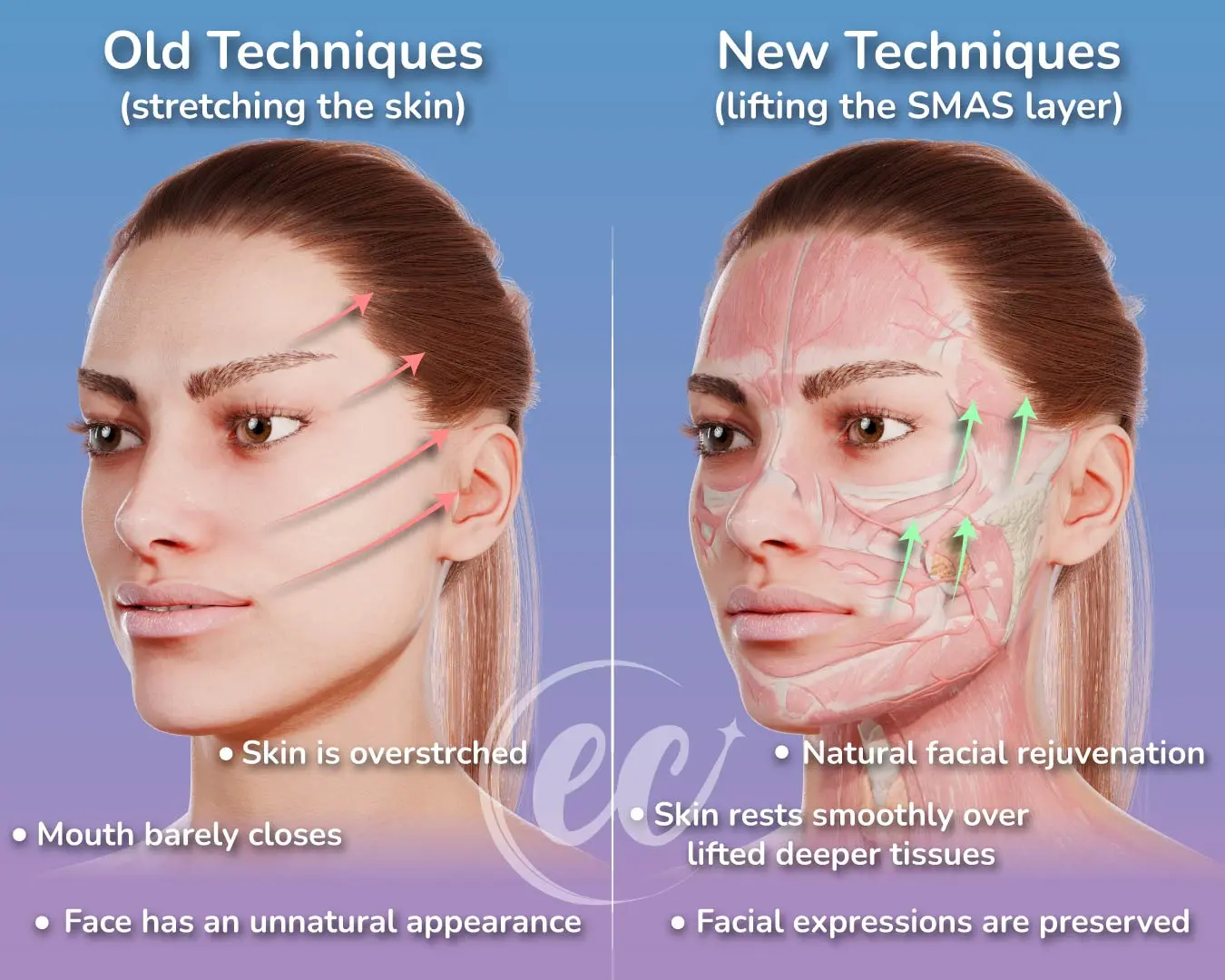
The SMAS connects your facial muscles to your skin, like a scaffold that manages facial expressions and maintains structure.
As we age, gravity, collagen loss, and tissue laxity cause this scaffold to stretch and slide downward.
One reason why skin-only tightening usually fails is that a traditional skin-only facelift just trims and pulls the skin, putting all the tension on the surface.
Over time, skin stretches back out, scar tissue widens, and the face loses natural volume.However, by lifting and securing the SMAS layer, surgeons keep the foundation of the lower face. Then, the skin is redraped over the new framework without tension, avoiding an unnatural pulled look.
A standard SMAS facelift focuses on the lower third of the face, defining the jawline, smoothing jowls, and lifting sagging cheek tissue.
How Does a SMAS Facelift Work?
A SMAS facelift is a surgical procedure performed under anesthesia or sedation. While surgical techniques vary based on your facial structure and needs, the standard approach includes:
- Consultation and Assessment: Your surgeon checks your skin elasticity, facial fat distribution, bone structure, and muscular tone to find the best surgical plan.
- Incision Placement: Different incisions are made along the hairline in the temple area, then around the natural contours of the ear, and into the lower scalp behind the ear to hide the scars.
- Lifting and Repositioning the SMAS: The skin is elevated to uncover the SMAS layer. Based on your needs, the surgeon performs SMAS plication (folding and suturing the SMAS over itself) or a SMASectomy/imbrication (trimming a strip of SMAS and fixing it higher).
- Addressing Excess Skin: Once the foundation is fixed in a good position, excess skin is trimmed.
- Redraping the Skin: The skin is redraped over the new facial contour and closed with delicate sutures to minimize visible scarring.
- Possible Neck Lift: Because lower-face aging can extend into the neck, you may need a SMAS facelift plus a neck lift (platysmaplasty) to tighten lax neck muscles and eliminate what is called a turkey neck look. Learn more about neck lift surgery in Turkey.
What Can a SMAS Facelift Improve?
A SMAS facelift improves age-related changes in the lower face and jawline. The table below shows the potential areas that can be improved and the changes a SMAS facelift can cause.
It is no secret that results vary from person to person and depend on each individual’s anatomy, skin elasticity, bone structure, and the degree of aging.
| Area Affected by a SMAS Facelift | How a SMAS Facelift Helps |
|---|---|
| Jowls | Lifts sagging tissue along the jawline to recreate a clean margin. |
| Lower-Face Sagging | Repositions fallen soft tissue back toward the midface and cheeks. |
| Jawline Definition | Restores an angular, distinct separation between the face and neck. |
| Nasolabial Folds | Softens deep lines from the nose to the corners of the mouth. |
| Loose Facial Skin | Removes redundant, loose skin without over-stretching the remaining tissue. |
| Neck Laxity | Smooths neck bands and loose skin when applied with platysma muscle tightening. |
SMAS Facelift Before and After: Results You Can Expect
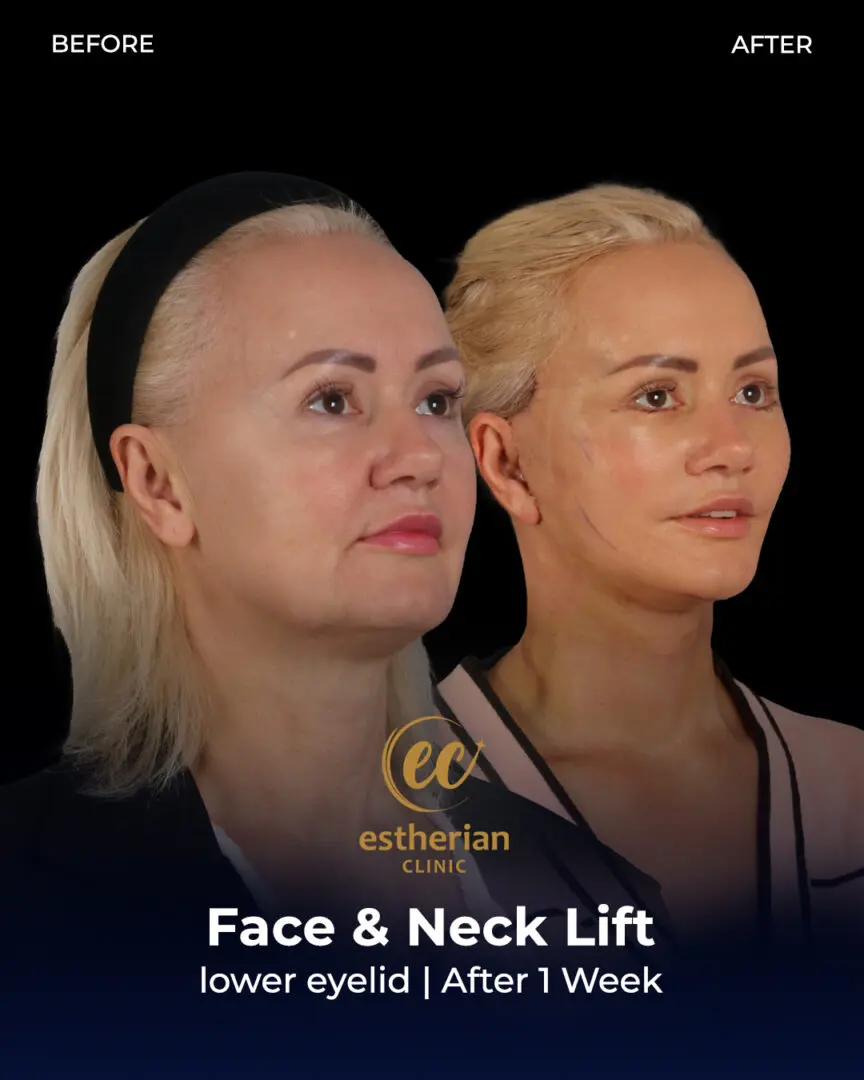
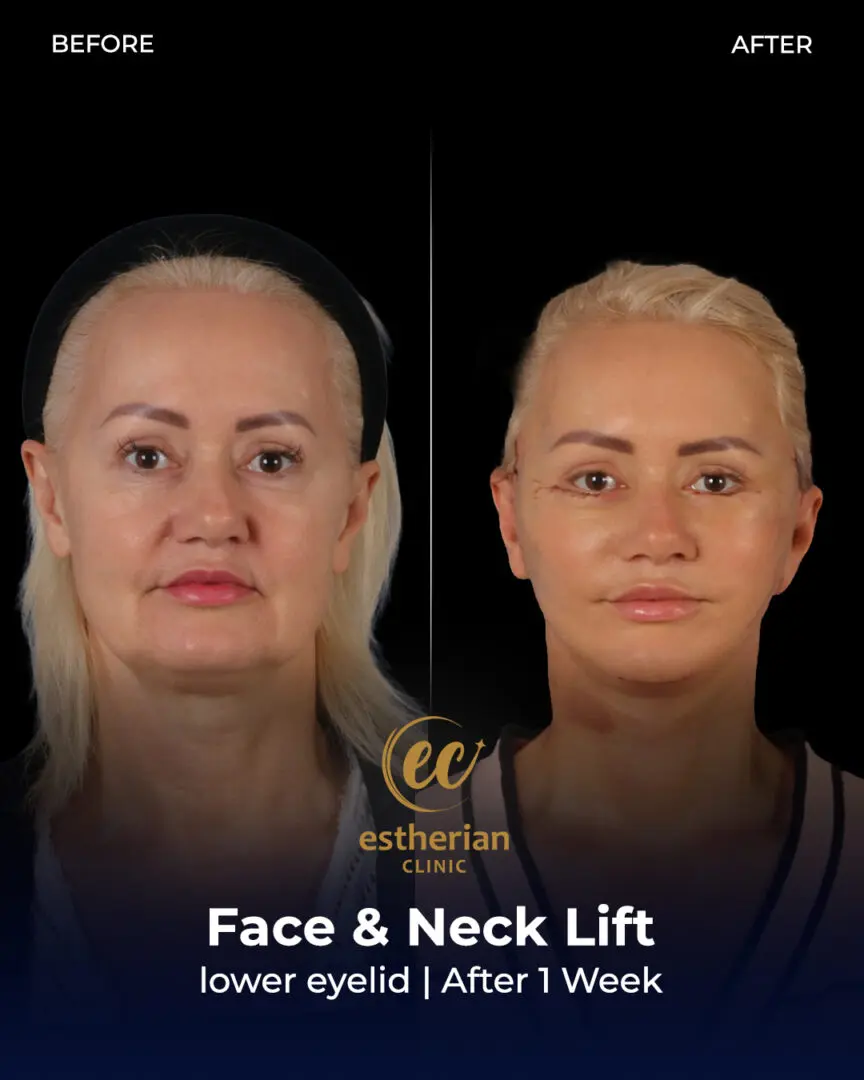
The goal of a SMAS facelift is not to make you look like a different person, but to create a refreshed, younger version of yourself. Results you can notice after a SMAS facelift can include:
- A defined, continuous jawline without sagging jowls
- Natural volume in the lower cheeks without a pulled mouth or flat look
- Smoother facial contour and skin from the lower cheek to the neck area
- Softened lines and lower facial folds
- Natural-looking facial tissues
While a SMAS facelift is one of the most effective treatments for sagging and loose faces, some patients may need a Deep Plane facelift.
SMAS Facelift vs. Deep Plane Facelift
When looking for facial rejuvenation techniques, you need to understand different methods and consult your surgeon to find the best possible solution.
SMAS facelift and Deep Plane facelift are both popular, effective techniques and work on the SMAS layer, but they access and release it differently.
- SMAS Facelift: In this method, the surgeon elevates the skin off the SMAS layer, then tightens, folds, or trims the SMAS layer beneath it, making it easier to control the jawline and lower face.
- Deep Plane Facelift: In a Deep Plane facelift, the surgeon releases the main facial ligaments beneath the SMAS layer, lifting the skin, fat, and SMAS as a single unit. This allows control over the midface and upper cheek area alongside the lower jawline.
You can also take a look at the table below that compares different aspects of a SMAS facelift vs. a Deep Plane facelift to make a more informed decision.
| Factor | SMAS Facelift | Deep Plane Facelift |
| Tissue Plane | Skin and SMAS separately (Bilamellar) | Deeper facial plane beneath the SMAS layer |
| Main Goal | Reposition and suspend lower-face SMAS tissue | Release deep ligaments to lift midface and cheeks |
| Lower-Face and Jawline | Strong, structural correction | Strong, structural correction |
| Midface and Cheek Elevation | Depends on the technique and the extension of the SMAS flap | Emphasizes midface and directly mobilizes malar fat pads |
| Surgical Dissection Depth | Intermediate (Superficial to deep fascial planes) | Deeper dissection closer to facial nerves |
| The Best Technique | Depends on your anatomy and aging pattern | Depends on your anatomy and aging pattern |
Please note that no approach is the best for everybody. A patient with severe cheek volume loss and heavy midface sagging may need a Deep Plane lift, while a patient concerned about jowls, lower-face skin laxity, and jawline blur can get better results with an SMAS facelift.
So it is important to consult your doctor and rely on the results of professional assessments. Another factor that can help us decide whether we would like to undergo SMAS facelift surgery is how long the results of this facelift can last.
How Long Does a SMAS Facelift Last?
While it can differ from person to person, on average, a SMAS facelift lasts for 7+ years.
Please note that a facelift does not stop the natural aging process, but it resets the clock. Ten years after your surgery, you will still look a lot younger than you would have without a facelift, but your facial tissues will continue to age naturally.You can improve the results of your SMAS facelift by revising your lifestyle and habits. The most important factors affecting your facelift results include:
- Skin Quality and Genetics: Patients with good skin elasticity and strong bone structure maintain results longer.
- Sun Protection: Daily broad-spectrum SPF prevents UV rays from breaking down collagen structures.
- Weight Stability: Fluctuations in weight can stretch the skin and alter facial fat.
- Lifestyle: Smoking and high stress accelerate the breakdown of skin tissue.
So, how do we know whether we are a good candidate for a SMAS facelift?
Who Is a Good Candidate for a SMAS Facelift?
If you have the following characteristics, you can be a good candidate for a SMAS facelift:
- Visible sagging in the lower third of the face, including noticeable jowls
- Blurring of the jawline and loss of definition between the neck and chin
- Mild-to-moderate skin elasticity in the cheek and neck regions
- Good general physical health with no underlying medical conditions that impact healing
- Being a non-smoker or willing to quit before and after the surgery
- Realistic expectations about cosmetic outcomes
Despite what many may think, age is not the only determining factor. Many candidates range from late 30s to 70s. Your facial anatomy, skin laxity, tissue changes, and your personal beauty goals are all important factors.
Check If You Are a Good Candidate for a SMAS Facelift Or Not?
Don’t hesitate to ask your question!
How Long Does the Recovery Take?
Each person recovers in their own timeframe, but most patients go through the following healing process:
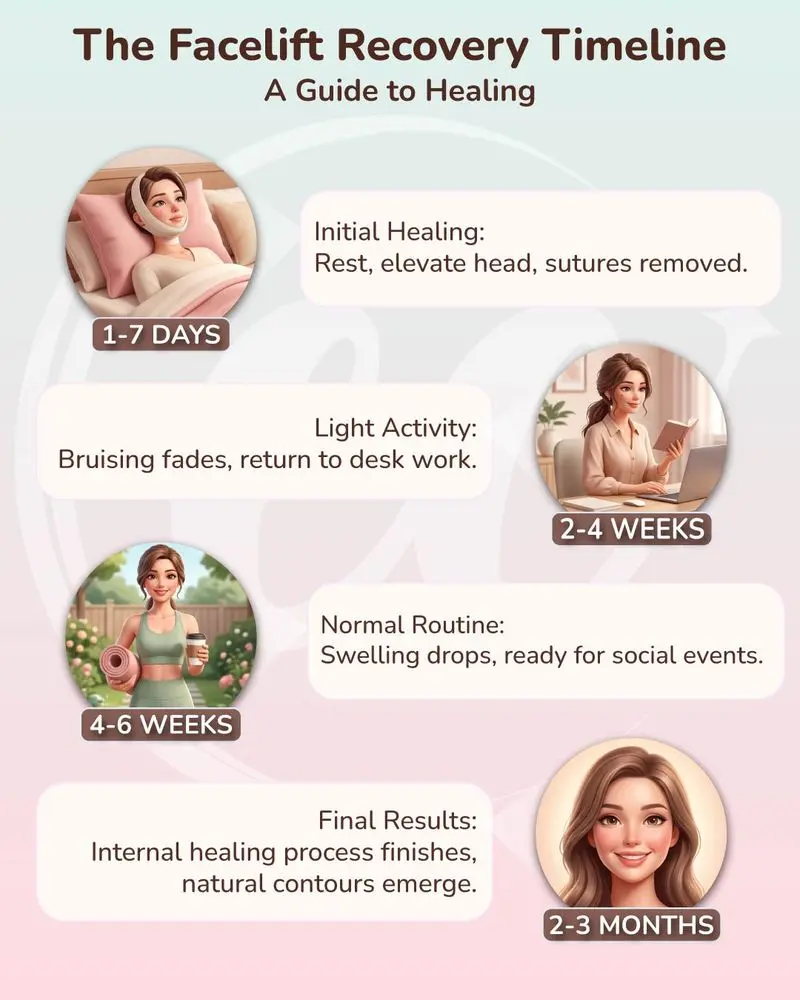
Week 1: Healing Starts
You may experience swelling, bruising, and a feeling of tightness around the jaw and neck. Mild numbness around the ears is also common.
Keeping your head elevated, using cold compresses, and avoiding bending or heavy lifting can decrease the aftereffects.
Week 2: Returning to Daily Routine
During the second week, you may notice the bruising fades to yellowish, and swelling begins to decrease significantly. Also, sutures are usually removed between days 7 and 10.
Most patients feel comfortable working from home or completing light activities.
Weeks 3-4: Ready for Going Out
During the 3rd and 4th weeks, swelling fades away, and the tightness keeps decreasing. Most patients return to work, public and social events, and do light exercise without obvious signs of surgery.
Months 1-6: Final Results
Incisions fade from pink to fine pale lines. Subtle numbness disappears as nerve endings repair. This is when your final, natural-looking contours fully settle and appear.
In addition to learning about the benefits and eye-catching beauty results, you should consider the possible risks or complications before going through the surgery process and make an informed decision.
What Are the Risks and Complications of a SMAS Facelift?
A SMAS facelift is generally a safe, common procedure, but all surgeries can carry risks. Possible SMAS facelift risks can include:
- Hematoma: A collection of blood under the skin, occurring in 1-2% of patients, which needs quick drainage.
- Temporary Numbness: Reduced sensation around the ears and cheeks is normal and usually resolves over several months.
- Facial Nerve Injury: Temporary weakness in facial expressions affects less than 1% of patients, and permanent nerve damage is extremely rare.
- Scarring: Incisions are placed in natural skin folds, but hypertrophic or widened scarring can occur in rare cases.
- Infection: It is usually rare, especially if proper wound care and hygiene guidelines are followed after the surgery.
Problems like asymmetry only occur if the surgeon is not experienced enough. Choosing an expert, certified facial plastic surgeon can significantly lower the rate of complications.
Apart from lower complications, choosing an experienced physician can help you make decisions more easily, especially if you need other procedures in addition to a facelift.
Can a SMAS Facelift Be Combined with Other Procedures?
Yes, to maintain balance all over the face, a SMAS facelift can be combined with the following complementary procedures if only your doctor approves:
- Neck Lift: Platysmaplasty or neck lift smooths vertical neck muscle bands and tightens jawline contours.
- Eyelid Surgery: Blepharoplasty or eyelid surgery removes drooping upper lid skin or lower eye bags to remove tired-looking eyes.
- Brow Lift: It elevates sagging brows to relieve heaviness over the upper eyelids. Learn more about eyebrow lift in Turkey.
- Fat Transfer or Facial Fat Grafting: It restores lost volume to hollow temples or flat cheeks.
So, to do a SMAS facelift and receive a thorough and expert consultation and assessment, you need to find reliable clinics that work with experienced surgeons. One of the most reliable hubs numerous patients choose is Estherian Clinic.
SMAS Facelift at Estherian Clinic
Many clinics offer different beauty procedures, but achieving a natural facelift result requires surgical precision, thorough evaluation, and an individualized approach that meets your needs and considers your anatomy.Located in Istanbul, Turkey, Estherian Clinic offers a wide range of plastic surgery services for international patients seeking high-level facial rejuvenation.
From initial consultation through personalized treatment planning, surgery, and postoperative care, Estherian’s medical team guides you through every step of your health and beauty journey.So, if you are considering high-quality, affordable facelift surgery in Turkey, speaking directly with an experienced facial surgeon is the best way to determine whether a SMAS, Deep Plane, or combined surgical technique is suitable for you.
How Much Does a SMAS Facelift in Turkey Cost?
Facelift surgery costs in Turkey can range from $4,000 to $8,000, depending on the technique used, areas treated (partial or full facelift), and the surgeon’s experience.
Prices vary if you combine your treatment with other procedures, such as eyelid surgery or brow lifts.For accurate price evaluation and personalized planning, Contact the Estherian Clinic today and schedule your consultation.
Medically Reviewed by Dr. Cengizhan
Last reviewed: Aug 21, 2026
About Dr. Cengizhan Ekizceli
Dr. Cengizhan Ekizceli is a Plastic, Aesthetic and Reconstructive Surgery specialist. He graduated from Istanbul University Cerrahpaşa Faculty of Medicine in 2011 and completed his specialty training in Plastic, Aesthetic and Reconstructive Surgery at Istanbul University between 2012 and 2017. Worked at Kanuni Sultan Süleyman Training and Research Hospital from 2017 to 2019 and has been working at BHT Clinic Istanbul Tema Hospital since 2019. He founded Estherian Clinic in 2020 and has more than 10 years of experience and over 10,000 successful cases. His specialization and experience in aesthetic and reconstructive surgery make him qualified to medically review content related to plastic surgery.
FAQ
Let’s find answers to the most frequently asked questions about a SMAS facelift.
What Is a SMAS Facelift?
It is a surgical procedure on a deep tissue layer beneath the skin to restore firm, natural contours to the lower face and jawline.
What Is the Difference Between a SMAS Facelift and a Traditional Facelift?
Traditional facelifts pulled only the skin layer, which could result in a tight, artificial look. But a SMAS facelift repositions the muscular scaffold beneath the skin, taking strain off the skin surface for a more natural look.
What Is the Difference Between a Deep Plane and SMAS Facelift?
A SMAS facelift separates the skin from the underlying SMAS before tightening the SMAS layer. A Deep Plane facelift lifts the skin, fat, and SMAS together in a single layer, making it effective for cheek and midface sagging.
How Long Does a SMAS Facelift Last?
Results can last for many years, depending on your age, skin elasticity, lifestyle, and sun exposure.
Is a SMAS Facelift Suitable for Everyone?
No, SMAS candidates must be in good general health, have clear lower-face laxity or jowling, and have realistic expectations.
How Painful Is a SMAS Facelift?
SMAS facelift is performed under anesthesia and is painless. The discomfort after the surgery is generally mild-to-moderate for the first few days and is managed with prescribed medication.
How Long Is Recovery after a SMAS Facelift?
Most patients return to public activities and light work in 2 to 3 weeks after a SMAS facelift. It can take several months for the tissue to fully settle and for the scars to fade away.
Does a SMAS Facelift Include the Neck?
A standard SMAS facelift focuses on the lower face and jawline. However, it can include a neck lift (platysmaplasty) if the doctor approves.
Is a SMAS Facelift Better than a Deep Plane Facelift?
We cannot say one method is better for everybody. It depends on your needs, health status, facial structure, tissue laxity, cheek volume, and goals. While an SMAS facelift is enough for someone, another person may need a Deep Plane facelift.
What Does SMAS Mean in a Facelift?
SMAS stands for Superficial Musculoaponeurotic System. It is a layer beneath your skin that supports your lower face. A SMAS facelift is done on the SMAS layer.
Are SMAS Facelifts Worth It?
Yes, especially for those with jowling and lower-face sagging. SMAS facelift repositions the skin foundation instead of just pulling the skin, providing natural-looking results.