
Introduction
If you’re considering plastic surgery in Turkey, the advertised price is only one part of the decision. Surgeon qualifications, the quality of the surgical facility, postoperative care, follow-up arrangements, and what your package actually includes can matter just as much. You should also consider whether the procedure is suitable for you, how long you may need to stay in Turkey, and what support will be available before and after surgery. Turkey has become a popular destination for international patients because it offers a wide range of cosmetic procedures and can provide access to experienced medical professionals and established healthcare facilities. Cost is another important reason people consider Turkey, as the overall price of treatment and travel may be lower than in countries such as the UK. This guide explains what international patients should consider when evaluating plastic surgery in Turkey.
Why Is Plastic Surgery in Turkey So Popular?
The International Society of Aesthetic Plastic Surgery (ISAPS) ranks Turkey among the top 10 countries worldwide for aesthetic procedures. Today, plastic surgery in Turkey stands as one of the nation’s leading medical sectors, attracting thousands of foreign patients annually.
Another factor is the country’s established infrastructure for international patients. Many providers offer support with appointments, transportation, accommodation, and communication, which can make the process easier for patients travelling from abroad and reduce the practical challenges of arranging treatment in an unfamiliar country. Istanbul, in particular, is accessible from many European and international destinations and has a high concentration of private healthcare providers, giving international patients more options when planning their treatment and coordinating their stay.
Turkey also offers a broad range of aesthetic procedures, from facial surgery such as rhinoplasty and facelifts to body-contouring and breast procedures.However, quality or safety should not be guaranteed simply by the popularity of plastic surgery in Turkey. Furthermore, variations in surgeon qualifications, facility standards, and pre- and postoperative care may be observed across different providers.
Free Quality Consult with the Doctor!
Don’t hesitate to ask your question!
Is Plastic Surgery Safe in Turkey?
One of the most important plastic surgery guide in Turkey is not inherently safe or unsafe. As with cosmetic surgery anywhere, several factors determine the level of safety. These include the surgeon’s qualifications and experience, the facility providing the treatment, the specific surgical technique, the patient’s health, and the medical team’s postoperative care.
this is passive still make it impassive For international patients, these factors deserve particular attention because follow-up and complication management can be more difficult once you return home.
Before choosing a surgeon or clinic, there are several important factors to evaluate:
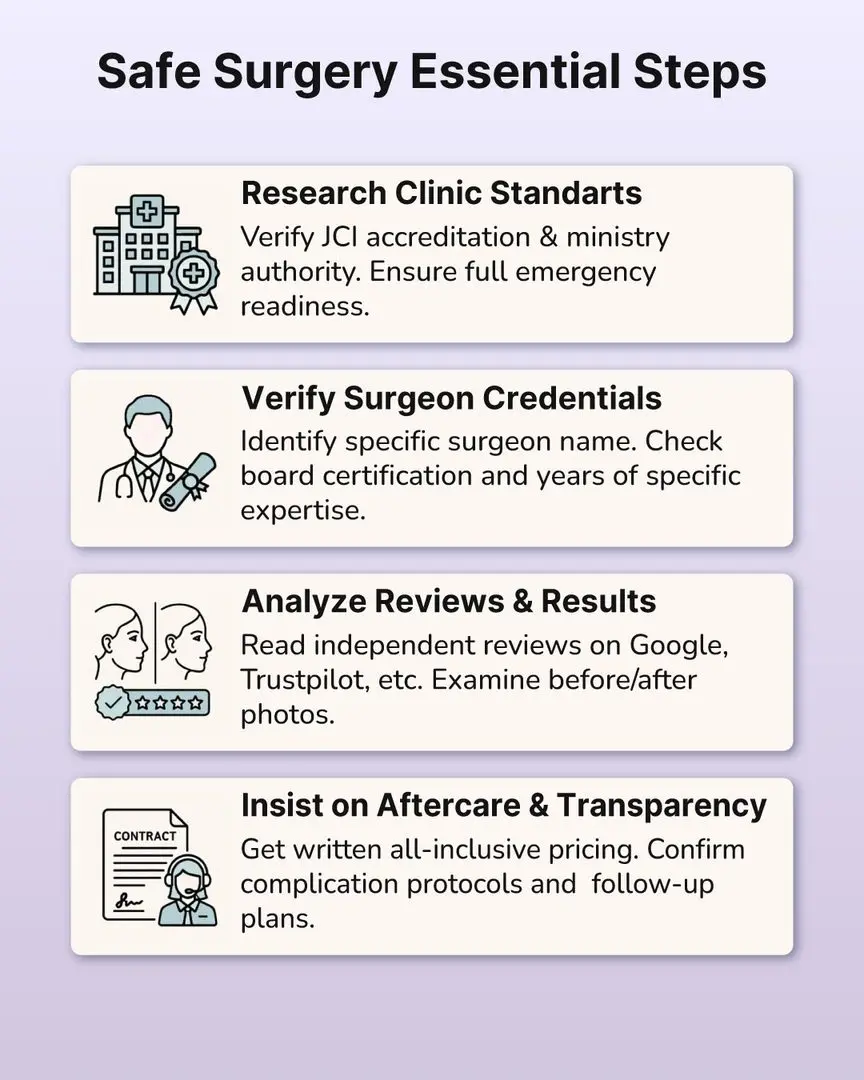
Verify the Surgeon’s Credentials
Start by finding out who will actually perform your surgery and whether they have appropriate training and experience in the procedure you are considering. Look for information about the surgeon’s qualifications, specialty, professional memberships, and experience performing the specific procedure.
Check Where the Surgery Will Take Place
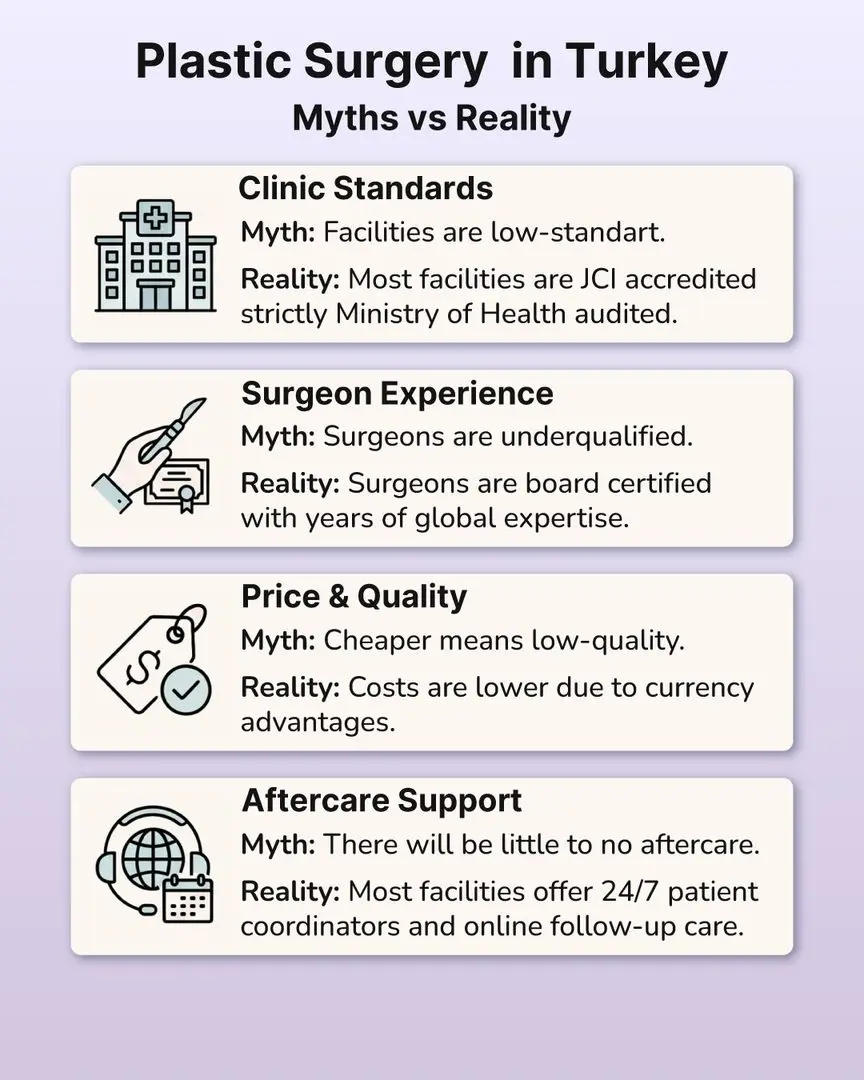
The facility is another important part of the safety equation. Before booking, ask the clinic exactly where the surgeon will perform your operation and what type of surgical facility they will use. You should verify that the Turkish Ministry of Health licenses and authorizes the hospital or clinic. Where applicable, also check if the facility holds internationally recognized accreditations, such as from the Joint Commission International (JCI). These credentials reveal vital information about the facility’s standards. You must weigh them alongside other crucial factors, including the medical staff’s qualifications, the available equipment, anesthesia services, and postoperative monitoring.
Have a Genuine Consultation With the Surgeon
A consultation should be more than a discussion with a sales representative about prices and packages. You should have an opportunity to speak with the surgeon who will perform your procedure and discuss your medical history, goals, suitability for surgery, the recommended technique, expected results, and potential risks.
What should happen during a proper plastic surgery guide consultation?
- Medical history review: The surgeon should ask about your health conditions, previous surgeries, medications, allergies, and lifestyle factors that may affect surgery.
- Physical assessment: The surgeon should assess the relevant treatment area and determine whether the procedure is appropriate for you.
- Discussion of your goals: You should be able to explain what you want to achieve and discuss whether your expectations are realistic.
- Treatment recommendations: The surgeon should explain the recommended technique, why it may suit you, and whether alternative options are available.
- Risks and recovery: You should receive clear information about potential complications, expected recovery, restrictions, and follow-up care.
- Questions and next steps: You should have enough time to ask questions and understand the procedure, costs, and what happens before and after surgery.
The surgeon should also explain the limitations of the procedure and what recovery is likely to involve. If you cannot obtain meaningful medical information from the surgeon before committing to surgery, consider this a reason to pause and investigate the provider further.
Understand the Aftercare and Complication Plan
Aftercare is another important difference. If a patient develops a complication after returning home, they may need additional medical appointments or, in some cases, further treatment. The NHS advises patients considering cosmetic surgery abroad to establish in advance where follow-up care will take place, what happens if complications occur and who will cover any additional costs.
You should also understand whether additional treatment or revision surgery would involve extra costs and whether you would need to travel back to Turkey. Having a clear aftercare and complication plan before surgery can help you avoid unexpected medical and financial difficulties later.
How to Check if a Plastic Surgery Clinic in Turkey Is Legitimate
Before making a final decision, use the following checklist:
- Who is the actual surgeon? Verify their name, qualifications, specialty, and experience.
- Where will the surgery take place? Ask for the exact hospital or surgical facility.
- Is the facility appropriately licensed or accredited? Verify this through reliable sources where possible.
- Will you have a consultation with the surgeon? Avoid making a decision based solely on communication with sales staff.
- Are the before-and-after photographs authentic? Ask whether they show the surgeon’s own patients and whether the images represent realistic results.
- Are the risks and possible complications discussed openly? A trustworthy provider should not present surgery as risk-free.
- What is included in the quoted price? Clarify surgery, anesthesia, hospital fees, medication, accommodation, transfers, and follow-up.
- What happens if something goes wrong? Ask who will provide treatment and how additional costs are handled.
- What postoperative care is available? Find out how follow-up will work both in Turkey and after you return home.
How Much Does Plastic Surgery Cost in Turkey?
There is no single price for plastic surgery in Turkey. The total cost can vary considerably depending on the procedure, the surgeon, the facility, the complexity of the surgery, and the level of care required before and after the operation. For international patients, the final cost may also include expenses beyond the surgery itself, such as accommodation, transfers, and other travel-related services.
What Affects the Cost of Plastic Surgery in Turkey?
Type and complexity of the procedure: Different procedures require different levels of surgical expertise, operating time, equipment, and postoperative care. A relatively straightforward procedure may therefore cost considerably less than a complex or extensive operation.
Surgeon’s experience and expertise: The surgeon’s qualifications, experience, specialization, and demand can influence their fees.
Hospital and facility fees:The facility where surgery takes place can also affect the total cost. Hospital or surgical-center fees may cover operating-room use, medical staff, equipment, and postoperative monitoring.
Anesthesia: Depending on the procedure and type of anesthesia required, anesthesia-related fees may form part of the overall surgical cost.
Postoperative care: Follow-up appointments, medications, medical supplies, and additional monitoring can contribute to the overall cost of treatment.
Additional services and travel expenses: For international patients, the advertised surgical price may not represent the total cost of the trip. Depending on the provider, packages may include services such as hotel accommodation, airport transfers, and local transportation. Patients must ask the clinic to clarify exactly what the package includes and to disclose any hidden charges before making a final decision.
Plastic Surgery Prices in Turkey
Prices for plastic surgery in Turkey can vary significantly between clinics and individual treatment plans. The ranges below reflect published 2025 package prices from Turkish clinics and are provided as a general reference rather than fixed prices. The surgeon’s experience, surgical technique, procedure complexity, and package inclusions all influence the final cost.
| Procedure | Indicative Price Range in Turkey | Main Factors Affecting Cost |
| Rhinoplasty | €2,500–€4,200 | Primary vs. revision surgery; open vs. closed approach; ultrasonic technique |
| Brazilian Butt Lift (BBL) | €3,500–€6,000 | Fat-transfer volume; number of donor areas; 360° liposuction |
| Facelift | €4,000–€7,500 | Mini vs. full/deep-plane facelift; combined neck lift or blepharoplasty |
| Tummy Tuck | €3,000–€5,500 | Mini vs. full abdominoplasty; extent of muscle repair; additional liposuction |
| Breast Augmentation | €3,000–€5,500 | Implant type and brand; implant shape; combined breast lift |
| Liposuction | €2,000–€5,500 | Number of treatment areas; technique; amount of fat removed |
Why Is Plastic Surgery Cheaper in Turkey?
Many patients researching treatment abroad ask: is plastic surgery cheap in Turkey? Plastic surgery in Turkey can cost less than similar procedures in countries such as the UK or the US for several economic and structural reasons. Differences in operating costs, local economic conditions, currency exchange rates, and the competitive medical tourism market can all influence the final price of a procedure. However, a lower price does not automatically mean lower quality, and patients should look beyond the price when comparing surgeons and clinics.
Lower Operating Costs
One factor behind Turkey’s comparatively lower surgical prices is its lower operating costs. Expenses such as staff salaries, facility maintenance, utilities, and administrative services can be lower than in higher-cost healthcare markets. This can allow private healthcare providers to offer lower surgical and facility fees.
Currency and Local Economic Differences
Currency exchange rates can make medical treatment more affordable for international patients. Patients from countries such as the UK, US, and Western Europe may benefit from greater purchasing power relative to the Turkish lira. However, local wages, facility expenses, and healthcare costs also contribute to price differences.
A Competitive Medical Tourism Market
Turkey has a large private healthcare and medical tourism sector, particularly in cities such as Istanbul. The presence of numerous hospitals, clinics, and specialist surgeons creates a competitive market, which can influence pricing and encourage providers to offer different treatment options and package structures.
An Established Medical Tourism Infrastructure
Turkey’s established medical tourism sector provides services designed for international patients, including airport transfers, accommodation, patient coordinators, and postoperative follow-up. Some clinics combine these services into all-inclusive packages, making overall costs easier to estimate.
However, packages can vary significantly. Patients should request an itemized breakdown and confirm if their package covers anesthesia, hospital fees, medications, accommodation, transfers, and follow-up care before they compare quotes.
Lower Cost Does Not Mean You Should Choose the Cheapest Provider
Although plastic surgery can be more affordable in Turkey, the lowest price should not be the main factor when choosing a surgeon or clinic. Providers can differ substantially in their qualifications, surgical experience, facility standards, anesthesia services, and postoperative care.
An unusually low quote may also exclude services or expenses that another provider includes in its package. Comparing the headline price alone can therefore give a misleading impression of which option is actually more affordable.
Turkey Plastic Surgery vs. UK: How Do the Costs Compare?
For many patients considering cosmetic surgery abroad, the lower advertised prices in Turkey are one of the main reasons to compare treatment there with private surgery in the UK. In general, cosmetic procedures in Turkey can cost less than comparable private treatment in the UK. However, comparing the headline price alone can be misleading because the two quotes may not include the same services.
| Cost factor | Turkey | UK |
| Procedure cost | Often lower, depending on the procedure, surgeon and treatment plan | Generally higher for private cosmetic surgery |
| Surgeon’s fee | May be included in an overall treatment package | Usually forms part of the private surgical cost |
| Hospital/facility fees | May be included in the quoted package | May be included or charged separately, depending on the provider |
| Anaesthesia | May be included in the package, but should always be confirmed | May be included or listed as a separate cost |
| Accommodation | Some international-patient packages include hotel accommodation | Usually not included in the surgical price |
| Airport transfers | Often available as part of international-patient packages | Generally not included in the cost of surgery |
| Aftercare | Follow-up during the patient’s stay may be included; arrangements after returning home vary | Follow-up is generally easier to access locally, but what is included depends on the provider |
| Travel costs | International flights and additional travel expenses need to be added to the treatment cost | No international travel is required for UK residents |
The difference becomes particularly important when comparing an all-inclusive Turkish package with a UK price that covers only the surgical procedure. Some Turkish clinics advertise packages that combine surgery with hospital or facility costs, accommodation, transfers and certain aftercare services.
What Plastic Surgery Procedures Are Available in Turkey?
Turkey offers a wide range of facial and body plastic surgery procedures for patients seeking cosmetic or age-related changes. The most suitable procedure depends on the patient’s anatomy, concerns, and desired outcome. Common facial procedures include rhinoplasty, facelift techniques, neck lift, eyelid surgery, brow lift, facial fat transfer, and otoplasty.
Facial Plastic Surgery Guide
Rhinoplasty: Rhinoplasty can address both cosmetic and functional concerns of the nose, reshaping the underlying nasal tissues to improve appearance.
Facelift: A facelift addresses visible signs of aging in the lower face and neck, improving sagging cheeks, jowls, loss of facial volume, and excess skin or fat around the neck.
Deep Plane Facelift: In a deep plane facelift, the surgeon focuses on repositioning deeper facial tissues. By releasing the deep attachments around the SMAS layer, the surgeon can reposition the tissues with less tension on the skin.
SMAS Facelift: The SMAS facelift works with the superficial musculoaponeurotic system (SMAS), a deeper layer beneath the skin, repositioning the underlying facial tissues as part of the lifting process.
Neck Lift: A neck lift improves sagging skin, excess tissue, and visible vertical bands in the neck, sometimes called a “turkey neck” by repositioning excess skin and tightening the underlying neck muscles.
Blepharoplasty: Blepharoplasty, or eyelid surgery, addresses excess eyelid skin and under-eye bags or circles.
Brow Lift: A brow lift repositions a sagging eyebrow to a higher position, using approaches such as endoscopic, hairline, and coronal techniques depending on the patient’s facial structure.
Facial Fat Transfer: Facial fat transfer restores volume using the patient’s own fat. Your surgeon can collect fat from areas like your abdomen or flanks and transfer it to facial areas experiencing volume loss, such as your cheeks, temples, chin, and nasolabial folds.
Otoplasty: Otoplasty reshapes or repositions prominent or misshapen ears, involving reshaping the ear cartilage and securing it in a new position, with incisions typically placed behind the ears.
Body Contouring
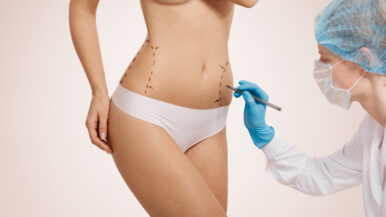
Body contouring procedures reshape specific areas of the body by removing excess fat, skin, or both. Patients generally use these treatments to improve their body shape rather than to lose weight, particularly when diet and exercise fail to change stubborn areas or when significant weight loss leaves behind excess skin.
Common surgical body contouring options include:
- Liposuction: Removes localized fat deposits that are resistant to diet and exercise. Surgeons can perform this procedure on areas such as the abdomen, waist, back, thighs, arms, chin, and neck, depending on the patient’s needs. They use several different techniques to achieve the best results, including traditional, power-assisted, ultrasound-assisted, and VASER liposuction.
- Tummy tuck (abdominoplasty): Removes excess abdominal skin and fat while tightening the underlying abdominal muscles. Depending on the amount and location of excess tissue, options may include a full, mini, extended or fleur-de-lis tummy tuck.
- Mommy makeover: Surgeons use the familiar term ‘mommy makeover’ to describe a personalized set of cosmetic procedures. They design these treatments to help women address the common effects of childbearing and aging on the face, breasts, and body, ultimately restoring or improving their pre-pregnancy appearance. Mommy makeovers can include cosmetic surgery, non-surgical treatments, or a combination of both.
- Body lift: Designed primarily for people with significant excess, loose skin, particularly after substantial weight loss. A body lift can remove excess skin, improve underlying tissue contours and address remaining excess fat.Depending on a patient’s needs, a surgeon can target the upper body with an arm lift, or address the lower body, back, hips, buttocks, or thighs. Surgeons frequently combine these treatments with procedures such as a tummy tuck.
- Other body contouring procedures: You might consider surgical lifts and skin-removal procedures if excess or loose skin is your primary concern, especially after significant weight loss.
The best procedure for you depends on your target area, your skin quality, the amount of excess fat or skin, and your ultimate cosmetic goals.
Breast Surgery
Breast surgery can address different aesthetic goals, including changing breast size, shape, or proportions. Common procedures include:
- Breast augmentation: Increases breast size and improves shape using implants or fat transfer. Your surgeon can use implants containing silicone gel or saline, or they can perform a fat transfer using fat collected from another part of your body.
- Breast reduction: Reduces breast size by removing excess fat, breast tissue, and skin. It may also help address physical discomfort associated with disproportionately large breasts, such as back, neck, or shoulder pain.
- Breast lift: Reshapes and raises sagging breasts by removing excess skin, reshaping breast tissue, and repositioning the nipple and areola. You can choose to have this procedure with or without implants, and many patients consider it after pregnancy, breastfeeding, or significant weight loss.
How to Choose the Best Plastic Surgery Clinic in Turkey
When searching for the best plastic surgery in Turkey, it is important to evaluate more than the clinic’s reputation or advertised price. Before making a decision, you should carefully consider the surgeon’s qualifications, relevant experience, past results, and the transparency of their treatment package.
Look at the Surgeon, Not Just the Clinic
Start by checking the surgeon’s credentials, specialization and experience with the specific procedure you are considering. Review their surgical portfolio and make sure the consultation process includes a proper discussion of your medical history, goals, expected results and potential risks. You should also confirm that the surgeon you consult with will be the same surgeon performing your procedure. Some clinics, including Estherian, structure their process so that the consulting surgeon and the operating surgeon are the same person, a detail worth confirming with any provider you are considering.
Review Before-and-After Results Carefully
Before-and-after photos can give you an idea of a surgeon’s work, but they should be assessed carefully. Look for images taken with similar lighting, angles and consistent photography conditions, and review results from multiple patients rather than relying on a few selected examples. Whenever possible, choose photos showing patients with anatomy and starting points similar to your own, and focus on realistic results rather than heavily edited or overly dramatic transformations. You should also ask whether the photos show the surgeon’s actual work and exactly when they took the ‘after’ images. Early postoperative results may not reflect your true final outcome, especially for procedures where swelling takes time to resolve. Reviewing a surgeon’s before-and-after gallery in detail, rather than a handful of selected images, can give a more realistic picture of what to expect.
Understand What Is Included in the Package
Ask for a clear, written breakdown of everything included in your package. Just as importantly, the package should clearly state what is not included and whether any additional costs could arise. Comparing the complete package rather than only the advertised price can help you make a more informed decision.
Depending on the provider, a package may cover:
- The plastic surgeon’s professional fee
- Anaesthesia and operating room costs
- Hospital or medical facility charges
- Routine pre-surgery tests, such as blood tests and an ECG when needed
- Medications provided during the initial recovery period
- One standard compression garment
- Hotel accommodation for the agreed number of nights
- Airport transportation from IST or SAW
- Planned follow-up appointments during your stay in Turkey
Some expenses are commonly charged separately, including:
- International flights
- Meals, unless specifically included in the package
- Additional or specialised compression garments
- Private nursing services
- PCR or other travel-related testing
- Medications that are not considered essential
- The cost of revision surgery, if required
- Medical care or complication management after returning home
- Travel insurance
Free Quality Consult with the Doctor!
Don’t hesitate to ask your question!
What Should You Ask a Plastic Surgeon Before Surgery in Turkey?
According to ISAPS and American Society of Plastic Surgeons, these are the questions you can ask your surgeon before surgery:
- Are you board-certified? If yes, by which Board or Boards?
- How many procedures of this type have you performed?
- Am I a good candidate for this procedure?
- Where and how will you perform my procedure?
- How long of a recovery period can I expect, and what kind of help will I need during my recovery?
- What are the risks and complications associated with my procedure?
- How are complications handled?
- What are my options if I am dissatisfied with the outcome of my surgery?
- Do you have before-and-after photos I can look at for each procedure and what results are reasonable for me?
What Is the Plastic Surgery Process in Turkey Like?
The plastic surgery journey in Turkey typically involves several stages, from the first inquiry through to returning home and continuing your aftercare. The exact process, preparation and recovery time can vary depending on the procedure and the amount of surgery involved.
- Initial inquiry: Start your journey by submitting an inquiry with details about your procedure and desired outcome. Simply request a consultation with our medical team at Estherian to explore your options.
- Medical information and photographs: Our team will request your medical history and photos, allowing our surgeons to properly assess your situation and target treatment area.
- Consultation with the surgeon: During the consultation, the surgeon reviews your medical history, current health, previous procedures and goals. Our medical team assesses your treatment area before discussing the best options for your specific goals.
- Treatment planning: Treatment Planning: Once your surgeon assesses your needs, they will explain the recommended procedure, expected results, potential risks, and recovery requirements. Your personalized treatment plan will depend on your specific goals and the procedure you choose.
- Travel to Turkey: After your surgeon plans your treatment, you can organize your travel to Turkey for the procedure. Make sure to factor your expected recovery time into your trip itinerary.
- Preoperative assessment: Before your procedure, your medical team will review your health history and perform necessary health checks or laboratory tests. Your surgeon will also provide any necessary preoperative instructions, including guidance about medications, supplements or lifestyle changes.
- Surgery: Your surgeon performs the procedure according to your personalized treatment plan. Depending on the type and extent of the surgery, they will use either local anesthesia with sedation or general anesthesia.
- Initial recovery and monitoring: After your surgery, our medical team will closely monitor your recovery as you wake up from anesthesia. Some swelling, bruising or discomfort may occur, depending on the procedure. You will also receive instructions regarding medication, wound care and activity restrictions.
- Follow-up: Follow-up care allows the surgical team to monitor your healing and recovery. Any necessary wound care, suture removal or other post-operative instructions will depend on the procedure performed.
- Return home and continued aftercare: Once you are ready to travel, you can return home and continue following your surgeon’s aftercare instructions. Recovery continues after returning home, and the timeline for resuming normal activities varies between procedures.
The exact journey can differ significantly depending on the type and extent of plastic surgery. A relatively minor procedure may involve a shorter recovery period, while more extensive surgery can require longer monitoring, downtime and aftercare.
How Long Should You Stay in Turkey After Plastic Surgery?
The appropriate length of stay in Turkey after plastic surgery depends on several factors, including the type and complexity of your procedure, your recovery, your overall health, and your surgeon’s recommendations. Some procedures may require only a few days before you are ready to travel, while more extensive surgeries may require a longer recovery period. Your stay may also need to include postoperative checks and suture removal, if applicable, before your surgeon confirms that it is safe to return home. Your medical team will assess your recovery and recommend the appropriate time to stay in Turkey based on your individual needs rather than following a fixed timeline.
Plastic Surgery Recovery Guide?
Recovery varies depending on the type and extent of surgery. After the procedure, patients are monitored as the effects of an aesthesia wear off. Some may return home the same day, while others may need to remain in hospital for a night or two. Before discharge, the medical team provides instructions for care at home. Recovery may involve:
- Getting plenty of rest and avoiding heavy lifting or prolonged standing.
- Caring for the surgical site and replacing dressings as instructed.
- Following any temporary dietary recommendations.
- Keeping the treated area elevated when advised to help manage swelling.
- Taking time away from work or school while healing.
- Using prescribed or recommended medication, including stool softeners when needed.
- Waiting until the surgeon advises that showering or bathing is safe.
What Are the Risks of Plastic Surgery in Turkey?
Like plastic surgery anywhere in the world, procedures in Turkey carry potential risks. The likelihood of complications depends on factors such as the type and complexity of surgery, your medical history, lifestyle and the quality of surgical and postoperative care. Some complications can occur during surgery, while others may develop during recovery. Possible risks include infection, bleeding or hematoma, blood clots, anaesthesia-related complications, fluid build-up, nerve damage, abnormal or excessive scarring, and wounds that take longer than expected to heal. There is also the possibility that the final aesthetic result may differ from your expectations. Certain procedures have additional risks that should be discussed with your surgeon before treatment, and some patients may require revision surgery or further treatment.
Medical Travel Considerations
Having surgery abroad also adds practical considerations to the recovery process. Travelling soon after surgery may not be appropriate for every patient, particularly when postoperative monitoring or wound checks are still required. Your recommended time to return home should depend on the procedure you undergo, how your recovery is progressing and your surgeon’s advice. Before leaving Turkey, make sure any planned postoperative checks have been completed and that you understand how to continue your aftercare after returning home.
What Can Help Reduce the Risks?
Although complications cannot always be prevented, careful preparation can help reduce avoidable risks. Choose a properly registered medical facility and a suitably qualified surgeon with experience in your specific procedure. Provide complete information about your medical history, medications and relevant lifestyle factors, including smoking. You should also understand the potential risks and expected recovery before consenting to surgery and follow your surgeon’s postoperative instructions carefully.
Booking Plastic Surgery Guide in Turkey
Choosing a plastic surgery provider in Turkey requires careful research. While competitive pricing can be one reason patients consider medical tourism, an offer that seems unusually attractive should be examined carefully. Watch for these warning signs before booking:
- Unrealistically low prices: A price that is significantly lower than comparable providers may mean that important services, medical care or follow-up are excluded.
- Guaranteed results: No reputable surgeon can guarantee an exact cosmetic outcome, as healing and results vary between patients.
- Pressure to book immediately: Be cautious if you are pushed to pay a deposit or book surgery before having enough time to review the surgeon, procedure and terms.
- No direct access to the surgeon: You should have an opportunity to discuss your procedure and expectations with the surgeon who will actually perform your surgery.
- Unclear surgeon identity: Make sure you know who your surgeon is, including their qualifications, specialty and experience with your specific procedure.
- Stock or stolen before-and-after photographs: Before-and-after images should represent genuine patients and should be relevant to your procedure and anatomy.
- No discussion of risks: A proper consultation should cover potential complications, limitations, recovery and alternatives, not just the expected aesthetic result.
- Vague information about where surgery happens: You should know the name and location of the hospital or medical facility where your procedure will be performed.
- Hidden costs: Ask for a clear breakdown of what the package includes, such as surgery, anesthesia, hospital or facility fees, accommodation, transfers, medication and follow-up care.
- No clear complication or follow-up plan: International patients should know who to contact if a problem develops after surgery and what follow-up care is provided before and after returning home.
- Promises of extremely fast recovery: Recovery times vary by procedure and patient. Be cautious of claims that suggest you can return to normal activities or fly home unusually quickly.
Medically Reviewed by: Dr. Cengizhan Ekizceli, Plastic, Aesthetic and Reconstructive surgeon.
Is Turkey a good country for plastic surgery?
Yes, Turkey is a popular destination for plastic surgery. However, the quality of care varies between providers, so patients should check the surgeon’s qualifications, experience, facility standards and postoperative care.
How much does it cost for plastic surgery in Turkey?
The cost varies by procedure, surgeon, facility and what is included in the package. Request a detailed quote to see exactly what is covered and whether there are additional costs.
Where is the best place in Turkey to get plastic surgery?
There is no single best location. Istanbul and other major cities have many established providers, but the surgeon’s qualifications, facility and experience with your specific procedure are more important than the location itself.
Who is the highest rated plastic surgeon in Turkey?
There is no universally accepted ranking for Turkey’s highest-rated plastic surgeon. Instead, compare surgeons based on their qualifications, experience, surgical results and patient reviews.
How do Turkey’s surgery costs compare with the UK’s?
Plastic surgery in Turkey is generally more affordable than private treatment in the UK. However, package inclusions vary, so compare the total cost and services included rather than the headline price alone.