

If you are living with severe obesity and related health conditions, weight loss surgery or bariatric surgery can be a way to regain your health. Two of the most common weight loss surgeries include Roux-en-Y Gastric Bypass and Sleeve Gastrectomy (Gastric Sleeve). While both procedures reduce stomach volume, they work differently, lead to different average weight loss, and involve different dietary and recovery considerations. So, let’s compare gastric bypass vs sleeve, their outcomes, safety, and cost in Turkey, to help you decide which is the better choice for you.
Gastric Bypass or Gastric Sleeve?
Don’t hesitate to ask your question!
This article is medically reviewed by Dr. Cengizhan Ekizceli – board-certified plastic surgeon at Estherian Clinic.
Why Is Bariatric Surgery Done? Key Health Benefits
Many people choose bariatric procedures because these surgeries reduce body mass and change your metabolism. Learn more about a patient’s 100 pound weight loss with bariatric surgery.
Studies show weight loss surgeries can significantly improve or completely resolve major obesity-related comorbidities, including:
- Type 2 Diabetes: Long-term clinical data show metabolic surgery can improve glycemic control. Gastric bypass has significantly improved or resolved type 2 diabetes in many patients, reducing or eliminating the need for insulin shortly after surgery.
- Sleep Apnea: Losing weight can reduce blockage or narrowing in the nose/ throat, making it easier to breathe. Most patients experience symptom improvement 6 to 12 months after the bariatric surgery.
- Hypertension & Cardiovascular Health: Losing weight and maintaining it can reduce inflammation and help your blood vessels work properly. This can help lower blood pressure and reduce the risk of heart problems over time.
- Joint Pain & Mobility: Obesity puts pressure on your knees, hips, lower back, and other joints. So, losing weight can ease pressure on weight-bearing joints and improve movement.
To get these benefits from gastric bypass, you need to understand two of the most common weight-loss, or bariatric, surgeries: gastric bypass and sleeve. You can also learn more about Bariatric Surgery in Turkey.
What Is the Difference Between Gastric Sleeve and Gastric Bypass?
When comparing gastric sleeve vs gastric bypass, both change the gastrointestinal tract to induce weight loss, but they do so in different ways.
1. Key Procedural Differences
First, let’s look at the differences between the procedures for gastric sleeve (Sleeve Gastrectomy) and Gastric Bypass (Roux-en-Y).
1.1 How Gastric Sleeve (Sleeve Gastrectomy) Works: Purely Restrictive
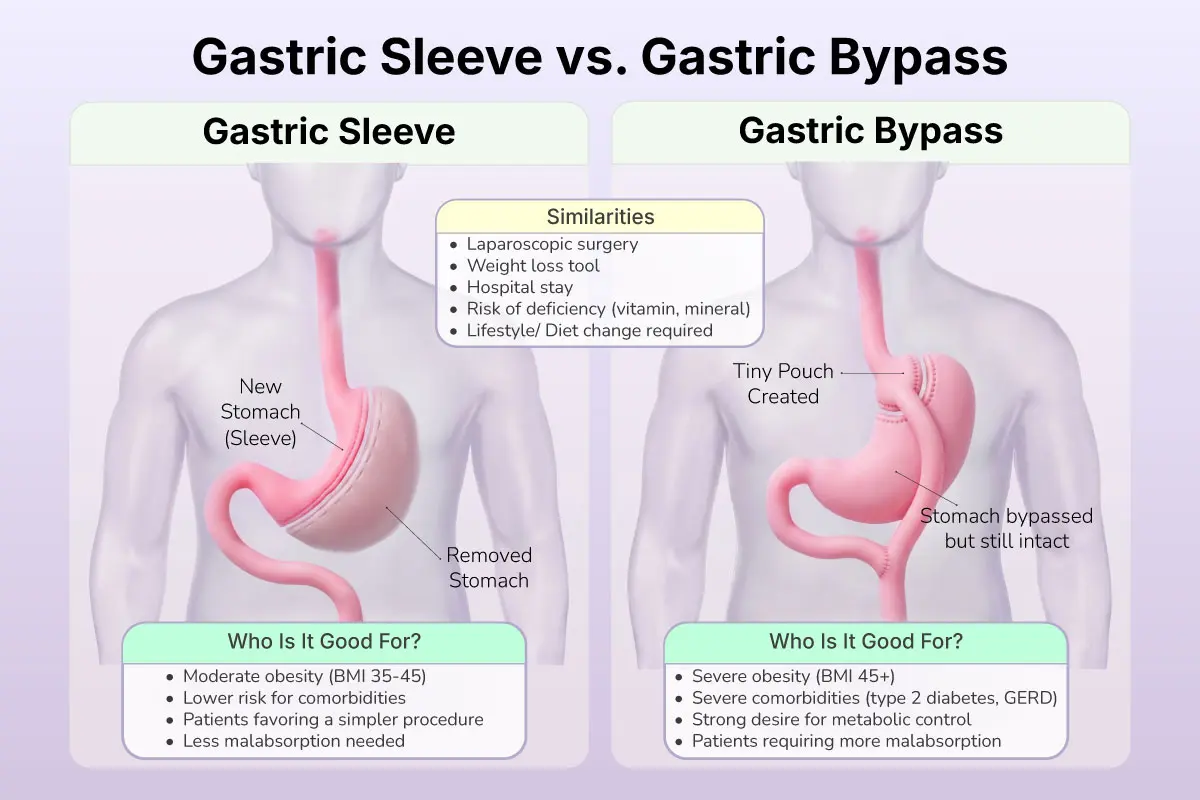
In a gastric sleeve, or sleeve gastrectomy, a bariatric surgeon removes 75% to 80% of the stomach in a vertical cut. The remaining part of the stomach is closed into a narrow, banana-shaped tube or sleeve.
This method is completely restrictive, and removing the upper part of the stomach (fundus) significantly reduces ghrelin production, the hormone that causes hunger.
This method does not change the intestines. The small intestine remains intact, meaning nutrient absorption occurs normally through the digestive tract.
Learn More: Gastric Sleeve Surgery – Before and After Gallery
1.2 How Gastric Bypass (Roux-en-Y) Works: Restrictive & Malabsorptive
Roux-en-Y gastric bypass combines both restrictive and malabsorptive methods. The surgeon creates a small, egg-sized stomach pouch (holding about 1 ounce or 30 mL) by dividing the top of the stomach from the remainder
The surgeon then divides the small intestine and connects the lower section (the Roux limb) directly to the new small stomach pouch.
The bypassed part of the stomach and upper small intestine (duodenum) will not contact food directly anymore.
So, food bypasses a big part of the stomach and upper intestine, limiting calorie absorption and changing endocrine hormones that suppress appetite and improve insulin resistance.
To help you choose, let’s compare gastric sleeve vs gastric bypass in more detail.
The table below compares gastric bypass vs sleeve in terms of the mechanism used, average surgery duration, the length of hospitalization, average excess weight loss, reversibility, etc.
| Clinical Feature | Sleeve Gastrectomy (Gastric Sleeve) | Roux-en-Y Gastric Bypass |
| Surgical Mechanism | Restrictive only | Restrictive & Malabsorptive |
| Average Surgery Duration | 60-90 minutes | 90-150 minutes |
| Typical Hospital Stay | 2-3 days | 2-3 days |
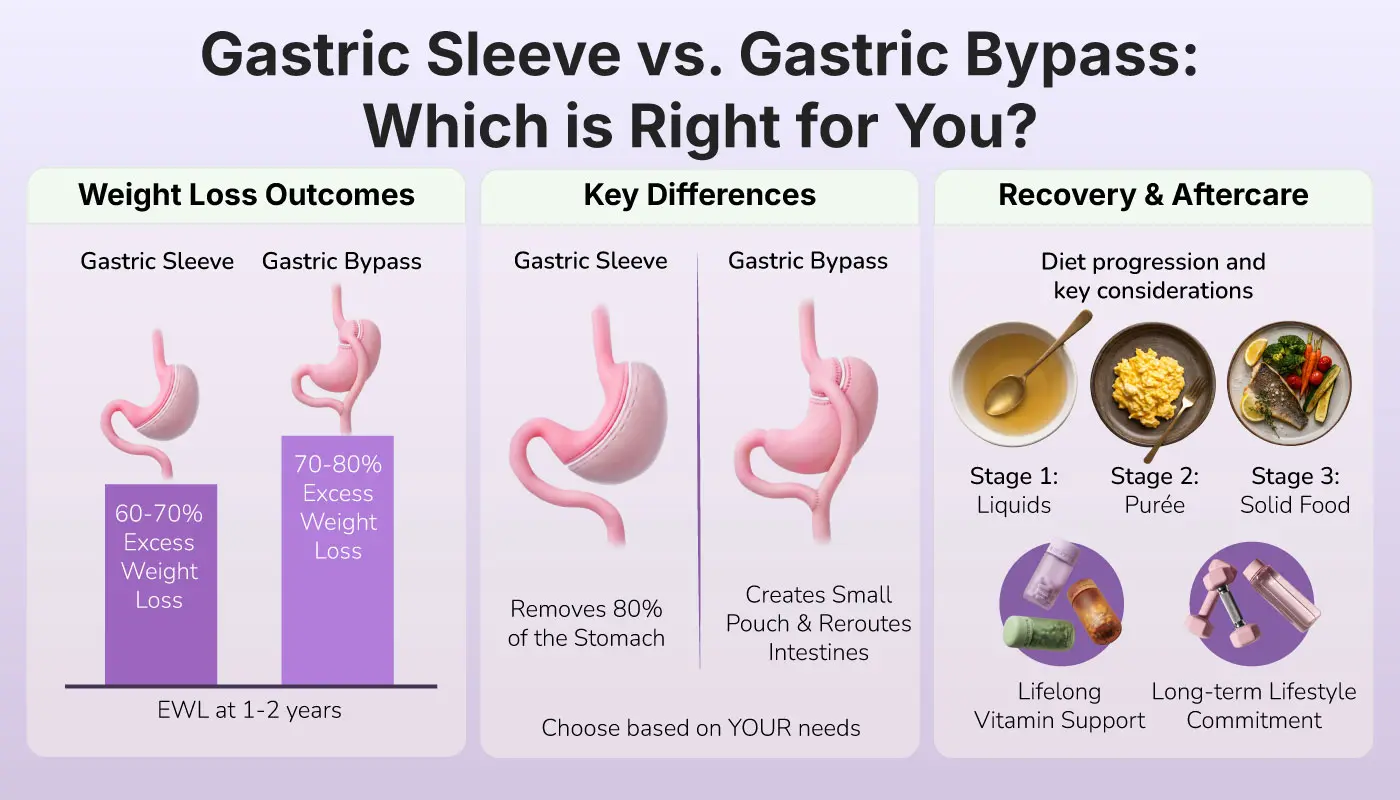
| Average Expected EWL (12-18 months) | 60%-70% | 70%-80% |
| Reversibility | Irreversible (stomach portion removed) | Potentially reversible (technically complex) |
| Intestinal Rerouting | No | Yes |
| Lifelong Vitamin Dependency | Standard daily multivitamins & B12 | High (Requires iron, calcium, B12, vitamin D) |
| Dumping Syndrome Risk | Very Low | Moderate to High |
| Acid Reflux/ GERD Impact | May worsen existing GERD disease | Highly effective at resolving severe GERD disease |
Are unsure between gastric bypass and gastric sleeve? Contact Estherian now and get a free clinical consultation with experts.
1.3 Anatomical Changes: Resection vs. Rerouting
The key difference between a gastric sleeve and a gastric bypass lies in how your internal organs are reshaped to help you lose weight.
A gastric sleeve involves a resection (removal) of tissue, meaning surgeons remove about 80% of your stomach, leaving a narrow, banana-shaped tube, but they don’t touch your intestines.
A gastric bypass involves both resection and rerouting, meaning surgeons create a small pouch out of the top of your stomach and connect it directly to a lower section of your small intestine, bypassing the rest of the stomach and the first part of your digestive tract.
In short, a gastric sleeve simply shrinks your stomach while keeping your natural digestive path intact.
In contrast, a gastric bypass physically re-plumbs your digestive system to reduce both how much you can eat and how many calories your body absorbs.
2. Eligibility & Patient Suitability
Choosing between gastric sleeve and gastric bypass depends on your current health status, goals, medical history, and an expert surgeon’s evaluation.
In addition to consulting an experienced surgeon, you can use the following guideline to decide between gastric bypass and sleeve surgery.
2.1 Who Is a Good Candidate for Gastric Sleeve?
Choose gastric sleeve if you:
- Have had previous complex abdominal surgeries/adhesions.
- Are concerned about strict daily vitamin regimens.
2.2 Who Is Gastric Bypass Recommended For?
Choose gastric bypass if you have:
- Severe pre-existing GERD/ Acid Reflux.
- Uncontrolled type 2 diabetes/ metabolic syndrome.
2.3 BMI and Medical Conditions Criteria (Acid Reflux, Type 2 Diabetes)
Clinically, you need to have a Body Mass Index (BMI) of 40 or higher, or a BMI of 35 or higher alongside severe obesity-related comorbidities, such as type 2 diabetes, severe hypertension, and sleep apnea.
3. Expected Results & Weight Loss Outcomes
Expected weight loss is usually measured as a percentage of Excess Body Weight Loss (%EWL), which is the weight above the patient’s ideal body weight based on a standard BMI.
3.1 Average Weight Loss Comparison Over 1 to 5 Years
- Gastric Sleeve: Patients usually achieve an average expected EWL of 60% to 70% in 12 to 18 months after the surgery.
- Gastric Bypass: Patients usually achieve an average expected EWL of 70% to 80% in 12 to 18 months after the surgery.
3.2 Health Improvements and Chronic Condition Remission
Long-term studies on sleeve gastrectomy, including 10-year clinical follow-up data published in peer-reviewed medical journals, show that both gastric bypass and gastric sleeve provide durable weight loss that lasts for many years.
While gastric bypass has led to a slightly higher percentage of weight loss and metabolic control over a decade, long-term success for both gastric bypass and sleeve depends on the patient’s lifestyle, diet, and exercise.
Another important factor that affects our choice is the total cost we need to pay for weight loss. Let’s compare the total costs of bypass/ sleeve in Turkey, the US, the UK, and the EU.
4. Recovery and Lifestyle Changes
Let’s learn about the recovery timeline and lifestyle changes you need to make after gastric bypass and gastric sleeve.
4.1 Surgical Duration and Hospital Stay
You need to let your body heal gradually after the surgery. It is best to start eating solid food slowly after surgery, so your internal stitches and healing gut can heal safely.
4.2 Recovery Timeline and Returning to Daily Activities
A typical recovery timeline includes the following steps:
- (Days 1-7) Clear Liquids: Drink water, clear broths, protein water, diluted unsweetened juices.
- (Weeks 2-3) Full Liquids & Smooth Purées: Consume high-protein shakes, smooth yogurt, blended soups, strained pureed foods.
- (Weeks 4-5) Soft Foods: Eat scrambled eggs, flaky fish, tender minced meats, cooked soft vegetables.
- (Week 6+) Solid Whole Foods Transition: You can eat lean proteins, dense vegetables, and complex carbohydrates. Please remember to chew slowly.
To ease into daily activities, follow these dietary rules after the surgery:
- Consume Protein: Eat 60-80 grams of protein daily to protect lean muscle mass during rapid weight loss.
- Stay Hydrated: Sip small amounts of water throughout the day (1.5 to 2 liters total). Avoid drinking liquids during meals or for 30 minutes after eating.
- Chew Completely: Chew food and swallow only when it is purée-like to prevent blockage at the pouch or sleeve opening.
4.3 Long-Term Dietary Restrictions and Vitamin Supplementation
After weight loss surgery, both gastric sleeve and gastric bypass require dietary and vitamin changes to keep you healthy, but bypass comes with stricter rules.
Because a gastric sleeve simply makes your stomach smaller, focus on eating small, high-protein meals, chewing slowly, and avoiding sugary or fizzy drinks to prevent stomach upset.
A gastric bypass, however, shrinks your stomach and reroutes part of your intestines, which may cause dumping syndrome, a reaction that triggers severe nausea, stomach cramps, and diarrhea if you eat high-sugar or greasy foods.
This digestive change also affects how your body absorbs nutrients.
Gastric sleeve patients need to take daily multivitamins, calcium, and vitamin D for life because they eat much less food.
Gastric bypass patients absorb fewer nutrients from their food, so they need stronger daily supplements, usually requiring extra iron, vitamin B12 (through special tablets or shots), and higher doses of key vitamins to prevent long-term deficiencies.
Bypass vs Sleeve: Which Is Right for Me?
Don’t hesitate to ask your question!
5. Risks, Side Effects, and Potential Complications
It is no secret that any major abdominal surgery contains risks, and both gastric sleeve surgery and gastric bypass are no exceptions.
While an accredited clinic and experienced surgeon reduce most risks, we still need to consider possibilities before surgery to make informed decisions.
5.1 Common Side Effects (GERD, Dumping Syndrome)
Two common complications that may occur in some individuals after gastric bypass and gastric sleeve are dumping syndrome and GERD.
Dumping Syndrome
Dumping syndrome occurs when high-sugar or high-fat foods move quickly from the small stomach pouch directly into the small intestine.
Its most common symptoms include nausea, abdominal cramping, sweating, rapid heart rate, diarrhea, and sudden weakness.
To reduce symptoms, seriously avoid refined sugars, high-fat foods, and simple carbohydrates.
Acid Reflux (GERD)
If you have gastroesophageal reflux disease (GERD), it may get worse after the surgery because the remaining sleeve pouch is narrow and operates under higher pressure.
Surgeons usually recommend patients with severe pre-existing GERD or Barrett’s esophagus to consider gastric bypass instead, as it naturally reduces gastric acid pressure.
5.2 Surgical Risks and Long-Term Nutritional Deficiencies
Gastric bypass and sleeve share some general surgical and long-term risks. Early complications can include surgical staple line leaks, bleeding, deep vein thrombosis (DVT), or infection.
Late complications can include nutritional deficiencies (higher with bypass), marginal ulcers, strictures, or gallbladder stones resulting from rapid weight loss.
Gastric Bypass vs Gastric Sleeve Costs in Turkey, US, UK, & EU
Bariatric surgery in Western countries can be very expensive. But Turkey offers more affordable options with similar quality. Comparing prices can give us better insight.
- United States: $15,000-$25,000+
- United Kingdom & EU: £8,000-£12,000/ €9,000-€14,000
- Turkey (Estherian Clinic): about €3200
You can also read this article and learn more about Gastric Sleeve Surgery in Turkey.
The Estherian Clinic All-Inclusive Package
International patients choose Istanbul for more affordable, high-quality care designed specifically for medical travel. Estherian Clinic is one of the most popular centers for aesthetic services. Its all-inclusive packages usually cover:
- Complete diagnostic workups (blood panels, endoscopy, cardiology, and pulmonary evaluations) before the surgery
- Operation performed in JCI-accredited surgical facilities
- Full hospital accommodation and private hotel recovery stays
- VIP airport and clinic transfers
- Lifelong personal dietitian and follow-up care after the surgery
Learn More: Liposuction Cost in Turkey: 2026 Prices, Packages & Safety
Why Choose Estherian Clinic for Weight Loss Surgery?
Patient safety and long-term health are Estherian Clinic’s main goals. Features that make Estherian a reliable clinic for international patients include:
- JCI-Accredited Partner Facilities: Operations are performed in modern hospitals equipped with modern surgical technology and intensive care units (ICUs).
- Comprehensive Multidisciplinary Pre-Op Testing: Every patient undergoes screening, including endoscopic stomach evaluations, cardiology consults, pulmonary clearances, and complete blood tests before surgery.
- Board-Certified Surgical Teams: Estherian’s experienced bariatric surgeons specialize in minimally invasive laparoscopic and robotic techniques to minimize scarring and shorten recovery times.
- Lifelong Dietitian Support: Estherian provides continuous, structured follow-up care and nutritional counseling long after you return home.
FAQs
Let’s answer the most frequently asked questions about gastric bypass vs sleeve surgeries.
Are There Foods I Must Avoid after Gastric Bypass?
Yes, you should avoid refined sugars, high-fat fried foods, carbonated beverages, and tough, dry meats. High-sugar foods can trigger dumping syndrome, while carbonated drinks can expand the stomach pouch and cause pain.
Which Is Safer: Gastric Bypass or Gastric Sleeve?
Both procedures are generally safe. Sleeve gastrectomy is simpler and carries a slightly lower risk. However, gastric bypass is better for those who need aggressive metabolic intervention or acid reflux relief.
Can Your Stomach Stretch Back Out after Surgery?
Stomach tissue can gradually expand if you consistently overeat or drink carbonated beverages. While it will not return to its pre-surgery size, stretching the pouch or sleeve can lead to weight regain.