
Medically Reviewed by Dr. Cengizhan Ekizceli, Lead Plastic Surgeon at Estherian Clinic
What to Know Before Breast Augmentation
Breast augmentation is a safe cosmetic procedure that balances naturally uneven breasts and gives them volume. It can also fix the lost shape of your breasts that might happen after a pregnancy or weight loss. Patients can choose silicone implants for added fullness or natural fat transfer for subtle, soft results. Modern techniques allow surgeons to easily balance uneven breasts or add natural fullness.
However, breast augmentation surgery is a very personal decision that can enhance your self-image. Today’s techniques emphasize natural aesthetics, anatomical harmony, and rapid recovery rather than an artificial look. This guide explains the differences between breast implants and fat transfer, as well as the recovery time after surgery, potential treatment costs, and factors that may affect your decision between the two procedures.
What Is Breast Augmentation?
A breast augmentation, often called a boob job, helps you get fuller, more even breasts. It can add size, balance uneven shapes, or bring back volume lost. There are two methods for breast augmentation: either using natural fat transfer or artificial breast implants.
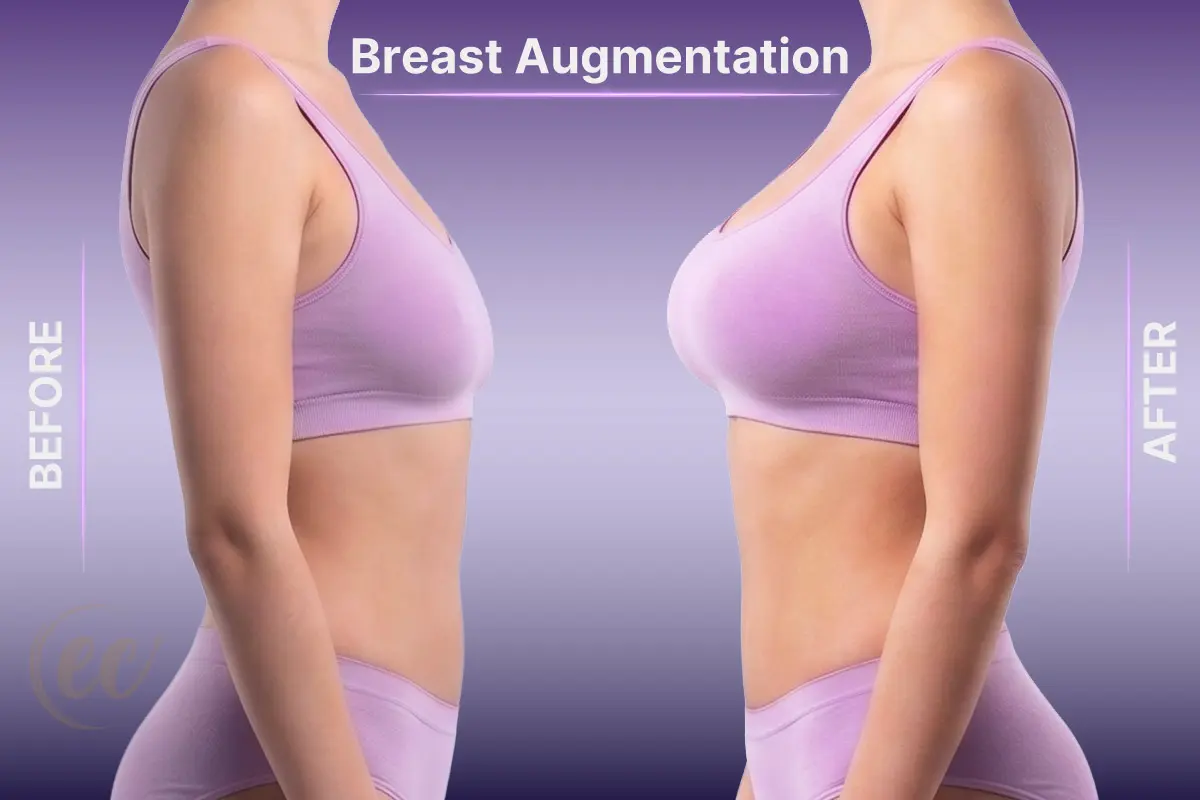
Today’s breast augmentation focuses on three things: keeping you safe, creating natural proportions, and protecting your body’s tissue for the long term. The term “boob job” is an informal expression for breast augmentation. Today, treatment planning may focus on breast volume, proportions, symmetry, and the patient’s preferred appearance rather than simply increasing size.
Your surgeon customizes your treatment based on your body’s unique anatomy; they evaluate your breast width, existing tissue thickness, skin elasticity, nipple position, and chest wall shape, as well as your personal aesthetic goals. There are two main approaches to breast augmentation:
- They gently remove fat from areas like your belly or thighs through liposuction and inject it into the breasts;
- They place the breast implants in one of the three positions: directly over the chest muscle, completely under the chest muscle, or partially under the muscle.
When carried out by a skilled plastic surgeon, both approaches offer safe, long-lasting, and natural-looking results. You can contact the professional team of breast surgeons at Estherian Clinic to receive a consultation about breast augmentation procedures and determine which method is best for you.
Defining the Breast Implant Procedure
During a breast implant procedure, a surgeon makes a small incision and places an implant into a pocket that is surgically created. Common incision locations include the fold beneath the breast, the edge of the areola, or the armpit. The choice depends on your anatomy, implant type, surgical technique, and the surgeon’s recommendation. Scars are permanent, although they may become less noticeable over time.
Why Do People Choose Breast Augmentation?
Every patient’s journey is unique. Some women choose breast augmentation to restore fullness after life changes, correct natural asymmetry, or simply achieve the shape they’ve always wanted.
- Restoring Breast Volume: The natural breast tissue shrinks during pregnancy, breastfeeding, and significant weight loss, stretching the skin envelope on top. Breast augmentation surgery can considerably restore breast structure and firmness
- Correcting Natural Breast Asymmetry: Approximately half of all women experience apparent differences in breast size, shape, or nipple placement. The surgeon may use different implant sizes or combine techniques, if needed, to minimize the difference between breasts to create a perfect asymmetry.
- Building Confidence: After breast augmentation, clothes, swimwear, and business clothes all fit more comfortably and symmetrically. Patients report feeling more confident and more connected to their appearance, leading to active lifestyles.
Breast Implants vs. Fat Transfer: Treatment Options
Your target cup size, body fat reserves, breast tissue volume, and preferred shape all play a role in choosing the best breast enhancement technique. The two options to choose from are:
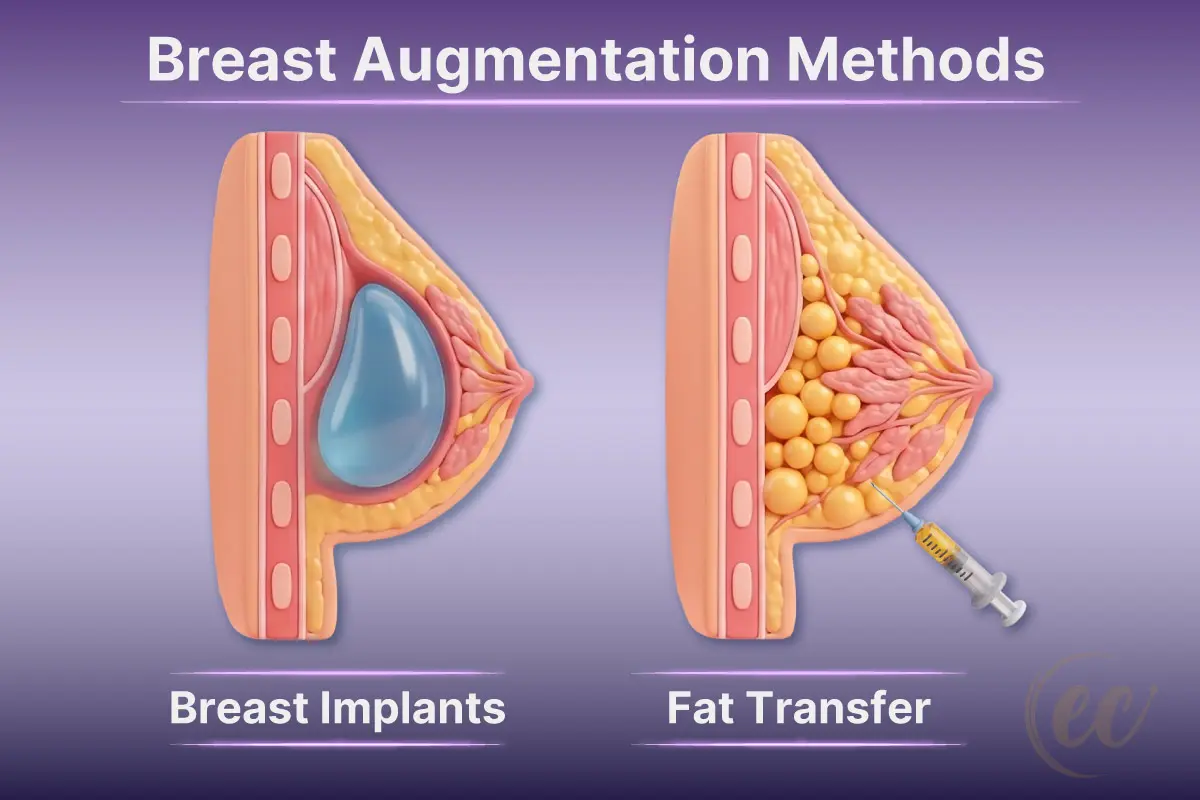
Silicone and Saline Breast Implants
The clinical gold standard for women looking for consistent, multi-cup-size enhancements is still breast implants. Cohesive silicone gel and sterile saline solution devices are the two main categories that international health authorities have approved.
- Cohesive Silicone Gel Implants (also known as “Gummy Bear”): The smooth silicone gel used in these implants reflects the soft texture of natural breast tissue. These implants preserve their structural shape, lower the possibility of noticeable folds, and won’t leak if the outer shell tears because the gel bonds to itself.
- Saline Implants: Surgeons insert an empty silicone shell and fill it with sterile saline solution during surgery. Saline implants feel firmer to the touch and have a greater chance of visible rippling in patients with less soft-tissue coverage.
- Shape and Profile Options: Implants are available in round profiles for obvious upper breast fullness or anatomical (teardrop) profiles for a soft, sloping transition. Visualizing a 300 cc breast implant result helps patients understand how cubic-centimeter dimensions look on different body types.
Fat Transfer Breast Augmentation
Autologous fat grafting, known as fat transfer breast augmentation, uses your own body fat rather than an artificial implant. This procedure offers a natural enhancement without synthetic materials while also refining another area of your body.
Surgeons perform gentle liposuction to remove unwanted adipose tissue from donor zones such as the abdomen, flanks, or inner thighs. The extracted fat is purified using a specialized centrifuge to separate living, viable fat cells. Then, the surgeon injects small amounts of processed fat into the specified areas of the breast using thin flexible tubes. The exact placement depends on the treatment plan and anatomy.
Comparison Table: Breast Implants vs. Fat Transfer
| Clinical Parameter | Cohesive Silicone Implants | Saline Implants | Autologous Fat Transfer |
| Primary Mechanism | Medical-grade cohesive silicone gel shell | Silicone shell filled with sterile saline solution | Carefully injecting small amounts of your own filtered fat |
| Volume Potential | 1 to 3+ full cup sizes per surgery | 1 to 3 full cup sizes per surgery | 0.5 to 1 cup size per treatment session |
| Look & Physical Feel | Soft, natural glandular mobility and bounce | Firmer; potential for fluid wave motion | Indistinguishable from natural native breast tissue |
| Incision Size | 3.5 cm to 5.0 cm | 2.5 cm to 3.5 cm | Tiny 2 mm to 3 mm puncture marks |
| Donor Fat Needed? | No donor fat needed | No donor fat needed | Requires adequate donor fat from flanks, abdomen, or thighs |
| Longevity | No fixed expiration date; replace only if complications occur or to update size | 10 to 20 years (higher deflating risk) | Permanent once fat cells establish blood supply |
| Recovery Period | 1 to 2 weeks off work; 6 weeks for sports | 1 to 2 weeks off work; 6 weeks for sports | 3 to 7 days off work; 3 to 4 weeks for exercise |
Which Breast Enhancement Method Fits Your Body
The anatomy of your chest wall, the elasticity of your tissue, and your long-term objectives will determine whether you choose natural fat transfer or cohesive silicone implants. To make the best choice, it is advised to speak with a qualified surgeon. For a preliminary photo evaluation and recommended course of treatment, speak with our multinational medical team in Istanbul directly.
Free Quality Consult with the Doctor!
Don’t hesitate to ask your question!
How Much Does Breast Augmentation Cost in Turkey?
The cost of breast augmentation varies worldwide. The operating facility’s accreditations, the surgeon’s clinical background, the cost of anesthesia, and the implant technology selected are some of the variables. Here is a simple comparison:
- United States: $6,500 to $12,000 (excludes post-op garments, overnight stays, and follow-up fees).
- United Kingdom: £5,500 to £9,500 ($7,000 to $12,000 equivalent; variable aftercare inclusions).
- Estherian Clinic (Turkey): $3,000 to $5,000 (all-inclusive: surgery, FDA-approved implants, 5-star hotel, VIP transit, and medications).
Global Cost Comparison vs. Treatment in Turkey
Surgical quotes typically only include the surgeon’s basic fee in Western countries. Unexpected add-ons often include operating room rentals, anesthesiologist bills, preoperative lab work, surgical compression garments, and follow-up appointments. Some international patients choose package-based treatment in Istanbul because it includes accommodation, transportation, surgery, and aftercare services into one quote. However, patients should still confirm exclusions and possible additional costs.
| Cost Element | United States (Average) | United Kingdom (Average) | Estherian Clinic (Istanbul Package) |
| Surgeon and Operating Fees | $5,500 – $9,000 | £4,500 – £7,500 | Included |
| FDA-Approved Implants | $1,200 – $2,500 | £1,000 – £1,800 | Included (Mentor / Motiva) |
| General Anesthesia Fees | $800 – $1,500 | £600 – £1,200 | Included (Board-Certified Specialist) |
| 5-Star Hotel Stay (6 Nights) | Out-of-Pocket Expense | Out-of-Pocket Expense | Included in the Treatment Package |
| VIP Airport and Clinic Transfers | Out-of-Pocket Expense | Out-of-Pocket Expense | Included (Private Chauffeur) |
| Post-Op Garments and Medication | $150 – $350 | £100 – £250 | Included |
| Total Estimated Investment | $7,650 – $13,350+ | £6,200 – £10,750+ | $3,200 – $4,800 Total |
Turkey provides excellent value through favorable currency exchange rates and reduced operating overhead rather than by sacrificing clinical quality. When selecting a clinic, look for teams in JCI-accredited surgical hospitals that use premium FDA-cleared brands like Motiva and Mentor. To calculate the total estimation of your breast augmentation surgery at Estherian Clinic, you can contact our team to help you figure out your whole journey to Turkey.
Breast Augmentation Recovery and Aftercare
Knowing the expected recovery timeline helps procedural anxiety and promotes a smooth healing process. Your healing time can differ depending on whether implants are placed under the chest muscle or above it and whether you also have a breast lift.
- Days 1 through 3 (Immediate Post-Op): You will experience tightness across your chest, particularly if your surgeon placed your implants under the muscle. You might feel a mild soreness similar to what you would feel after an intense chest workout. Anti-inflammatory drugs, muscle relaxants, and oral painkillers help you stay comfortable. You should wear a seamless medical compression bra all the time.
- Weeks 1 to 2 (Returning to Light Routine): By day seven, the majority of bruising and severe pain go away. Stitches either dissolve or are removed by your surgeon during your post-operative examination. Patients with desk jobs can safely go back to work in 7 to 10 days. Avoid lifting anything heavier than 10 lbs (4.5 kg).
- Weeks 3 to 6 (Tissue Adaptation): Swelling decreases by approximately 60% to 70%. You may start with light lower body cardiovascular exercise, such as brisk walking or stationary cycling. Running, push-ups, and direct chest exercises should be avoided during this time.
- Drop and Fluff (Months 3–6): Under muscle implants go through the “drop and fluff” process naturally. The chest muscles relax, and the implants settle into the lower breast pocket to create a natural, tear-shaped projection. Incision lines will change from pink marks to fine, pale scars.
Risks and Possible Complications
Breast augmentation is a commonly performed procedure, but like all surgery, it carries potential risks and requires individual assessment.
- Capsular Contracture: The human body will automatically build a protective capsule of collagen fibers around any implanted device. In a small percentage of cases, this tissue capsule tightens and squeezes the implant, causing firmness, discomfort, or aesthetic asymmetry. Modern textured and nanosurface shells greatly reduce this risk.
- Implant Displacement or Malposition: If you return to heavy exercise too soon or do not wear the support bras as instructed, your implants can move higher, lower, or wider on your chest wall.
- Infection and Hematoma. Accumulation of blood (hematoma) or serous fluid around the surgical pocket occurs in less than 1% to 2% of operations. Sterile surgical settings, prophylactic antibiotics, and temporary surgical drains help prevent such events.
- Changes in Nipple Sensation: During the first few weeks, the nipple-areola complex may experience occasional numbness or hypersensitivity as small sensory nerves heal from stretching. Permanent loss of sensation is still uncommon.
Are You a Suitable Candidate for Breast Augmentation Surgery?
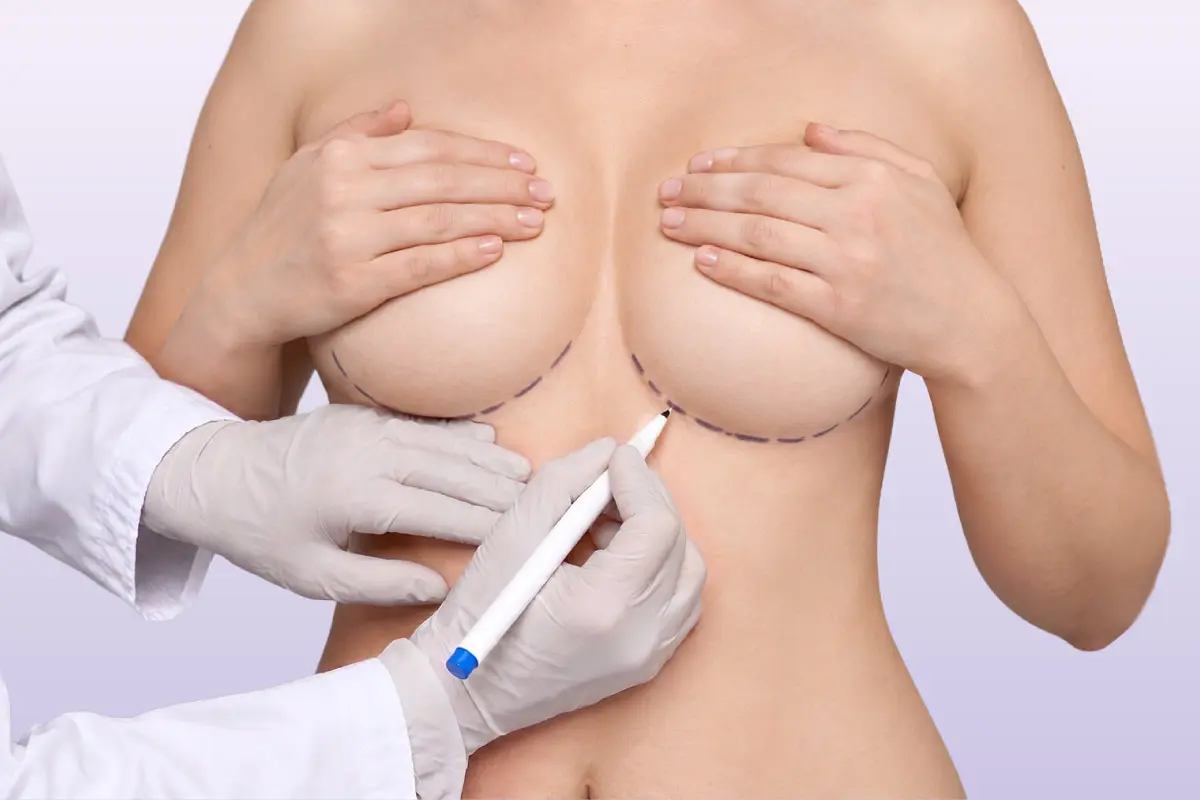
The first step in protecting patient safety and ensuring realistic, rewarding outcomes is candidate suitability. Some of the main factors to determine a patient’s suitability are:
- Physical Health and Stability: Candidates should be in optimal general health, have stable body weight, and should not have any unmanaged chronic illnesses that impede wound healing.
- Non-Smokers or Committed Quitters: Nicotine causes narrowing of blood vessels and increases the risks of delayed incision healing, infection, and skin necrosis. All smoking and vaping products must be stopped at least three to four weeks before and after surgery.
- Realistic Aesthetic Expectations: Candidates should be aware of the real outcomes of surgical implants and fat grafting. Augmentation alone may result in a bottom-heavy appearance if your breasts have severe drooping (ptosis), where the nipple is below the inframammary fold. The best way to prevent breast ptosis is to combine a breast augmentation procedure with a breast lift.
- Clear personal motivations: The decision to get surgery should be yours, driven by your own aesthetic needs, not by outside pressures or fleeting trends seen on the internet.
Why Choose Estherian Clinic for Your Procedure
The Estherian Clinic in Istanbul provides international patients seeking body and breast contouring with safe, natural surgical results. Surgical accuracy and individualized care are combined in our clinical philosophy.
Our surgical team makes use of touchless Keller Funnel delivery sleeves and high-definition endoscopic instruments. These methods lower the risk of contamination and postoperative inflammation by enabling surgeons to insert implants through small incisions with little tissue contact.
Your entire medical journey will be seamless, supportive, and stress-free, thanks to our multilingual patient coordinators—from your first virtual 3D simulation to your post-operative recovery at our partner hotels. See our full line of advanced cosmetic surgery solutions for our entire range of treatment options.
Plan Your Breast Enhancement Journey in Istanbul
You start your journey from your home with a virtual consultation where our medical team reviews your aesthetic objectives, evaluates photos, and crafts a customized surgical plan. Your surgery, hospital stay, hotel room, and private transfers are all included in the treatment plan. You will receive an all-inclusive plan before your trip, ensuring there won’t be any surprises when you get there.
When you arrive in Istanbul, your dedicated coordinator will guide you through your in-person tests and final consultation with the surgeon before the procedure. After your surgery, you will rest comfortably in your hotel with dedicated follow-up care. Then, on day six, you will have an in-clinic evaluation to check your incisions and confirm they are healing well and that it is safe for you to fly home.
Frequently Asked Questions (FAQ)
What is breast augmentation surgery?
Breast augmentation uses silicone or saline implants or purified autologous body fat to increase breast volume, contour, and symmetry.
How much is a breast augmentation?
Breast augmentation costs $6,500–$12,000 in the US and UK. Estherian Clinic in Turkey offers full-service packages from $3,000 to $5,000, including surgery, FDA-approved implants, luxury hotel accommodations, VIP transfers, and aftercare.
How long is the breast enlargement recovery time?
Most patients return to light daily tasks and desk work in 7 to 10 days. Within 4 to 6 weeks, swelling will decrease considerably. Implants will soften and settle into their final contours within 3 to 6 months.
How long do breast implants last?
Modern cohesive silicone implants don’t have an arbitrary expiration date. Premium implants from top-notch manufacturers last 10 to 20 years or longer without needing replacement unless complications or changes in one’s appearance occur. But they are not lifetime devices.
Can I combine a breast implant procedure with a lift?
Yes. Patients with glandular deflation and skin laxity usually opt for an augmentation-mastopexy. This combined approach restores internal upper-pole fullness while tightening the skin envelope and elevating the nipple-areola complex.
Is fat transfer breast augmentation permanent?
Yes. For the first 3 months, the injected fat cells need to develop a vascular blood supply to survive. Fat cells that do this successfully (usually 60% to 70% of injected cells) remain permanently. These cells will naturally grow or shrink with your future weight changes.