

Fox eye surgery, also known as cat eye surgery, is one of the most popular facial procedures worldwide. By elevating the outer corner of the eye and smoothing the brow tail, this procedure gives your eyes a refreshed, almond-shaped appearance. While it can be expensive in the US or Western Europe, Turkey offers more affordable options. Fox eye surgery in Turkey can cost $2,200-$3,800 at Estherian Clinic. But before deciding whether to do it, learn more about fox eye lift in Turkey, surgical vs. non-surgical techniques, costs, recovery, and pro tips.
Want to know more about Fox Eye Surgery costs?
Don’t hesitate to ask your question!
This article is medically reviewed by Dr. Cengizhan Ekizceli, a board-certified plastic surgeon and expert in advanced oculoplastic surgery and facial aesthetics at Estherian Clinic, Istanbul.
What Is Fox Eye (Cat Eye) Surgery?
Fox eye surgery (or cat eye surgery) is a cosmetic procedure that lifts, stretches, and tilts the outer corner of the eye to give your eyes an almond-shaped, refreshed look.
Instead of operating on the eye itself, the surgeon works on the soft tissues, tendons, and skin surrounding the eye socket.
The main goal is to change the angle between the inner and outer corners of your eye, known as the canthal tilt.
When eyes look tired or downturned, the outer corners are level with or lower than the inner corners. Elevating the outer corner just 2 to 5 degrees creates that lifted, fox-eye contour.
Depending on the patient’s natural facial features and desired results, surgeons use one of two main techniques:
- Lateral Canthopexy: It tightens and reinforces the existing eye tendon with internal stitches without cutting it, creating a subtle lift with faster recovery.
- Lateral Canthoplasty: During a lateral canthoplasty, the surgeon cuts, shortens, and reattaches the tendon directly to the eye socket bone, providing a dramatic, permanent change in eye shape.
📍 At times, the Fox eye surgery is also done in combination with a brow lift or a blepharoplasty to achieve enhanced rejuvenation and a more comprehensive transformation.

Fixing Hooded Eyes & Symmetry with Fox Eye Surgery
Fox eye surgery is popular not just because it makes your eye more beautiful, but it also provides cosmetic and anatomical benefits, including:
- Fixing Hooded Eyes
- Restoring Facial Symmetry
- Reversing Natural Aging
Check out this Fox Eye Surgery before and after gallery.
Fixing Hooded Eyes
Reversing Natural Aging
Restoring Facial Symmetry
Many people are born with eyes or eyebrows that are slightly different in height or angle. By fixing the anchor point of each eye individually, surgeons can balance these natural asymmetries.
Reversing Natural Aging
As you get older, your skin loses collagen, and the tendon that keeps the outer corner of your eye stretched out weakens, making your eyes look droopy or sad.
Placing this tendon back in place restores a firmer, more youthful look to your eyes and face.
Fox eye surgery comes in different forms, including surgical and non-surgical approaches. So, you can choose what best fits your needs, goals, and your surgeon’s recommendation.
Surgical vs. Non-Surgical Fox Eyes
To reach fox eyes, you can choose between surgical and non-surgical methods. But to choose between them, you need to understand the differences.
PDO Thread Lift: Non-Surgical
In a PDO thread lift, a non-surgical method, doctors use fine, hollow needles to insert Absorbable Polydioxanone (PDO) threads under local anesthesia.
These threads have tiny microscopic hooks that grab onto your subcutaneous facial tissue (the layer of fat and connective tissue beneath the skin).
They physically pull the skin around your temples and the tail of your eyebrow upward toward your hairline.
- Pros: It provides immediate, visible lift, requires no surgical cuts or scars, and needs no recovery downtime.
- Cons: Results last only 6 to 12 months. It carries a higher risk of uneven results or threads poking through the skin. It cannot change the underlying structure or shape of your eye tendon.
Lateral Canthopexy: Supporting the Outer Eye Corner
In a lateral canthopexy, the surgeon places internal non-absorbable stitches to tighten and raise the existing eye tendon (lateral canthal tendon) without cutting it away from its natural attachment point.
- Pros: It keeps your natural tendon structure intact, carries a much lower risk of accidentally changing your natural eye shape, and heals faster.
- Cons: It works best for minor eyelid sagging and provides a subtle lift rather than significant reshaping.
Lateral Canthoplasty: Surgical, Permanent Reshaping
In a lateral canthoplasty procedure, the surgeon carefully cuts the lower part of the main eye tendon (lateral canthal tendon), shortens or repositions it, and fastens it directly to the bone inside your eye socket.
- Pros: It is completely customizable, creates a permanent change, and effectively fixes drooping eye corners or the whites under the eye.
- Cons: It requires advanced surgical skill and involves a full 10 to 14-day recovery period.
Endoscopic Temporal (Brow) Lift Combination
To create a complete, sweeping eye shape, surgeons usually perform a canthoplasty with a temporal brow lift.
By making tiny, hidden cuts behind your hairline, the surgeon uses a small camera to loosen the deep tissue layers around your temples, lifting your outer eyebrow and the outer corner of your eye at the same time.
Thread Lift vs. Surgical Fox Eye
You can also check the similarities and differences between a thread lift and surgical fox eye in the table below.
| Feature | PDO Thread Lift | Lateral Canthopexy | Lateral Canthoplasty (Surgical) |
| Primary Mechanism | Subcutaneous thread tension | Internal suture tightening | Tendon release & bone-anchoring |
| Permanence | Temporary (6-12 months) | Semi-Permanent (3-5 years) | Permanent structural outcome |
| Invasiveness | Non-invasive | Minimally invasive surgery | Structural oculoplastic surgery |
| Anesthesia Type | Local anesthesia | Local or IV sedation | General or Twilight sedation |
| Recovery Time | 2-4 days | 5-7 days | 10-14 days |
| Ideal For | Minor, temporary lift testing | Mild age-related sag | Aesthetic almond reshaping |
| Reversibility | Dissolves naturally | Difficult | Needs surgical revision |
Another important factor that directly affects your decision about the type of fox eye surgery and your condition is the total price you need to pay.
While fox eye surgery prices can be high in the US and Western Europe, Turkey offers clinics that provide high-quality care with more affordable prices.
Check out these eyelid surgery before and after images.
Fox Eye Surgery Cost in Turkey
One of the main reasons international patients choose Istanbul for cosmetic surgery is the significant cost advantage compared to the UK, EU, and USA, without compromising on medical quality or surgeon credentials.
The table below compares average prices for fox eye surgery in Turkey, the US, the UK, and the EU.
| Country | Average Price Range | Includes Hospital & Hotel? |
| United States | $6500 – $12000 | No (Surgeon fee only) |
| United Kingdom | $5500 – $9500 | No (Clinic fee only) |
| Germany/ EU | $5000 – $8500 | No |
| Turkey (Estherian Clinic) | $2200 – $3800 | Yes (All-Inclusive) |
Why Is Fox Eye Surgery More Affordable in Turkey?
- Lower Overhead Costs: Medical and operational expenses, facility management, and staff costs are lower in Turkey than in Western nations.
- Favorable Exchange Rates: Strong foreign currency rates allow modern clinics to offer premium care at lower costs.
- Government Medical Tourism Support: Turkey actively supports accredited medical facilities providing services to international patients.
Why Choose Estherian Clinic for Fox Eye Surgery?
Estherian Clinic is one of the most popular clinics in Istanbul, offering a wide range of aesthetic surgeries, including fox eye surgery.
Estherian’s all-inclusive packages cover every detail, from medical care to travel and hotel stays. Let’s find out why many people choose Estherian for fox eye surgery.
Expert Surgery Team Led by Dr. Cengizhan Ekizceli
Dr. Cengizhan Ekizceli, a highly skilled plastic surgeon known for facial aesthetics, leads the clinic. He creates a personalized plan based on your natural facial shape, rather than using a one-size-fits-all method.
Full Medical Checks
Your safety comes first. Before surgery, you will have complete blood tests, an ECG (heart check), and detailed eye assessments to ensure you are ready for the procedure.
Hospital Stay with 24/7 Care
You will stay overnight in a modern hospital. A team of nurses will take care of you around the clock to keep you comfortable and monitor your early healing.
Luxury Hotel Stay (4-5 Nights)
To help you rest, we book a 4-star or 5-star hotel in Istanbul close to the clinic. This gives you a quiet, comfortable place to relax between check-ups.
Private VIP Rides
You won’t have to worry about getting around an unfamiliar city. Our VIP driver picks you up and drops you off between the airport, hotel, and clinic for every visit.
Complete Aftercare Kit
Before leaving the clinic, you get a full kit with everything you need for recovery: prescription medicines, eye gels, anti-swelling ointments, and cold packs.
Personal Coordinator
You will have a dedicated coordinator who speaks your language. They help with translation, answer your recovery questions, and guide you through every step of your stay.
🩹 Recovery and Healing Process of the Fox Eye Surgery
Similar to other cosmetic surgical procedures, the outcome of fox eye surgery heavily depends on an uneventful recovery period and strict adherence to maintenance guidelines. The initial recovery period for a fox eye or siren eye surgery lasts 2 to 4 weeks. During this time, patients may suffer from mild pain, discomfort, swelling, mild bruising, and asymmetry. These symptoms mostly resolve after 10-14 days if patients strictly follow the advice of the surgical team.
Here are some helpful aftercare tips to ensure an uneventful and seamless recovery period after a canthoplasty procedure:
- Stay at home and ensure rest and minimal activity for the first 48 hours post-surgery
- Use a cold compress around the surgical site for 10-15 minutes, as advised by the surgical team, to decrease swelling
- Strictly use your prescription medication as explained by the surgical team
- Keep your head elevated when lying down to prevent fluid buildup
- Avoid manipulating the surgical site and the ocular area
- Do not wet the surgical site for 3-5 days or as long as your surgeon advises
- Avoid cosmetics and skincare products in the ocular area for the next 3-4 weeks
- Use contact lenses after the initial recovery period (2-3 weeks) is over
- Avoid exertion and straining
- Protect eyes from environmental factors like sunlight, wind, and dust
- Maintain a nutritious diet
- Avoid strenuous workouts
- Do not smoke or indulge in alcohol consumption, as these may retard wound healing
- Maintain a healthy lifestyle and keep an eye out for signs of delayed healing or infection
- Do not miss any follow-up visits to your surgeon

Fox Eye Surgery Aftercare Timeline
- Days 1-3 (Initial Healing): Swelling, mild bruising, and tight eye sensation peak during the first 72 hours. Use cold compresses every 2 hours while awake and sleep with your head raised on 2-3 pillows. Use prescribed antibiotic ointment and artificial tears.
- Days 4-7 (Early Recovery): Swelling begins to subside. Stitches around the outer eyelid corner are usually removed on Day 7 at Estherian Clinic before your return flight.
- Weeks 2-3 (Return to Work): You can cover the remaining bruising with light makeup once the suture sites are completely closed. Most patients return to work and social activities.
- Month 1 (Resuming Exercise): You can resume heavy lifting, strenuous cardio, sauna, and swimming. Avoid rubbing or pulling hard on the outer eye areas.
- Month 3 (Final Aesthetic Outcome): Your internal deep-tissue heals completely. Soft tissue sits into its natural, permanent almond shape.
Fox Eye Surgery for Men (Fox Eye Men)
Many male patients want eye surgery to fix tired, drooping outer corners or hooded eyelids. However, the procedure must be adjusted to preserve masculine facial features.
While women usually need a sharp, upward curve with a high lift at the outer corner and an arched eyebrow, men need a flatter, subtle stretch that keeps the eyebrow straight and natural.
Women’s brows are lifted into a soft arch. For men, the eyebrow must stay flat and sit right along the brow ridge to maintain a masculine look.
Lifting the outer corner of the eye too high can make the eyes look too feminine. For men, sagging lower eyelid surgery straightens and refreshes the eye while keeping the lift subtle.
Because men usually have thicker skin, surgeons hide small incisions inside natural crow’s-feet wrinkles or behind the hairline so scars remain invisible.
Fox Eye Surgery Risks & Possible Complications
You should be aware of the potential risks of fox eye surgery to set realistic expectations and plan for an easy recovery. Possible risks of a cat eye or fox eye surgery include:
- Temporary Unevenness: Your eyes may swell slightly differently in the early days, which can temporarily make them look uneven until they heal.
- Eye Surface Swelling (Chemosis): A harmless, gel-like swelling on the clear surface of the eyeball may appear. This usually clears up in 2 to 4 weeks with prescribed eye drops.
- Loss of the Sharp Outer Corner: If the tendon isn’t anchored correctly, the outer corner can lose its sharp angle and look rounded. Choosing an experienced specialist prevents this issue.
- Infection & Dryness: Simple aftercare, like taking your prescribed antibiotics and using daily lubricating eye drops, helps prevent infections and dry eyes.
📍Most of these potential risks are avoidable by ensuring that the operating surgeon is experienced and board-certified. Moreover, having a good pre-operative health status, an active lifestyle, a stable weight, and a lack of other health issues also minimizes the risk of developing any untoward post-operative complications.

💉 Non-Surgical Alternatives to Consider
Before a canthoplasty procedure, many people wonder how long a fox eye surgery lasts. The results of this surgery are mostly permanent. However, to ensure the success of the fox eye surgery, before and after care for the patients is a priority. Individuals who are not sure about surgery can avail of non-surgical fox eye alternatives, which include:
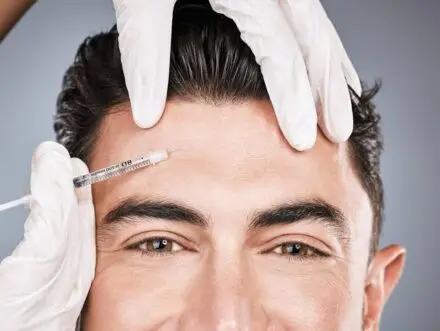
Botox Brow Lift
A non-surgical eye lift is possible by using Botox injections. It is also sometimes referred to as a chemical brow lift. During the procedure, Botulinum Toxin Type A is injected strategically around the eye in selected muscles. Botox works by blocking the nerve signals to the muscles, which prevents muscle contractions and has a slight lifting effect on the eyes and eyebrows. While the outcomes of a traditional surgical eyelift are permanent, a Botox brow lift procedure is temporary and results last approximately 3-4 months.
Thread Lift
Unlike a traditional canthoplasty surgery, a thread lift is a minimally invasive procedure, involving the use of absorbable sutures to produce a lifting effect. Moreover, a thread lift for the eye is an effective way to achieve an uplifted aesthetic. In addition, it takes away the need for general anesthesia, a long recovery process, or noticeable surgical incisions. Having said that, the outcomes of a thread lift are more subtle and not as durable as a cathoplasty.
Ready to secure a permanent, beautifully sculpted siren eye look? Since a surgical fox eye lift provides long-lasting, striking facial symmetry, ensuring it is performed by a top board-certified plastic surgeon is vital. Connect directly with our patient care team on WhatsApp to check our current all-inclusive surgical packages and get an instant price quote!
✨ Can You Reverse Fox Eye Surgery?
The simple answer is that a fox eyelift performed surgically through a canthoplasty, canthopexy, or temporal lift is only partially reversible. Once the muscles, tendons, skin, or any other tissue in the body is surgically changed, it becomes almost impossible to go back to the pre-operative status. This is true for a fox eye surgery as well. Mild alterations may be achievable through lowering the outer canthus or the eyebrow, fat grafting, fillers, or laser treatments.
Depending on the type of surgical procedure, the fox eye surgery costs vary among different hospitals and clinics.
Are You a Good Candidate for Fox Eye Surgery in Turkey?
You may be a great candidate for a fox eye lift if you:
- Have naturally downturned outer eye corners or sagging lower eyelids.
- Have mild drooping or hooded skin on the outer edges of your upper eyelids.
- Are in good health and want a subtle, natural improvement.
- Are a non-smoker or can pause smoking for 2 weeks before and after surgery to help your skin and blood vessels heal properly.
FAQs
Let’s review answers to the most frequently asked questions about fox eye surgery in Turkey.
Is Fox Eye Surgery Permanent?
Yes, surgical methods like lateral canthoplasty and deep-plane temporal lifts provide permanent results. However, non-surgical thread lifts are temporary and last 6 to 12 months.
Does the Fox Eye Procedure Hurt?
No, the surgery is performed under local anesthesia with sedation or general anesthesia, so you feel no pain during the operation. But you may feel sore during recovery.
Will There Be Visible Scars?
Small canthoplasty cuts are hidden in the natural crease at the outer corner of your eye or just below your lower eyelashes. If you also get a temporal brow lift, the tiny cuts are hidden inside your hairline.
How Long Do I Need to Stay in Turkey for Fox Eye Surgery?
It takes about 5 to 7 days, including pre-operative consultations, the procedure, post-operative monitoring, and stitch removal on day 7, before you fly home.