

Medically reviewed by Dr. Mehmet Yildiran, Board-Certified Facial Plastic Surgeon at Estherian Clinic
Ethnic rhinoplasty in Turkey is a nose surgery designed for patients of African, Asian, Middle Eastern, or Hispanic descent who want to enhance facial balance while fully preserving their unique cultural identity. It costs between €2000 and €3500 at Estherian Clinic as an all-inclusive package, compared to $10,000 to $20,000 in the US. Turkish rhinoplasty specialists perform hundreds of multi-ethnic procedures annually, giving them deep practical expertise.
What Is Ethnic Rhinoplasty?
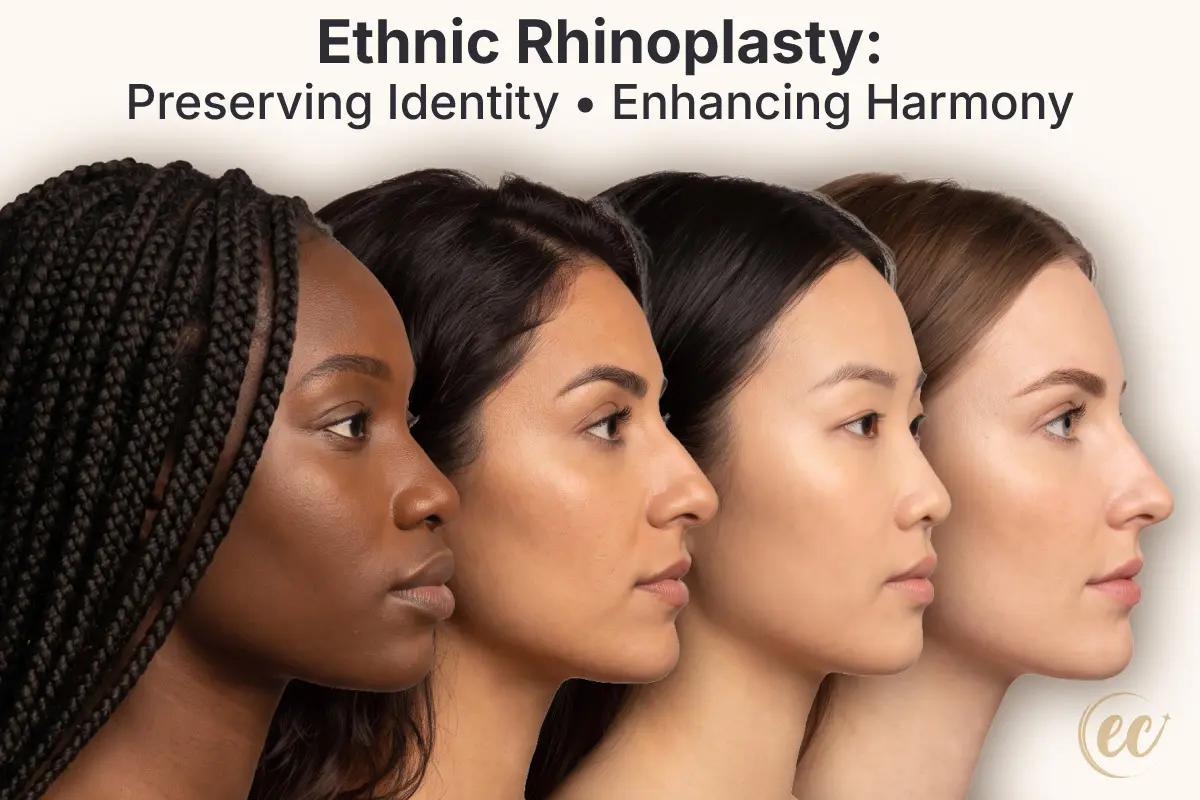
Ethnic rhinoplasty is a nasal surgery customized to patients with diverse cultural backgrounds and distinct anatomical features. This cosmetic procedure is ideal for individuals of African, Asian, Middle Eastern, and Hispanic heritage. While conventional nose surgery often focuses on reducing size by removing bone and cartilage, ethnic rhinoplasty emphasizes structural reinforcement. The main goal of ethnic rhinoplasty is building up projection, refining the nasal tip, and preserving your unique heritage and natural facial harmony.
Just removing tissue from beneath the skin can cause the tip of the nose to lose its genuine definition. Ethnic rhinoplasty uses specialized reshaping methods to build a stable internal framework to craft a balanced look that harmonizes naturally with the rest of your facial features. This guide explains how ethnic rhinoplasty works, its costs in Turkey, risks and recovery time, and how a surgeon can affect the final facial result.
Why Choose Ethnic Rhinoplasty? Preserving Identity While Enhancing Harmony
Choosing to refine your nose does not mean erasing your cultural heritage. The goal is harmony: a nose that sits in proportion with the eyes, cheeks, lips, and chin and that still looks like it belongs to someone from your family. The real objective of ethnic rhinoplasty is balance, not assimilation. Modern surgeons concentrate on:
- Cultural Preservation: Protecting the unique attributes of your heritage while correcting personal aesthetic concerns.
- Facial Harmony: Changing the nose so it matches your forehead slope, cheekbones, lips, and chin.
- Functional Breathing: Adjusting internal asymmetry (such as a deformed nose wall) to improve normal airflow alongside cosmetic improvements.
- Long-Term Stability: Building strong cartilage architecture that keeps your nose from drooping as your skin heals and settles over time.
Common Anatomical Variations for Ethnic Rhinoplasty
Ethnic rhinoplasty is a set of approaches chosen based on the patient’s nasal structure. Every heritage brings distinctive structural features to the operating room. Surgeons customize their surgical plan based on each specific anatomical background:
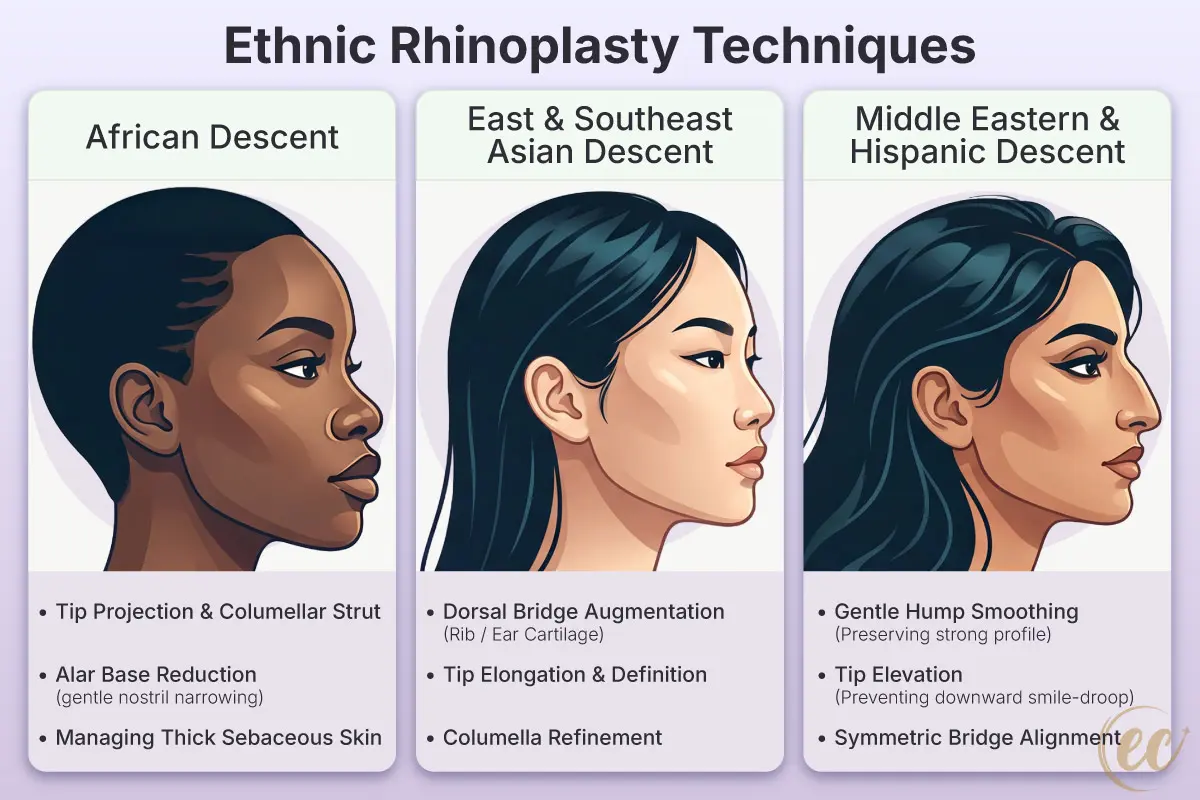
African Descent (African American and Afro-Caribbean)
Patients of African descent often have a wider nasal base, softer lower cartilage, flatter bridge, and usually thicker skin. The typical goals are a slightly higher bridge, a more defined tip, and narrower nostrils, all while keeping the nose in proportion with fuller lips and cheekbones.
For African descent, surgery often involves reducing nostril flaring to gently narrow wide nostrils without creating visible external scars. Surgeons also place cartilage pillars to lift, project, and define the tip so it does not appear rounded under thicker skin.
Asian Descent (East and Southeast Asian)
Patients of East and Southeast Asian descent often have a low, flat bridge, a short nose, and a tip that lacks projection. The skin tends to be thick and the cartilage soft. Asian rhinoplasty commonly focuses on augmentation, building up volume rather than reducing it.
Many patients want a higher, more structured nasal bridge and better projection at the tip. Surgeons use natural cartilage grafts (from the ear or rib) for smooth bridge lift, correction of the columella (the vertical strip of skin at the base of the nose), and ideal projection between the eyes.
Middle Eastern and Hispanic Descent
Patients of Middle Eastern, Mediterranean, and Hispanic descent often have a strong, high bridge with a visible hump, a drooping or rounded tip, and moderately thick skin. The surgeon should be careful because too much reduction will make the nose look scooped and out of place on their strong face.
The surgical approach carefully smooths the nasal bridge while preserving the tip cartilage to keep it elevated and secure. The most important consideration is avoiding over-resection of the bridge and preserving a natural, strong profile. This ethnic group often prefers reshaping the bridge without breaking it down completely.
Standard vs. Ethnic Rhinoplasty: Key Differences
Ethnic rhinoplasty adds structure and refines proportions, unlike traditional nose surgery, which removes bone and cartilage to adjust the nose size. The following table helps you easily compare the key differences between standard and ethnic rhinoplasty.
| Feature | Standard Rhinoplasty | Ethnic Rhinoplasty |
| Primary Goal | Reduce size, narrow bones, and remove humps | Build structure, refine proportions, protect identity |
| Skin Thickness | Usually thin to medium | Medium to very thick |
| Cartilage Strength | Firm and rigid | Softer, more flexible; requires added support |
| Graft Requirements | Occasional minor grafts | Frequently requires structural ear, septal, or rib grafts |
| Nostril Reshaping | Rarely required | Common |
| Swelling Duration | Settles in 6 to 12 months | Can take 12 to 24 months due to thicker skin |
How Much Is Ethnic Rhinoplasty in Turkey? (2026 Costs)
Cost is one of the main reasons international patients choose Istanbul for facial surgery. The ethnic rhinoplasty surgery costs $10,000 to $20,000 in the United States and £7,000 to £14,000 in the UK, which usually covers the surgeon’s fee only. In Turkey, all-inclusive packages allow patients to access world-class surgeons and accredited hospitals at 50% to 70% lower costs.
| Location | Average cost | What’s included |
| United States | $10,000 to $20,000 | Surgeon fees; hospital, anesthesia, and follow-up are often billed separately |
| United Kingdom | £7,000 to £14,000 | Surgery and clinic stay; aftercare is often extra |
| Estherian Clinic (Turkey) | €2000 to €3500 | All-inclusive: surgery, hospital stay, 3D simulation, hotel, VIP transfers, aftercare kit, follow-up |
Ethnic rhinoplasty sits at the higher end of Turkey’s rhinoplasty pricing because it takes longer and usually needs grafts. Rib cartilage harvesting adds to the cost, so a major bridge build costs more than tip refinement alone. Your exact quote depends on what your nose needs.
Want to know which rhinoplasty techniques fit you
Don’t hesitate to ask your question!
Why Choose Turkey for Ethnic Rhinoplasty?
- Expert Surgeons: Turkey is known worldwide for rhinoplasty. Skilled Turkish surgeons frequently handle diverse nasal structures, making them true experts in ethnic noses.
- Affordable Costs: Many procedures cost 50–70% less than in the US or UK. Even with flights and accommodations, you’ll often save money overall.
- Modern Clinics: Expect top-tier facilities with international accreditations and English-speaking staff.
- All-Inclusive Packages: Some clinics bundle surgery, hotel, transfers, and aftercare. You can focus on healing rather than logistics.
- Beautiful Destination: Enjoy Turkey’s rich history and culture. It’s not just surgery; it’s also a unique travel experience!
Recovery and Aftercare Timeline
Recovery from ethnic rhinoplasty takes about 2 weeks for visible healing and up to 2 years for the final result. Because ethnic rhinoplasty frequently involves thicker skin and cartilage grafting, healing requires patience. Thicker skin retains lymphatic fluid longer than thin skin, so your final tip definition will appear gradually.
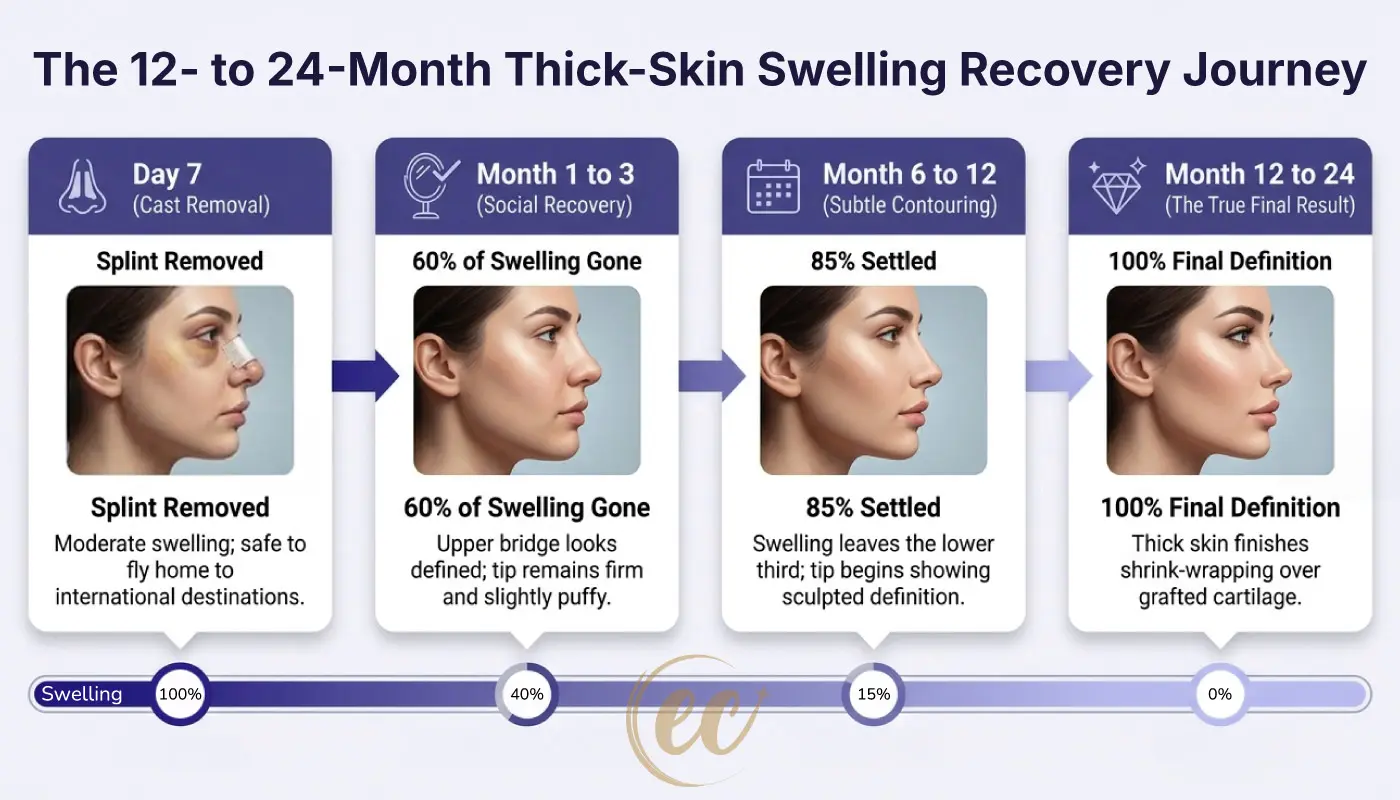
- Days 1 to 7: Expect swelling, bruising around the eyes, and a blocked feeling. Sleep with your head raised and avoid bending over.
- Week 2: Splint and any stitches come off. Bruising fades. Most patients fly home between days 7 and 10 and return to desk work by week 2.
- Weeks 3 to 6: Most swelling in the bridge settles. Tip swelling is still noticeable. No glasses resting on the bridge, no heavy exercise, and no contact sports.
- Months 3 to 6: Nose looks close to its final appearance for most people. Patients with thicker skin will still see the tip slowly getting sharper.
- Months 12 to 24: True final result. Tip definition keeps improving as the last deep swelling leaves.
Your surgeon may use small steroid injections in the tip during the first year to help thick skin settle faster. Taping the nose at night for the first few weeks also helps.
Ethnic Rhinoplasty Risks, Healing Realities, and Tips for Best Results
When Ethnic rhinoplasty is performed by experienced surgeons, it has higher satisfaction rates and lower risks. The procedure requires specific considerations defined by medical associations like the American Academy of Facial Plastic and Reconstructive Surgery (AAFPRS):
- Longer Swelling: Thicker skin will take a much longer time for the subtle tip definition to show. Consistent night-taping and patience are essential.
- Scarring Around Nostril Bases: If your procedure includes alar base narrowing, tiny incisions are placed in the natural crease where your nostril meets your cheek. After a while, they heal into faint, discreet lines, but proper scar care and sun protection are still important during the first six months. Tell your surgeon if you scar easily.
- Actual Skin Limits: Your surgeon can sculpt and reinforce the cartilage, but they cannot make thick skin thin. An experienced surgeon designs a stable, projected framework that gives shape without compromising blood flow to the skin.
- Realistic Expectations: You cannot bring in a photo of someone from an entirely different background and ask for their nose. A good surgeon will explain why that won’t work on your face. That’s not a rejection. It’s the first sign you’re working with a good surgeon.
Are You a Suitable Candidate for Ethnic Rhinoplasty?
You’re likely a good candidate for ethnic rhinoplasty if you’re in good general health and you meet the following practical standards:
- Completed Facial Growth: Your facial bones have finished developing. This means you should be at least 17 or older.
- Clear Personal Goals: You want to refine your nose, such as lifting a bridge, reducing a hump, or narrowing nostrils, while maintaining the general character of your heritage.
- Good General Health: You are a non-smoker or willing to pause smoking during healing, with no uncontrolled medical conditions.
- Emotional Preparedness: You understand that healing with thicker skin is a gradual, month-by-month process.
Why Choose Estherian Clinic for Ethnic Rhinoplasty in Turkey?
Nose surgery requires an artistic eye and a deep familiarity with diverse human facial proportions. At Estherian Clinic in Istanbul, our surgical team specializes in custom nasal reconstruction for global patients:
- Diverse Anatomical Experience: Our board-certified facial plastic surgeons operate on international patients every week, giving them extensive expertise with African, Asian, Middle Eastern, and Latino nasal structures.
- Advanced 3D Facial Simulation: During your consultation, we use realistic imaging to review your bridge height, tip angles, and nostril balance so you can preview natural outcomes before surgery.
- Structural Preservation Techniques: Our grafting techniques reinforce your natural cartilage rather than over-resecting it. This Technique helps preserve structural strength and supports clear, comfortable airflow over the long term.
- Seamless VIP Travel Package: Your entire stay in Istanbul is arranged in advance, including private airport chauffeur service, luxury hotel accommodations, hospital care, and dedicated multilingual patient hosts.

Will I still look like myself after ethnic rhinoplasty?
Yes. The surgery adjusts specific things you don’t like while keeping the features that make your nose fit your face and heritage.
Does having thick skin make ethnic rhinoplasty harder?
It does. Thick skin hides fine detail and holds swelling longer. This condition means it takes longer for final results to appear. Your surgeon must build a stronger, well-supported cartilage framework underneath so the new shape shows visibly.
Is rib cartilage safe?
Yes. It’s taken through a small incision under the breast fold and leaves a scar of about 2 to 3 cm that’s hidden by clothing. It’s the strongest graft material available for major bridge augmentation.
Will I have visible scars if my nostrils are narrowed?
If you have an alar base reduction, the tiny incisions are hidden directly where the nostril meets the cheek. Once fully healed, these incisions typically fade into faint lines that blend naturally into the crease of the nose.
How long should I stay in Turkey?
Plan for 7 to 10 days. You’ll have surgery on day 1 or 2, a check-up mid-week, and your splint removed around day 7 before flying home.
Can ethnic rhinoplasty fix breathing problems too?
Yes. A deviated septum, enlarged turbinates, or a narrow airway can be corrected during the same surgery.
Ethnic Rhinoplasty Q&A Videos

Related Facial Aesthetic Procedures
- Rhinoplasty in Turkey: Discover how ultrasonic and closed nose job techniques shape facial balance.
- Face fat injection in Turkey: This procedure uses fat as a natural filler to add subtle volume to the cheeks, temples, or chin to improve the appearance of the face.
- Bichectomy in Turkey: Explore how buccal fat removal from your face creates youthful facial proportions.
Book your free 3D rhinoplasty consultation
Ready to refine your profile while honoring your unique heritage? Every ethnic rhinoplasty starts with understanding your face, not a template. Book a free virtual consultation with Estherian Clinic to review your anatomy, see a 3D simulation of your options, and get an all-inclusive quote for surgery in Istanbul.